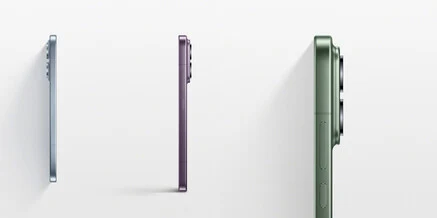
Xiaomi 17 Pro and 17 Pro Max: Dual Screens, Elite Snapdragon Power, and a New Take on Smartphone Design
Xiaomi has taken another bold step in redefining what a flagship smartphone should look and feel like. The newly unveiled Xiaomi 17 Pro and Xiaomi 17 Pro Max are not foldables, but they come with something equally eye-catching: large secondary displays on their backs. These rear panels aren’t just gimmicks – they unlock a new way of using the main cameras, controlling music, or even gaming on the go. Add to this the fresh Snapdragon 8 Elite Gen 5 chipset, improved cameras, and massive batteries, and it’s clear Xiaomi is aiming to shake up the premium phone market once again.
The Xiaomi 17 Pro: Compact Powerhouse With a Twist
The Xiaomi 17 Pro may be the smaller of the two, but it packs features that rival much larger flagships. Its defining highlight is the 2.7-inch rear display. With a resolution of 904 × 572 pixels, a smooth 120Hz refresh rate, and brightness peaking at 3,500 nits, this isn’t a token feature. Instead, it’s a full-fledged screen that can show selfies taken with the powerful main camera, run countdown timers, play music controls, or simply flash quirky wallpapers. Xiaomi even offers a retro case that turns the phone into a mini gaming console, reviving nostalgic vibes while still keeping things futuristic.
On the front, the 6.3-inch LTPO AMOLED panel continues the premium story. It features adaptive 1–120Hz refresh rates, Xiaomi’s M10 luminescent material for better efficiency, and Dragon Crystal Glass protection. The result is a compact device that doesn’t compromise on display quality, brightness, or toughness.
Performance is driven by Qualcomm’s new Snapdragon 8 Elite Gen 5 chip, paired with either 12GB or 16GB of LPDDR5X RAM and up to 1TB of fast UFS 4.1 storage. Thermal management is handled by a 4,637mm² vapor chamber, a necessity given the compact body and powerhouse specs.
Battery life should be equally impressive. Despite its smaller frame, the 17 Pro houses a 6,300mAh cell with enhanced silicon content, ensuring long life and reliability. Charging is where Xiaomi flexes its engineering: 100W wired, 50W wireless, and 22.5W reverse charging both wired and wireless. The custom Surge G2 chip promises that the battery will retain at least 80% health after 2,000 cycles – an area where many users feel iPhones and other flagships fall behind.
Photography With Leica’s Touch
The Xiaomi 17 Pro’s camera setup underscores Xiaomi’s ongoing partnership with Leica. The main shooter features a 1/1.28-inch Light Fusion 950L sensor with 16.5 stops of dynamic range and an f/1.67 Summilux lens with OIS. The telephoto system has been redesigned with a floating prism that enables a 5x zoom lens – a noticeable improvement over the Xiaomi 15 Pro’s 2.6x telephoto. Not only can it zoom, but it can also capture macro shots at just 20cm, giving it dual functionality. A 50MP ultra-wide camera with a 102° field of view and a new 50MP front camera complete the setup, supported by a 3D ToF sensor for depth mapping and enhanced AR effects.
Xiaomi 17 Pro Max: Bigger, Bolder, Better?
If the Pro is impressive, the Xiaomi 17 Pro Max is Xiaomi’s statement piece. It boasts a 6.9-inch LTPO display with 12-bit colors, adaptive refresh rates, and the same 3,500-nit brightness ceiling as its smaller sibling. On the back, its 2.9-inch secondary screen continues the theme – slightly larger than the Pro’s but with the same use cases, from camera previews to fun animations.
Power again comes from the Snapdragon 8 Elite Gen 5, but the cooling solution here is even larger at 5,533mm². RAM options remain 12GB or 16GB, while storage begins at 512GB, catering to heavy users straight out of the box.
Battery life is on another level. The Pro Max holds a 7,500mAh cell, making it one of the largest in a mainstream flagship. Paired with 100W HyperCharge wired and 50W wireless charging, the phone doubles as a reliable power bank, supporting 22.5W reverse charging for other devices.
The camera hardware mirrors the Pro in some ways but diverges in others. The main 50MP Light Fusion 950L sensor and Leica Summilux lens carry over, but the telephoto system is more ambitious. Using a different prism layout, Xiaomi managed to include a larger 1/2-inch ISOCELL GN8 sensor with a 5x f/2.6 lens. While macro shots require 30cm instead of 20cm, the overall image quality should be superior. The ultra-wide and selfie shooters remain 50MP each, ensuring consistency across both models.
Durability and Design
Both devices carry an IP68 rating for dust and water resistance. Xiaomi goes a step further, boasting that the 17 Pro can survive submersion up to 4m and the Pro Max up to 6m. That level of durability isn’t common even among the most expensive flagships, adding peace of mind for adventurous users.
Pricing and Availability
For now, the Xiaomi 17 Pro and 17 Pro Max are launching exclusively in China. Pricing starts at CNY 5,000 ($700 converted) for the base Pro model, climbing up to CNY 7,000 ($980 converted) for the top Pro Max variant with 1TB storage and 16GB RAM. As always, global prices will be higher once these models make their way overseas. The big question is whether Xiaomi will release both globally or keep the Pro Max (and potential Ultra) as China-exclusive offerings.
What This Means for the Industry
Xiaomi is clearly experimenting with features that blur the line between gimmick and utility. The rear displays may sound unnecessary to some, but they open new creative possibilities. Combined with massive batteries, elite silicon, and Leica’s photography know-how, the 17 series could challenge Samsung’s Galaxy S line and even Apple’s iPhones, particularly in areas like battery longevity and charging speeds where Cupertino lags behind. While some fans lament changes compared to the Xiaomi 15 Ultra, others see the Pro Max as an exciting new direction. Whether this iteration is a true upgrade or a sidestep will depend on how Xiaomi positions the rumored 17 Ultra next year.
At the very least, these phones prove that Xiaomi isn’t afraid to try bold ideas – and sometimes, that’s exactly what the smartphone market needs.