World of Warcraft has always been a game about places as much as it is about bosses, loot and parses. We remember expansions through their hubs and hangouts: the crush of players around the mailbox in Ironforge, the packed auction houses of Orgrimmar, the social sprawl of Valdrakken. With the Midnight expansion, Blizzard is finally answering a request that has followed the MMO for almost two decades: true player housing. 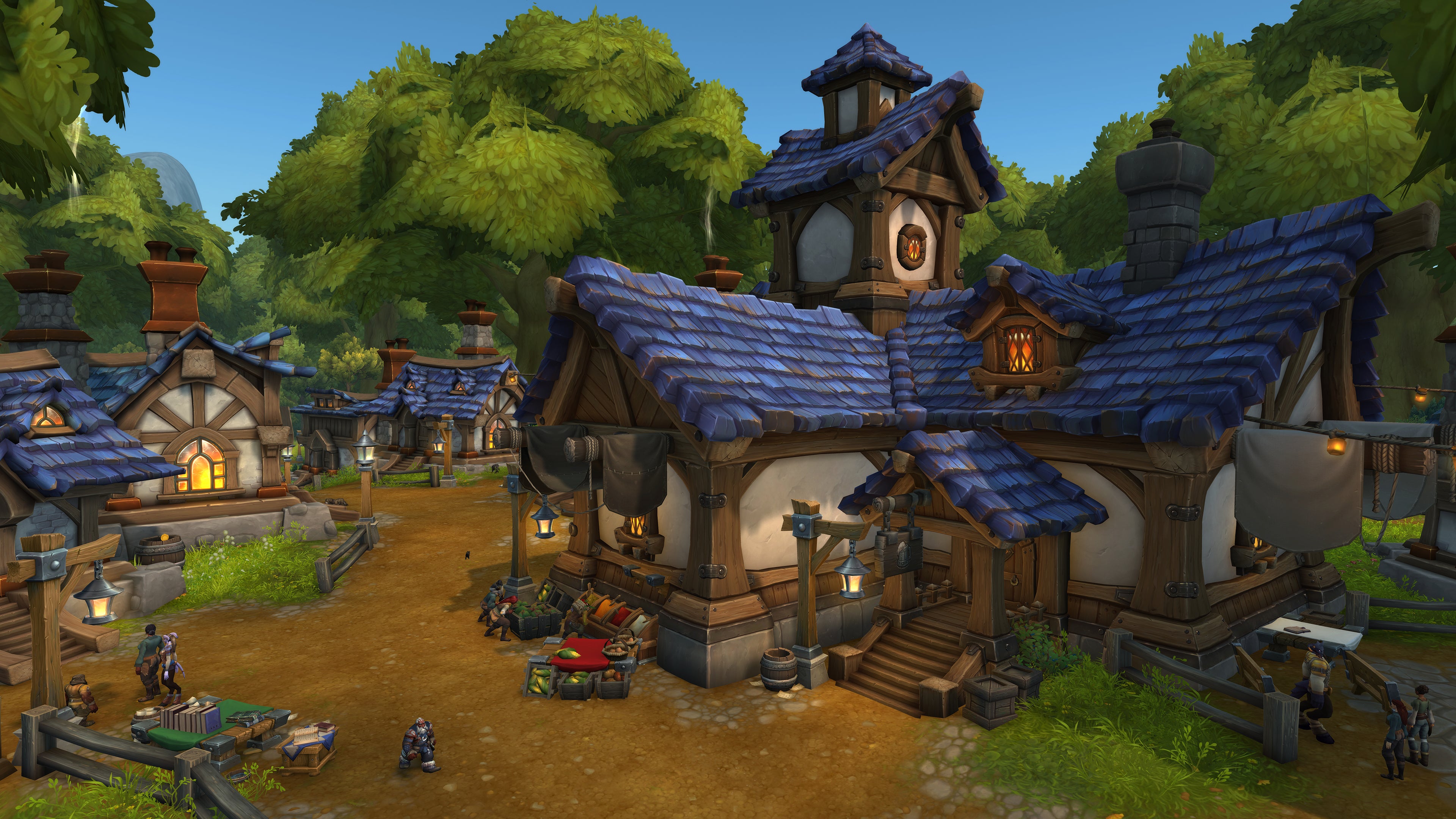
Not a garrison, not a temporary farm, but something explicitly framed as a long term home in Azeroth.
Housing has now gone live in the World of Warcraft: Midnight beta, and in just a short time players have already begun turning their plots into impossible art projects. Entire taverns rebuilt from scratch, elaborate gardens that look like they have been growing for years, and spooky necromancer dens full of skulls and candles have been flooding social feeds. For many long time MMO fans, it feels like Blizzard has finally joined a genre tradition pioneered by the likes of Ultima Online and other classics. For others, the feature raises questions. Is this late stage MMO wallpaper over deeper issues, or the start of a new pillar for the game.
To understand how seriously Blizzard is taking the system, we spoke with housing lead and principal game designer Jesse Kurlancheek and senior UX designer Joanna Giannullis about everything from couples housing and neighborhood layouts to secret decor, contests and the risk of turning raiders into full time interior designers. What follows is a deep dive into how housing is meant to work on day one of Midnight, what the team deliberately held back for later and how they plan to keep the feature alive in expansions 12.0, 12.1, 12.2 and beyond.
A Home Built To Last, Not Another Throwaway Feature
Anyone who lived through Pandaria’s farm system or Warlords of Draenor’s garrisons has the same fear: Blizzard rolls out a flashy evolution of player space, builds a few patches of content around it, then leaves it behind when the next expansion lands. When we raised that concern, Kurlancheek was very direct. Housing, he stressed, is not a one expansion experiment.
Internally the team has a short, medium and long term roadmap dedicated solely to housing. Designers are already talking in concrete terms about how the system will grow in Midnight’s patches and in future expansions. They track ideas for patch level updates and big tentpole systems for later expansion launches. The way Kurlancheek puts it, housing is so broad that almost anything a player suggests can plausibly belong there. Ask ten players what they want and you will get a dozen different answers, almost all reasonable. That breadth is exactly why the team is confident they will never run out of interesting additions.
Crucially, Blizzard is not thinking of housing as a simple list of decor drops. The goal is to give players a canvas where they can express identity, history and taste in Azeroth, but also a shared space that belongs to groups of friends, guilds and communities. The team keeps coming back to that idea of a home that is not just mine but ours. That philosophy underpins almost every decision, from neighborhoods to social tools to the types of rewards that hook into the system over time.
Why Housing Will Never Be Mandatory For Player Power
Housing inevitably raises a scary possibility for progression minded players: what if your new home becomes another mandatory grind. In a world of raid attunements, borrowed power systems and endless checklists, nobody wants to feel forced into decorating just to keep their damage competitive. According to Kurlancheek, that line is one the team refuses to cross.
The housing feature has what he calls a fairly hard line between home life and pure player power. You should never open the adventure guide and see a requirement that sends you into a housing loop just to unlock a raid, secure a crucial buff or squeeze out an extra few percent DPS. That means no raid attunement hidden behind a cozy hearth, no best in slot trinket that only drops from a dresser in your bedroom and no combat stat bonuses tied to how many paintings you hang on the wall.
Instead, the power of housing is carefully framed as emotional, social and aesthetic. It is about vibes, as the team likes to joke, not numbers. That does not mean the world around your home is static. The housing neighborhoods feel alive thanks to little touches: NPCs wandering by to take tourist snapshots of particularly fancy plots, visitors queueing for local shops, vendors and residents popping umbrellas when the rain starts. None of this makes your character hit harder, but it makes your little corner of Azeroth feel like a living place rather than a frozen diorama.
Capital Cities Still Matter In A World With Housing
One worry long time players often raise is the risk of hollow cities. If everyone hides in their personal instance full time, what happens to the bustling social energy of Stormwind, Orgrimmar and future capital hubs. The housing team is very aware of that tension and, according to UX lead Joanna Giannullis, has deliberately avoided turning homes into all purpose utility hubs.
Core services remain rooted in the capitals. If you want to visit profession trainers, place or pick up crafting orders, access the main auction house or sort through your banks, you still need to head back to the city. Those hubs remain the central arteries of the game, full of people showing off mounts, toys, transmogs and giant dinosaurs parading around merchants. Housing is meant to complement, not replace, those spaces.
To prevent players from feeling forced to choose a single anchor, Blizzard is also adding a special hearth that goes directly to your house. You keep your traditional Hearthstone, which you can plant in the current expansion hub, while a new home hearth takes you straight to your plot or neighborhood. The idea is that you bounce between the two: run keys or raids, port home to relax and tinker with decor, then hop back into the city when you need big city infrastructure.
Neighborhoods: From Hermit Cabins To Guild Cul De Sacs
World of Warcraft housing is not just a row of identical cottages. The team wants players to have strong feelings about the kind of neighborhood they live in. When designing the existing Horde and Alliance themed areas, they deliberately mapped out different archetypes of players and tried to create plots that speak to each type.
Some homes are tucked away deep in the woods or isolated on hilltops, perfect for hermits who prefer to live far from the crowd. Others sit in cozy cul de sacs with two, three or four houses hugging the same small clearing, ideal for groups of friends or small guilds who want to live literally next door to one another. There are houses that open onto quiet beaches, houses buried near rocky cliffs and houses overlooking more urban style streets. The goal is to cover as wide a spectrum of fantasy as possible, while still leaving obvious gaps for future expansions to fill.
On the technical side, Blizzard has been stress testing neighborhoods by dumping large numbers of bots into heavily decorated spaces, just to see where performance and population limits begin to creak. There will be a cap on how many people can inhabit a specific space at one time, but residents get priority. If a neighborhood can handle one hundred players simultaneously and fifty five of those are plot owners, those fifty five have reserved slots so they can always access their own homes even during big events or parties.
Couples Housing, Co Owners And Professional Decorators
One of the earliest questions players asked the team is whether two people could truly share a home. In many MMOs, couples, best friends or guild pairs end up unofficially co owning a house, even if the game only recognizes a single account as the owner. In the current version of WoW housing, hard ownership still belongs to one character, but Kurlancheek is very clear that richer permissions and shared spaces are high on their radar.
The team regularly hears from players who do not consider themselves creative but have a friend whose design sense they trust completely. These people want to hand over the keys and say, please just make this place look amazing. Others imagine proper in game interior design businesses, where a dedicated decorator could move between clients, completely redesigning their homes for a fee. All of that requires a more flexible permission system: the ability to grant certain characters access to edit layouts, move furniture or even own houses together.
While Blizzard is not ready to announce a full couples housing or joint ownership system yet, the developers talk about it as an inevitability rather than a wild idea. It fits perfectly with their philosophy of homes as shared spaces. Expect future updates to give you more ways to designate co decorators, roommates or romantic partners and to let them express themselves inside your four walls without risking griefing or accidental destruction.
What Did Not Make Launch And Why That Is Good News
Looking at the beta, it is obvious that housing already ships with a huge toolkit. Yet both Kurlancheek and Giannullis admit that a lot of features had to be pushed out of the initial release window. Rather than quietly cutting those ideas, the team is very open about them, because in most cases the delay exists to make room for polish or technical improvements, not because the ideas were abandoned.
One example is the system of outdoor rooms, a way of extending your plot beyond the boundaries of the house and yard. These spaces were briefly made available to testers so Blizzard could gather feedback on how they felt to build in and decorate, but they will not officially unlock for players until the actual Midnight launch. The team chose to expose them early to collect real data and iterate, even though the underlying tech is still being finished.
Another sacrifice for now is exterior lighting. At one point, players could go wild with outdoor lamps, lanterns and spotlights. It looked fantastic in screenshots, but once the team tested neighborhoods where every lawn was flooded with dozens of light sources, performance began to suffer. Rather than letting the feature ship in a compromised state, Blizzard disabled it for alpha and beta, with plans to rework and re enable it after launch. For players who love moody nighttime scenes, that post launch patch is already one of the most anticipated updates on the roadmap.
More Biomes, More Neighborhoods And Old World Inspirations
The current neighborhoods offer distinctly Horde and Alliance flavors, but anyone who has wandered across Azeroth can immediately name zones that feel like perfect housing candidates: the autumn forests of Grizzly Hills, the eerie blue glow of Azsuna, the red rock cliffs of Highmountain, the neon goblin chaos of Kezan. The housing team is thinking along the same lines.
Kurlancheek talks about their ongoing effort to identify which fantasies are missing from the current catalog of plots. Maybe you are the type who wants to live above a bustling bazaar rather than in a secluded grove. Maybe you dream of a haunted manse perched over a blighted landscape, or a quiet villa on a vineyard hill. Future neighborhoods are likely to chase these fantasies, each with its own unique layout and skyline.
To make these spaces feel like part of the wider world, the team has been combing through old expansions, hunting for memorable foliage, props and set dressing they can import into the housing decor catalog. If you are obsessed with a particular tree from an older zone or a cluster of flowers from a leveling quest, there is a real chance it could become a purchasable object. The idea is that every era of WoW, not just the current expansion, gets represented somewhere in the housing toolkit.
Hidden Gems, Trash Piles And Community Sourced Decor
One of the most charming aspects of the housing pipeline is how much it leans on internal and community suggestions. Inside Blizzard, there is literally a form developers can fill out whenever they spot a prop that would make a great decor item. Because he runs housing, Kurlancheek jokes that he can nudge those requests along, occasionally asking the decor lead to add something purely because it makes him personally happy.
From the community side, players are already digging through old dungeons and raid instances on beta, grabbing screenshots of forgotten props and posting them as housing suggestions. A strangely expressive hanging shark from the Battle for Azeroth era suddenly resurfaces because someone tries to build a fishing village on their lawn. An obscure banner from a leveling quest becomes the perfect accent piece for a themed tavern. The team sees these posts and often agrees: yes, that forgotten asset would look fantastic as part of the decor catalog.
Then there are the wonderfully weird items. Internally, there has been a surprising demand for goblin junk, scrap heaps and general trash. The developers answered by adding things like the Johnny Trash pile from Battle for Azeroth as placeable objects. Few people would have predicted that a mound of refuse would become a highly requested trophy, but once you see it in someone's yard, it is oddly irresistible. And of course, nearly everyone agrees on one universal desire: string lights. Cozy, festive string lights are quickly becoming the unofficial mascot of the housing aesthetic.
Rare Secrets, Hidden Catalog Entries And Trophies
World of Warcraft has built an entire subculture around secret mounts and hidden achievements, from the Time Lost Proto Drake to elaborate puzzle chains. It was inevitable that players would ask whether housing would get its own equivalent: ultra rare or secret pieces of decor that only appear at the end of tricky scavenger hunts, puzzle chains or long term grinds.
The short answer is yes, there is room for that. The housing catalog already supports a flag that hides specific items from view until you have actually earned them. That means some of the most coveted trophies will not even show up as greyed out placeholders. They will simply appear one day when you meet the right conditions, a quiet surprise sitting next to your more common furnishings.
At the same time, Blizzard is being cautious about exclusivity. The game already uses expansion long meta achievements as sources for special decor, and those are inherently limited to the players who manage to complete everything in a given cycle. That level of rarity feels acceptable. What the team wants to avoid are mundane items locked behind narrow, time limited windows. Nobody wants to need a specific green placard to complete their dream layout, only to discover it was a reward for a one off event from years ago. For more competitive content like PvP, the team is leaning into the idea of trophies: decor that clearly signals a player's accomplishments without being essential for anyone's fantasy home. They are even experimenting with multiple versions of certain items so that if you really love the shape of a trophy, you can obtain a more accessible variant while still recognizing that a rarer edition signifies something extraordinary.
Housing Rewards From Everything You Do
One of the most exciting aspects of the system is how deeply it connects to the rest of the game. The philosophy is straightforward: if there is a way to earn something in World of Warcraft, there should eventually be a way to earn housing decor through that activity. Dungeons, raids, world quests, reputation tracks, PvP brackets, holiday events, crafting professions, meta achievements and side systems like Midnight's new Endeavors can all feed into your growing catalog of furnishings.
That broad approach has a powerful side effect for veteran characters. When you first log in after housing unlocks, the game will immediately scan your history and shower you with decor tied to what you have already done. Kurlancheek notes that players with five, ten or even twenty years of progression might suddenly receive a flood of one hundred and fifty or two hundred items, all at once. Each of those pieces acts like a little time capsule: a banner that reminds you of a Siege of Orgrimmar achievement, a statue linked to an old reputation grind, a painting tied to a quest line you had half forgotten.
To keep new players from feeling left behind, Blizzard also provides curated starter packs that include essentials like beds, chairs, tables and simple decor in a cohesive modern style. That way, even if your achievement history is relatively sparse or full of mismatched odds and ends, you still have a functional, decent looking home right away. Over time, the wild collection of veteran reward items and the clean starter sets blend into something uniquely yours.
The Decorating Toolset, Outdoor Limits And Accessibility
On paper, housing is about items, but in practice it lives or dies by its tools. The team knows this, and early feedback on the beta has already zeroed in on the user interface and quality of life around the act of decorating. Advanced mode, which lets players fine tune the positioning, rotation and scaling of items, is incredibly powerful but can also be intimidating. Some players immediately dive into it to create illusions, clipping tricks and complex build structures, while others bounce off the complexity and wish for something friendlier.
Giannullis emphasizes that the team is watching all of that feedback closely, especially through an accessibility lens. A solution that works great for one group of players might be physically uncomfortable or cognitively confusing for another. There is a long list of small improvements on their board: better snapping options, clearer visual feedback, more consistent controls and features that reduce repetitive strain from placing large numbers of items. It will take time, but they see the editor as a living tool rather than a set and forget interface.
Another hot topic is item limits, especially outdoors. Creative players immediately push any system to its extremes, and on beta many have run headfirst into caps that feel too low for their ambitions. The housing team sympathizes. Their guiding principle is to avoid unnecessary restrictions, but they also have to keep performance and stability in mind, especially in shared neighborhoods. Expect those limits to be revisited over time as the team gathers more data, optimizes the engine and finds ways to squeeze in a few more chairs, trees and string lights without turning entire districts into slide shows.
Copy Paste Layouts, Export Strings And Remix Culture
When a housing system gets big enough, a new type of player appears: the architect. These are the people who treat building as their main content and want tools that let them work at scale. Unsurprisingly, one of the most common feature requests Blizzard has already received is copy paste functionality. Players want to be able to take a perfectly aligned bookshelf, a complex staircase, or a carefully layered window alcove and drop that arrangement elsewhere without rebuilding it piece by piece.
Alongside internal copy paste, many players have asked about exportable layouts or strings that can be shared with others. This is where the fantasy of professional decorators and design influencers becomes real. In that world, a talented creator might share a code for a pirate themed den, a cozy inn, or a minimalist elven study. If you own the necessary pieces, you could import their layout and instantly populate a room, then tweak it until it feels personal.
For Kurlancheek, this remix culture is one of the most compelling possibilities of the system. Maybe your friend builds an incredible pirate cave under their house, and you love everything about it except that the water outside the dock looks too plain. So you copy the layout, add a swarm of sharks, lanterns and floating wreckage and suddenly the design feels like yours. That kind of playful ownership, where you build on someone else's foundation to make something distinct, mirrors how creativity works across the internet. The trick for Blizzard is giving players those tools without turning the housing scene into a rigid catalogue of prefab rooms.
Parties, Contests And Housing As A Spectator Sport
If raiding has the Race to World First, housing naturally invites its own form of competition. Even before launch, content creators are already positioning themselves as housing specialists, streaming build sessions and hosting informal challenges. Some beta communities are experimenting with weekly themes, asking players to build around prompts like coastal retreat, villain lair or goblin junkyard, then touring one another's houses to vote on favorites.
Blizzard is watching all of this closely. The developers talk about building tools and systems that support whatever shenanigans players invent, whether that looks like a Trial of Style style contest for interiors, neighborhood wide events where everyone decorates for a holiday or simple party hosting features. Something as basic as how many characters can occupy an instanced house at once becomes critical when you want to throw a real in game party.
Behind the scenes, Blizzard has been stress testing those social limits. They throw large numbers of bots into highly decorated homes and watch what happens, trying to strike a balance between spectacle and stability. While there will inevitably be caps, the goal is that housing can comfortably host guild gatherings, small conventions, mount races around the block and impromptu dance parties without turning into a slideshow. When you look at your neighborhood town square, the team wants you to see potential venues as much as front lawns.
Good Neighborhoods, Bad Neighborhoods And Social Identity
Whenever a game adds housing neighborhoods, the jokes start immediately: will there be the nice district and the bad side of town. Will one corner of the map quietly evolve into Azeroth's equivalent of a nightlife strip while another becomes the sleepy suburb where raiders log out after mythic pulls. In World of Warcraft, there are no mechanical differences between one neighborhood and another yet, but social identity is already forming.
Some guilds are planning to claim entire cul de sacs and turn them into thematic blocks: one corner dedicated to a role playing tavern row, another turned into a bazaar of player run shops, a third themed around a shared story. Other groups are already joking about leaning into the idea of a rough neighborhood, filling their streets with suspicious goblin tech, scorched ground textures and slightly illegal racing tracks. None of this is enforced by the game systems, but that is the point. Housing gives players a stage on which to perform the version of Azeroth they want to inhabit.
Over time, it is easy to imagine reputations taking hold. Maybe one cluster of neighborhoods becomes famous on social media for hosting weekly contests, another for open mic nights and dance halls, another for being the quiet retreat where people go to escape the bustle of capital hubs. That sense of place and culture is the same energy that once made specific banks and bridges the de facto meeting points of early WoW; now it simply has a proper set of walls around it.
Housing As A Game Within The Game
Whenever you give MMO players a rich sandbox, you also create a new type of time sink. More than one beta tester has already admitted that they lost entire evenings to tweaking staircases, aligning rugs and testing lighting angles. Some jokingly warn their raid leaders that they might not show up on time because they are too busy fixing their kitchen. Kurlancheek says this is a very real pattern the team has observed: people log in intending to run keys and instead get trapped in what he calls the extremely compelling housing loop.
For Blizzard, that is not a bug, it is a sign that the feature is tapping into something powerful. Housing gives players a way to invest in the game that is not tied to gear resets, seasonal ladders or weekly lockouts. When your environment reflects your taste and history, logging in to tweak a wall or add a new trophy feels meaningful even if you do not touch a single boss. In a live service game that has to cater to raiders, collectors, role players, achievement hunters and casual explorers at once, that kind of evergreen creative outlet is invaluable.
Of course, this also feeds back into the earlier skepticism from some veterans who see housing as a classic late stage MMO move, something developers reach for when they have run out of new bosses to spawn. Blizzard's answer, implicit in their long term roadmap, is that housing is not the end of the road but a new lane alongside raids, dungeons and PvP. You can still chase mythic clears and high keys; now you just have a place that feels genuinely yours to return to when the night's wipes are over.
Addressing The 'Why Now' Skepticism
For players who have been asking for housing for over a decade, the timing can feel almost suspicious. Other MMOs have had robust housing systems since the early 2000s, and WoW famously brushed off the request for years with variations on the idea that it did not fit the game. Now, in the Midnight era, the feature finally appears. Some community voices read that as proof that Blizzard is arriving late to the party or trying to paper over unpopular changes elsewhere, from addon policies to transmog restrictions.
The housing team does not frame it that way. From their perspective, the delay was partly technical, partly philosophical. True housing, the kind that can evolve for another twenty years, cannot simply be bolted on as a side activity. It needs to tie into achievements, economies, art pipelines and social systems. Garrisons and Pandaria's farm taught the studio hard lessons about building something too self contained or too tied to a single expansion's storyline. Midnight's system is their attempt to do it properly: instance neighborhoods that belong to the ongoing world, not a one off campaign.
There is still an understandable wariness among veterans who watched previous big features go dormant. The best answer the team can offer is consistency over time. If the housing catalog keeps growing in 12.0, 12.1, 12.2 and beyond, if new neighborhoods continue to appear, if the editor keeps receiving quality of life updates and if new raids and systems reliably plug into housing rewards, the skepticism will gradually soften. Until then, a healthy dose of side eye from old school players is part of the texture of any long running MMO.
Midnight, Endeavors And Why Your Home Sends You Back Out
Midnight introduces more than housing. One of its key new frameworks, Endeavors, is designed to give players structured reasons to revisit old content, experiment with different activities and earn progression in flexible ways. Importantly, the housing team has built a feedback loop between Endeavors and neighborhoods. You might pursue a set of Endeavors that sends you into dungeons, battlegrounds or world zones, and the rewards on the other side translate into new decorations, trophies or building options.
This looping design counters the idea that housing is a purely inward feature. Even if you could happily spend hours in your house moving chairs around, the broader progression of decorating still nudges you back into combat, exploration and social systems. Want that perfect painting for your hallway. It might be locked behind a world boss. Dreaming of a specific tree for your yard. Maybe it drops from a reputation vendor in an older expansion you never finished. In that sense, housing becomes both a reward and a motivation for engaging with Azeroth as a whole.
At the same time, Endeavors prevent housing from feeling like a grind in its own right. You are not simply logging in to do daily chores for wallpaper tokens. Instead, the feature becomes a parallel track layered over your normal play. You raid, you PvP, you quest, you explore; then, at the end of the night, you return home with a few new pieces of the world in your bags, ready to be woven into your own story.
Getting Started: From Decor Floods To Starter Packs
On the very practical level, one of the most common questions is what happens the first time you open the housing interface on your main character. The answer, at least for long time players, is: chaos, in a good way. The game retroactively checks old achievements, reputations and activities and immediately awards any related decor, pumping out a long scroll of unlocked items. For a character with many expansions of history, that can easily mean over a hundred new objects appearing in their catalog in one go.
That initial wave is going to feel eclectic. You might get a serious monument from a raid meta achievement right next to a goofy feast table from a holiday event and a trash pile from a goblin quest chain. The idea is not to hand you a perfectly curated set, but to acknowledge where you have been. Some of those items will click with your taste immediately. Others will sit unused in the catalog for months until you suddenly realize they are exactly what a new room design needs.
To keep that flood from overwhelming newer or more casual players, Blizzard also offers streamlined starter sets aimed at giving you a coherent base to work from. These packs prioritize functional furniture and simple, flexible decor in styles that pair well with many different themes. That way, even if you ignore your more eccentric achievements for a while, you still have a bedroom that looks like somewhere a hero might reasonably sleep instead of a pile of chairs stacked in panic.
The Road Ahead: Dance Halls, Shared Spaces And Beyond
Talk to any group of housing fans for long enough and a familiar wish list appears. Dance halls. Community centers. Shared workshop spaces. Neighborhood fairs. The housing team has heard all of those ideas and more. When we mention a player joke about Blizzard inevitably adding dance studios next expansion, the developers laugh and point out that a dance hall is actually one of the lowest hanging fruits imaginable. Give players an open room, some light controls and a few themed decor pieces and they will handle the rest.
More ambitious is the notion of shared neighborhood projects. Guilds already daydream about transforming the spaces between houses into racetracks for mount tournaments, obstacle courses for dueling events or town squares filled with vendor stalls and mini games. The team finds this collective building fantasy incredibly compelling. As soon as you let individuals create something, they naturally want to create things together. The challenge for Blizzard is to figure out how to give players shared canvases without creating unmanageable griefing or ownership disputes.
Looking further ahead, it is easy to imagine future expansions adding entirely new frameworks around housing: seasonal decorating events tied to the in game calendar, catalogs of community curated layouts, developer spotlights on standout neighborhoods, even tools that let role play focused realms host official in game festivals. For now, the housing system is taking its first steps. But the way the team talks about it, this is less a side feature of Midnight and more the foundation of an Azeroth where adventuring and everyday life finally feel meaningfully connected.
In the end, housing in World of Warcraft is not just about hanging a painting straight or finding the perfect rug for your mage's study. It is Blizzard finally acknowledging that for many of us, Azeroth stopped being just a game world years ago. It became a place. With Midnight, that place finally has front doors we can decorate, neighborhoods we can recognize and homes we can share, whether with a partner, a guild or a group of friends who have been raiding together since vanilla. After all the years of debates, excuses and wish lists, it feels like the era of true Azeroth real estate has finally begun.
3 comments
if they dont let me co own a house with my partner and give her full decor perms whats even the point, i just wanna log in and be told where to put the sofa
Thank you for your sharing. I am worried that I lack creative ideas. It is your article that makes me full of hope. Thank you. But, I have a question, can you help me?
dance hall is 100% happening, you can already see people theorycrafting raves in their basements, raid logging is over its house logging now