vivo is taking its newest camera flagships, the X300 and X300 Pro, far beyond glossy launch stages and lab tests. 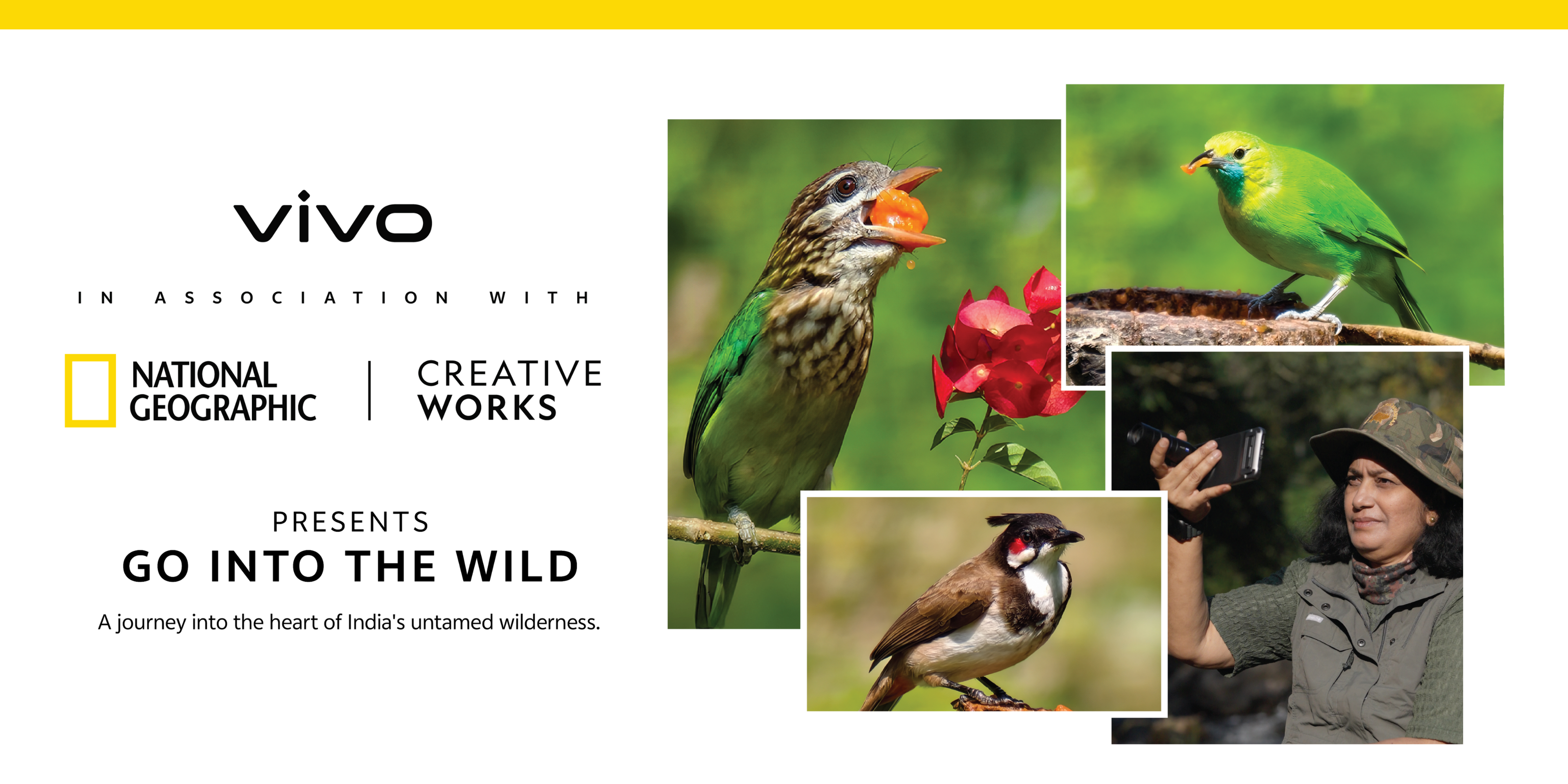
In a new collaboration with National Geographic Creative Works, the brand is sending its phones into real wilderness, across rock, sand, mist and monsoon, to see what they can truly capture when nothing is staged and nothing is predictable.
The project, built around the theme Go Into the Wild, is part photographic expedition, part storytelling lab. A National Geographic Explorer, together with a team of photographers and creators, is traveling through some of India’s most dramatic environments. From dense forests to high-altitude ranges, from sun-baked desert dunes to humid coastal belts, every frame in this series is being shot on a vivo X300 series phone rather than a traditional camera kit.
That choice is deliberate. Smartphone imaging has reached a point where it no longer lives only in the shadows of mirrorless and DSLR systems. With the X300 and X300 Pro, vivo is betting that ultra high resolution sensors, advanced optical design and computational photography can stand up to the chaos of the wild. Extreme contrast, rapidly changing light and fast moving wildlife are exactly the kind of scenes that once exposed the limits of phone cameras. This project is designed to test whether those limits still exist.
At the center of the series is vivo’s partnership with ZEISS. The X300 line uses a ZEISS tuned optical system that aims to deliver clean, sharp images with controlled flare and faithful color. When a tiger slips from the shade into a patch of harsh light or a flock of birds cuts across the sky at dusk, the phone needs to lock focus quickly, keep fine detail in feathers or fur and avoid turning the background into mush. These are the subtle details that make the difference between a pretty snapshot and a frame that feels worthy of a National Geographic story.
Hardware alone is not enough, so vivo layers on heavy software intelligence. The X300 series combines multi frame processing, scene recognition and pro level stabilization to keep images stable and detailed when the photographer is bouncing in a jeep or scrambling over rocks. Long exposure night shots in the forest, for example, benefit from both optical and electronic stabilization working together, while AI based noise reduction tries to preserve texture in leaves, clouds and animal fur instead of smearing it into a flat blur.
According to Geetaj Channana, Head of Corporate Strategy at vivo India, the goal behind this campaign is bigger than simply showing off a spec sheet. The company wants its technology to feel like a tool for curiosity, letting people document the world around them with more emotion and nuance. The X300 family is described as a camera system built for extremes: very low light, huge landscapes that stretch to the horizon and subjects that refuse to stay still. A wilderness expedition, rather than a controlled studio, is the most honest arena to prove that claim.
National Geographic, for its part, sees the collaboration as a continuation of its long tradition of visual exploration. Photography has always been at the heart of how the brand tells stories about wildlife, cultures and fragile ecosystems. By working with vivo, it can experiment with a more agile way of shooting. A phone slips into a pocket, rests comfortably in one hand and is ready at a moment’s notice when a rare animal appears for just a few seconds. That immediacy can lead to more spontaneous, intimate images that would be harder to capture while juggling heavy lenses.
The content created on this journey is expected to highlight more than postcard perfect vistas. Alongside sweeping mountain panoramas and close ups of elusive animals, viewers may see quieter scenes: a guide waiting at dawn with binoculars in hand, monsoon clouds building over a small fishing village, or the way last light filters through dust and leaves. Each sequence doubles as a real world demonstration of what the X300 and X300 Pro can do in terms of dynamic range, detail retention and color depth.
For enthusiasts considering a new imaging focused smartphone, this campaign essentially functions as a living, breathing test gallery. Instead of isolated studio charts, the X300 series is being pushed through the same demanding situations that professional storytellers face in the field. If the phones can consistently handle low light in dense forest canopies, keep horizons level from a moving vehicle and freeze wildlife without heavy blur, it says a lot about how far mobile photography has evolved.
The bigger takeaway, though, is philosophical. Projects like Go Into the Wild blur the line between professional and everyday tools. They suggest that the device in your pocket, provided it is thoughtfully engineered, can be far more than a casual camera. In the hands of explorers, filmmakers and ordinary travelers alike, phones like the vivo X300 and X300 Pro are becoming compact visual notebooks for the natural world, ready to document fleeting encounters before they disappear back into the wild.
1 comment
Smartphones replacing DSLRs in the wild… photographers gonna argue about this for years 😂