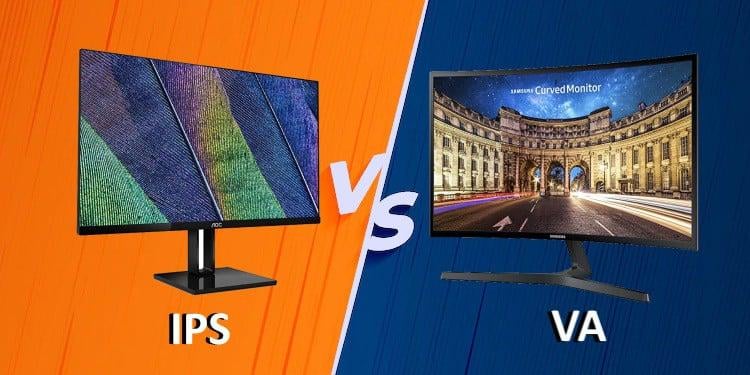
VA vs IPS: Understanding the Screen Matrix Technologies and Choosing the Right One
When it comes to modern displays – whether we’re talking about televisions, monitors, laptops, or other devices – two acronyms appear again and again: VA and IPS. These are not brand names or product lines but rather distinct technologies used in LCD (liquid crystal display) panels. Both have grown immensely popular over the years, often appearing in products within the same price range. Yet, despite this apparent similarity, VA and IPS matrices differ in ways that can significantly affect the viewing experience depending on what you plan to use your screen for.
This article dives deep into how these two technologies work, why they produce different visual characteristics, and how to make an informed decision when choosing between them. Whether you are a gamer, a film enthusiast, or a professional designer, understanding these differences can save you from costly mistakes and ensure you get the most out of your screen investment.
How LCD Screens Work: A Primer
Before comparing VA and IPS, it helps to understand the basics of LCD technology itself. In essence, every LCD display relies on three main building blocks: a light source (usually LED backlighting), a layer of liquid crystals that control light passage, and filters that shape that light into colors visible to the human eye.
Each pixel on the screen is divided into three subpixels – one red, one green, and one blue – thanks to dedicated color filters. By manipulating the orientation of liquid crystals through electric voltage, each subpixel can vary in brightness. Combine these three subpixels in different intensities, and you unlock the ability to reproduce millions of colors. The precision of this process, however, depends heavily on the structural arrangement of those crystals – and that’s where VA and IPS differ.
The IPS Matrix Explained
IPS stands for “In-Plane Switching.” In this design, liquid crystals are aligned parallel to the plane of the glass substrate. When the display is off, the crystals block backlight effectively. But once an electrical charge is applied, the crystals rotate horizontally within the plane, sometimes as much as 90 degrees, altering their transparency and thereby controlling how much light passes through each subpixel.
One major advantage of this parallel alignment is consistency. Because the crystals rotate horizontally, they maintain fairly uniform brightness and color accuracy across wide viewing angles. Sit directly in front, move to the side, or even stand above the monitor – colors largely remain true to life. This feature makes IPS panels particularly attractive for professionals who need accuracy, such as photographers, video editors, and graphic designers.
However, IPS technology has a known drawback: its inability to produce perfectly deep blacks. Even when “off,” the horizontal arrangement of crystals does not completely block light leakage, resulting in blacks that often appear closer to dark gray. This limitation is especially noticeable when watching movies in dark rooms, where shadow details may feel washed out.
The VA Matrix Explained
VA stands for “Vertical Alignment.” In VA panels, liquid crystals are naturally aligned perpendicular to the glass substrate when no voltage is applied. This vertical position effectively blocks the backlight, creating deep, rich blacks. Once an electrical charge is introduced, the crystals tilt away from their vertical stance, letting light through and producing the desired colors.
The most celebrated strength of VA technology is contrast. Contrast refers to the difference between the darkest and brightest tones a screen can produce, and VA panels often reach ratios of 3000:1 or higher – several times greater than IPS’s typical 1000:1. This makes VA screens excellent for watching movies in dimly lit environments, as they can reproduce darker scenes with striking depth and realism.
But VA is not flawless. The tilting mechanism of vertically aligned crystals results in weaker viewing angles. Move too far to the side of a VA display, and you may notice washed-out colors or reduced contrast. On large flat TVs, for example, people sitting at the edges of the sofa might see a noticeably inferior image compared to those sitting front and center. Curved VA panels attempt to mitigate this issue by ensuring the distance from the viewer’s eyes to each point on the screen remains more consistent, though this solution typically raises the price.
Comparing Key Performance Metrics
Response Time
Response time measures how quickly a pixel can change from one color to another, often in milliseconds. For gamers, response time can make the difference between smooth motion and distracting blur in fast-paced action sequences. Historically, IPS panels had an edge in this area, but recent improvements have brought both IPS and VA panels closer to parity, with many models boasting response times around 4–5 ms. While high-end VA displays can achieve similar responsiveness, they usually come with a higher price tag.
Viewing Angles
IPS clearly dominates in terms of viewing angles. Thanks to the in-plane crystal alignment, colors and brightness remain consistent across a wide arc, often up to 178 degrees. VA, while improving, still tends to lose accuracy as you move off-center. This makes IPS better suited for collaborative environments, such as offices, studios, or living rooms where multiple viewers watch from different positions.
Color Accuracy and Gamut
Color accuracy is another domain where IPS excels. The parallel crystal alignment ensures more consistent light transmission, producing accurate tones across the screen. As a result, IPS is the go-to choice for creative professionals who require faithful color reproduction. Many IPS displays cover a wide color gamut, including sRGB and Adobe RGB spaces, which is critical for tasks like photo editing and digital painting.
VA panels, while capable of strong performance, can suffer from uneven color uniformity. At off-angles, colors may shift slightly due to how the crystals bend the light. This can be distracting in professional workflows where precision matters, though for everyday use such as gaming or casual video watching, the difference is less problematic.
Contrast and Black Levels
Contrast is VA’s crown jewel. Where IPS struggles to present true blacks, VA shines, often delivering deep, cinematic dark tones. For movie lovers who enjoy watching late at night in a dark room, this is a game-changer. IPS, in comparison, can look “glowy” or washed-out in similar conditions. This discrepancy is why VA is commonly favored for home theaters and large living room TVs.
The Glow Effect
One phenomenon often discussed in IPS panels is the “IPS glow” – a form of backlight leakage that appears in the corners of the screen, particularly visible when displaying dark content in a dark room. While manufacturers are continuously working to minimize it, IPS glow remains an unavoidable trait. VA displays, due to their stronger ability to block light in the “off” state, exhibit this problem far less frequently.
Which Technology Should You Choose?
Ultimately, the choice between VA and IPS should not be about which one is universally better but about which one aligns with your specific needs and use cases.
- For professional creative work: IPS is the clear winner. If you work with photos, videos, or design projects where accurate colors are non-negotiable, an IPS monitor will serve you best.
- For gaming: If your focus is on fast-paced multiplayer titles where every millisecond matters, IPS remains a strong contender due to its responsive performance and wide viewing angles. However, for story-driven, visually rich single-player games, VA’s superior contrast can add immersion.
- For movie nights and home theaters: VA is hard to beat. The ability to produce rich blacks and high contrast makes it ideal for cinematic experiences, particularly in dim lighting conditions.
- For general office or mixed use: Either technology can suffice. If you prioritize versatility and collaboration, IPS may be better. If you value deep blacks for after-hours entertainment, VA might be more appealing.
Conclusion
Both VA and IPS technologies have evolved considerably, narrowing the performance gap that once clearly separated them. While IPS delivers unmatched color fidelity and viewing angles, VA continues to impress with its deep contrast and affordability in certain categories. The real trick is understanding what matters most to you – speed, accuracy, immersion, or versatility – and then choosing accordingly. The good news is that modern advances mean you’re unlikely to go terribly wrong with either option, provided you align your purchase with your priorities.
As technology continues to advance, hybrid solutions may blur the lines even further. Already, manufacturers are experimenting with quantum dot enhancements, mini-LED backlighting, and other innovations that push the boundaries of what VA and IPS panels can deliver. For now, though, knowing the strengths and weaknesses of each remains the best way to shop smart.
5 comments
my gaming monitor is IPS, no regrets, smooth af
i got a VA tv and its black levels are insane 🔥
ips always better for design work trust me, colors are spot on
i thought IPS glow was a myth until i saw it in the dark lol
lol who even notices ‘contrast ratios’ unless ur pixel peeping