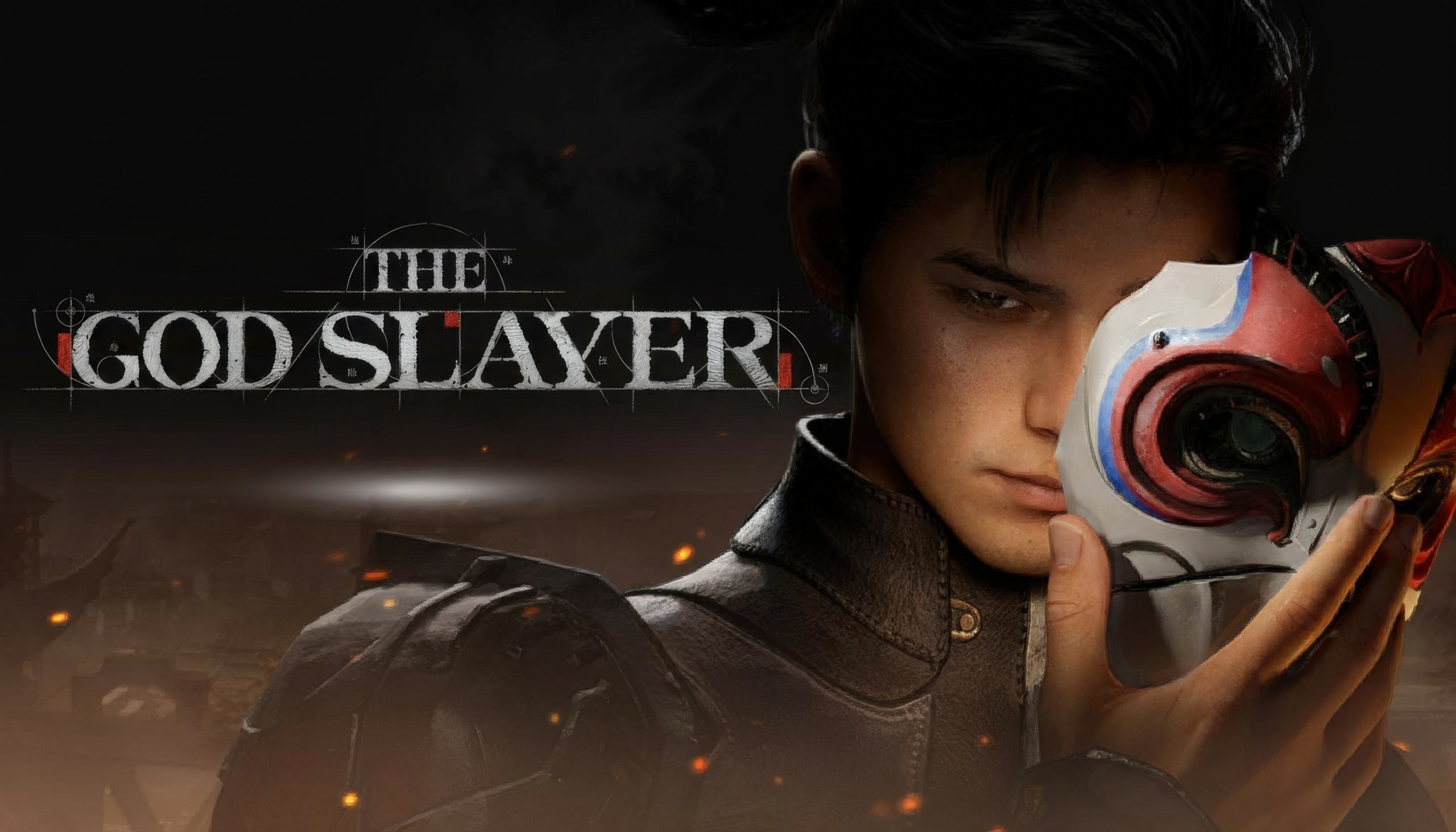
The God Slayer: A Bold Steampunk Action RPG Reinventing Pathea Games’ Legacy
Pathea Games, the studio beloved for its cozy-life simulations in the My Time series, is stepping into dramatically different territory with The God Slayer, an expansive open world steampunk action RPG that blends martial arts combat, systemic gameplay, and a sweeping narrative rooted in mythic cosmology. During an exclusive media session, Business Development Director Yongjin (Aaron) Deng walked us through this ambitious new project, revealing how the studio has spent the past year and a half quietly shaping a world meant to feel both culturally rich and mechanically deep. Now, Pathea believes the moment is right to pull back the curtain.
The game unfolds in Zhou, a sprawling fictional metropolis inspired by Ming-era aesthetics but electrified with industrial steampunk flair. Imagine towering smokestacks, buzzing mechanical workshops, airships drifting through copper-tinted skies, and narrow streets lit by a fusion of lantern light and humming machinery. What makes Zhou particularly striking is its integration of a Qi-based elemental magic system – earth, metal, fire, water, and wood – woven seamlessly into both everyday life and the fabric of combat. This is not a setting where magic and technology compete; instead, they coexist to define a civilization caught between tradition and revolution.
Yet beneath this industrial ascension lies a darker truth. The world was shaped by ancient beings known as the Celestials – immortal entities who created humanity not as children to uplift, but as resources to exploit. Human beings produced Qi, and Qi sustained the Celestials’ eternal existence. For centuries, this parasitic relationship remained hidden, until humans evolved methods of channeling Qi themselves. Combined with the rapid rise of steam-powered engineering, humanity’s empowerment threatened the cosmic hierarchy, prompting a brutal retaliation.
This retaliation arrived in one devastating night: the God Fall. The Celestials struck mercilessly, wiping out the mightiest kingdom and its elite Elemancers. Cities burned, families perished, and any hope of resistance seemed lost. For Cheng, the game’s protagonist, that night became the crucible that shaped his destiny. His family was slaughtered, his life shattered, and his path narrowed toward a single purpose – destroying the Supreme Celestial and dismantling the oppressive divine order that has tormented humanity for ages.
The narrative of The God Slayer stretches across seven major Chapters, each culminating in a signature boss battle meant to test players’ growing mastery of the game’s systems. A typical playthrough is expected to last around 40 hours, though completionists could easily double that figure thanks to the game’s highly systemic sandbox design. While Chapters contain key story milestones, players are free to explore at will, interact with the world’s constantly moving simulation, and tackle missions using their preferred approach.
Pathea is leaning heavily into player agency. Every encounter, quest, and obstacle is designed with multiple possible solutions. Want to charge through the front gates and fight every guard in sight? You can. Prefer to bribe your way past obstacles? That’s valid too. Maybe you’d rather manipulate elemental energies to create noise distractions, reveal hidden paths, or rig explosive chain reactions. The game’s systems even allow for long-term strategic thinking: poisoning enemies before an encounter, setting traps across a district, or altering environmental states to weaken a boss before the battle begins. These layered, interlocking mechanics evoke the spirit of immersive sims while maintaining the kinetic thrill of martial arts RPG combat.
Decisions carry weight beyond combat. If you eliminate a character early, they will remain absent later. Distract a beast with food rather than fight it, and the outcome of a mission subtly shifts. This dynamic, consequence-driven design echoes Pathea’s earlier experiments but evolves them into something far more ambitious.
The combat system itself is a fusion of traditional Chinese martial arts and elemental manipulation. Cheng can wield the four primary elements – fire, water, earth, and metal – to enhance weapons, unleash devastating attacks, or reshape the environment. Fire evaporates water into steam clouds used for concealment; metal fortifies physical strikes; earth alters terrain. Combat is fluid, reactive, and deeply tied to experimentation, rewarding players who think creatively instead of relying solely on brute strength.
As Cheng travels across Zhou, he’ll meet allies, uncover betrayals, inspire oppressed citizens, and slowly unravel the Celestials’ true motives. Pathea aims to deliver a story rich with twists, moral dilemmas, and emotional resonance – far more cinematic and character-driven than anything the studio has produced before. Unreal Engine 5 powers the entire experience, enabling sprawling districts, atmospheric lighting, and large-scale battles that blend spectacle with player freedom.
Though the game has no confirmed launch date, Deng shared that 2027 is a realistic expectation, likely in the latter half of the year. Confirmed platforms include PC, PlayStation 5, and Xbox Series X|S, with Pathea expressing openness to supporting whatever next-generation hardware emerges by the time of release.
If Pathea succeeds in delivering everything it promises – steampunk exploration, martial arts combat, systemic world design, and a layered narrative about rebellion against divine tyranny – The God Slayer may well become one of the genre’s most intriguing new entries.
2 comments
hope the combat feels as good as it sounds, not just another button masher
Your article helped me a lot, is there any more related content? Thanks!