Tesla rarely lets a holiday weekend go by quietly, and this Labor Day proved no exception. The company dropped its long-anticipated Master Plan Part 4, a roadmap that blends its vision for sustainable technology with some eye-catching product teasers. 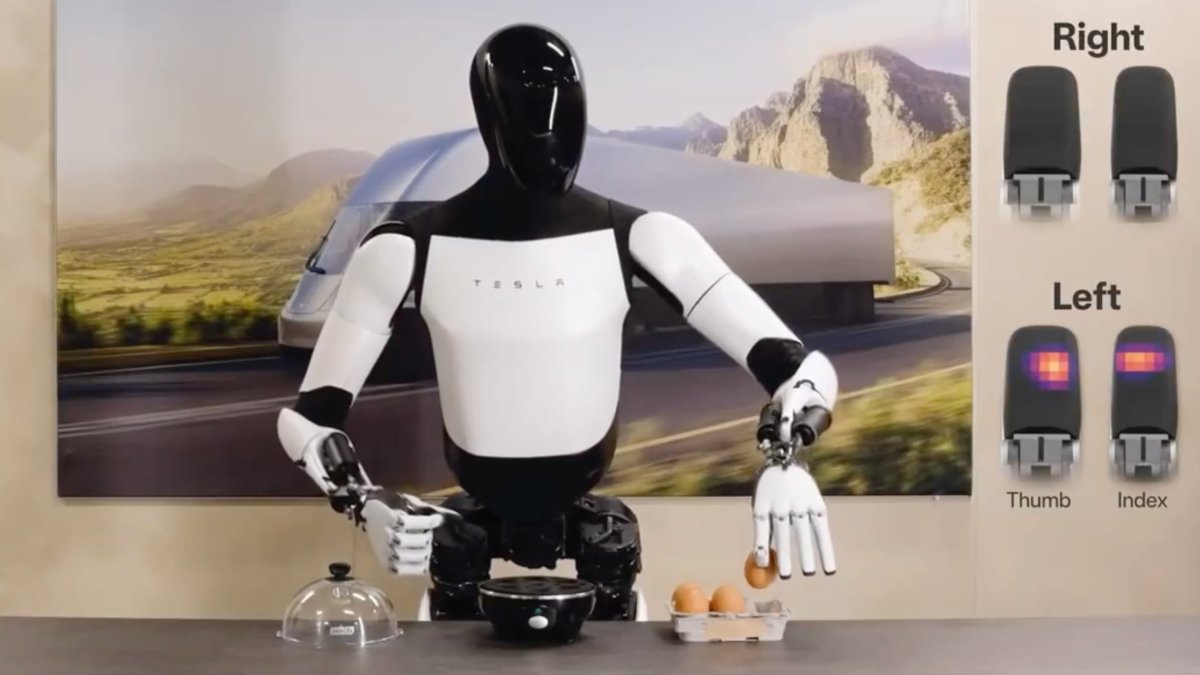
Among the highlights: an appearance of a so-called Cyber SUV in Tesla’s new “Sustainable Abundance” video, plus renewed focus on the company’s humanoid robot, Optimus.
The Cyber SUV’s cameo was subtle – miniature models glimpsed in the background – but enough to set the rumor mill spinning. While Tesla hasn’t officially committed to producing such a model, the mere inclusion suggests executives are gauging public reaction. Industry watchers note this wouldn’t be out of character for Tesla: earlier this year, chatter about a sub-$30,000 hatchback fizzled out when the company instead released a 6-seat Model Y L in China. Teasers, misdirections, and eventual surprises are part of Tesla’s playbook.
Beyond vehicles, Tesla is positioning the Optimus robot as the centerpiece of its future ecosystem. The Master Plan describes it as a paradigm shift: a machine built not just to mimic human actions but to handle monotonous or dangerous tasks, theoretically freeing up human time for creative or fulfilling pursuits. The pitch frames Optimus as a way to redefine labor itself, where routine jobs may be reassigned to autonomous robots. Tesla originally aimed for a 2026 launch, but markets are less confident. On prediction platform Kalshi, contracts currently price only a 40% chance of Optimus arriving before 2027, reflecting skepticism about Tesla’s ability to move from prototype to mass production quickly.
The timeline has become even murkier as Tesla pivots away from its ambitious Dojo supercomputer project. Instead, the company now leans heavily on NVIDIA’s hardware to train its Full Self-Driving (FSD) systems. Optimus itself is expected to rely on Tesla’s upcoming AI5 chips, while Samsung will reportedly supply OLED panels for the robot’s expressive face. Those displays won’t just be cosmetic: they’ll function as a primary interface, allowing Optimus to convey emotions, expressions, and status updates – essential for human-robot interaction.
The debate around Optimus and the Cyber SUV reveals a tension at Tesla’s core: bold visions versus executional reality. Some investors wonder whether the hype surrounding Optimus – Tesla has implied it could one day account for a major slice of the company’s valuation – risks overshadowing its already stretched production goals. Others worry about broader implications, from centralizing robot intelligence to the social consequences of automating vast swaths of work. Pop culture references like I, Robot inevitably creep into discussions, reflecting both fascination and unease.
Still, for all the controversy, Tesla’s announcements continue to command attention. Whether or not the Cyber SUV hits production lines, and whether Optimus arrives in 2026 or slips into 2027, the company’s ability to keep the world speculating underscores its role as one of tech’s most influential storytellers.