IDW Publishing is turning the spotlight back on one of Star Trek’s most quietly revolutionary characters. 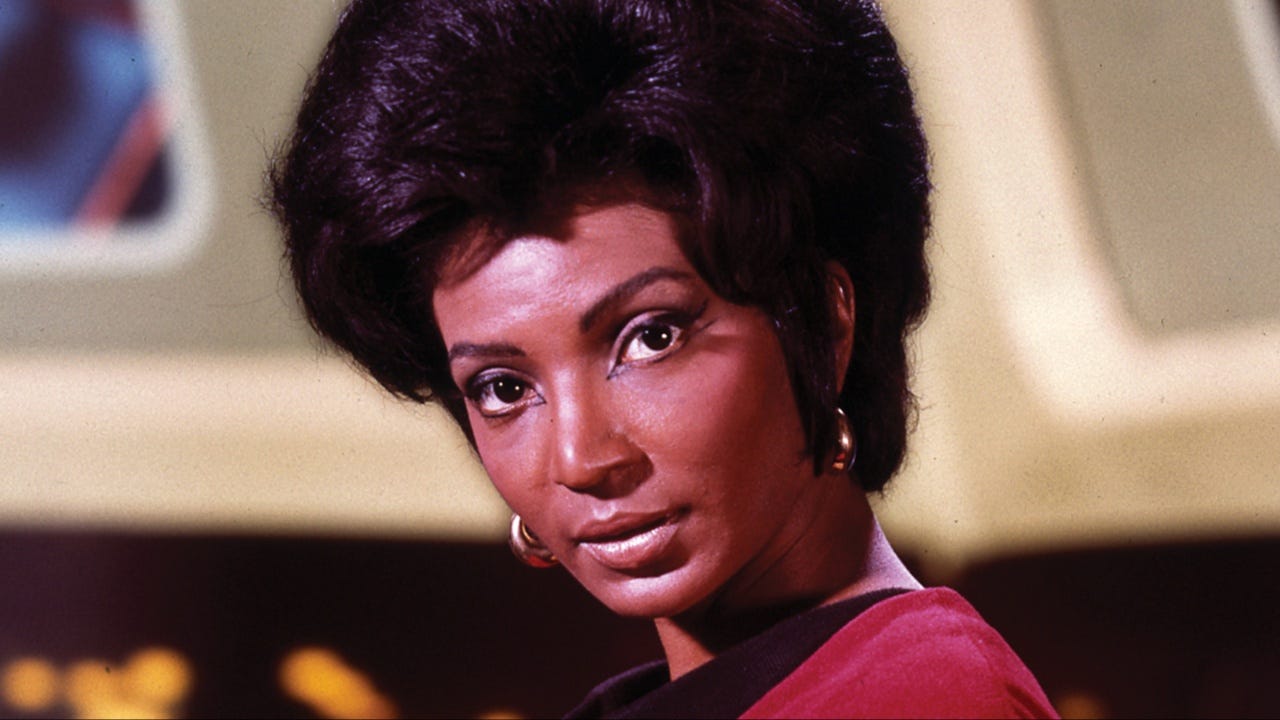
In early 2026, the publisher will release a new one-shot, Star Trek Deviations: Threads of Destiny, a comic that pulls Lieutenant Nyota Uhura to the center of the stage just in time for Black History Month. Instead of treating her as a supporting voice on the Enterprise bridge, this issue reimagines a classic episode and asks a simple question: what happens when Uhura is the one who falls through time and lands in the middle of the Civil Rights Movement?
The comic is part of IDW’s Deviations line, a series that functions as Star Trek’s answer to Marvel’s “What If..?” tales. Each story tweaks a pivotal moment in Trek history and follows the ripple effects. A previous Star Trek Deviations issue explored a universe where Romulans, not Vulcans, made first contact with Earth. Threads of Destiny returns to another foundational moment: the Original Series episode “The City on the Edge of Forever,” but this time it is Uhura, not Kirk or Spock, who is yanked into the past.
In the prime timeline, Uhura is the brilliant communications officer who keeps the Enterprise talking to the galaxy. In this alternate reality, she steps through the Guardian of Forever and finds herself in 1963 America, at the height of the Civil Rights Movement. Instead of negotiating with alien civilizations, she walks into a world of sit-ins, protest marches, and courtroom battles where Black Americans are literally fighting for the right to be seen as human. The series takes her core skill set – language, empathy, cultural translation – and drops it into a period when even basic communication between communities was a radical act.
The one-shot is written by Stephanie Williams, known for her work on titles like Nubia and the Amazons, with art by Greg Maldonado and Anthony Fowler Jr. Williams has already carved out a reputation for centering Black women in genre stories, and Threads of Destiny looks like a natural extension of that focus. Maldonado and Fowler Jr. are tasked with an ambitious visual challenge: blending the cool futurism of the 23rd century Enterprise with the raw, boots-on-the-ground streets of 1963, from crowded demonstrations to intimate moments of quiet resistance. The result promises a visual contrast that keeps reminding readers that history is another kind of alien world.
IDW’s official description frames the book as a dual exploration of communication. In the 23rd century, Uhura travels among the stars to build bridges with alien species, decoding languages and customs that seem utterly strange. In the 20th century, African Americans are doing a different kind of translation work: turning lived pain into speeches, songs, and acts of civil disobedience that force a hostile society to listen. By thrusting Uhura into that era, the story connects her Starfleet duty to an ongoing, real-world fight for equality and insists that her role has always been political, even when the show never said it out loud.
This is especially powerful when you remember Uhura’s legacy outside the page and screen. Nichelle Nichols famously considered leaving the original series until a conversation with Dr. Martin Luther King Jr. changed her mind. He urged her to stay because Uhura was one of the first Black characters on American television treated as an equal alongside white colleagues, not as a servant or a punchline. That moment has become legend among fans, and it is difficult not to read Threads of Destiny as a kind of love letter to that history – a story that finally sends Uhura directly into the era King helped shape.
Fans also remember how sharply Uhura pushed back against stereotypes on screen. One of the most quoted lines from the episode “The Naked Time” comes when an infected, swashbuckling Sulu declares, “I’ll protect you, fair maiden!” and Uhura coolly replies, “Sorry, neither.” It is a tiny exchange, but it underlines how the character quietly rejected both damsel-in-distress clichés and the racist, sexist expectations placed on Black women. A comic that puts that same woman in the middle of 1963’s struggle for civil rights has the potential to explore the intersection of race, gender, and power in ways Star Trek has only hinted at before.
Story-wise, readers can expect Threads of Destiny to play with one of Trek’s favorite questions: how much can a time traveler change? Uhura understands the rules of temporal interference, yet she is a Black woman suddenly dropped into an era where people who look like her are being beaten, jailed, and killed for demanding basic rights. The tension between the Prime Directive and moral responsibility practically writes itself. Does she stand back to preserve the timeline, or does she add her voice to the chorus of activists, even if it risks altering history as her crew knows it?
On a meta level, this one-shot also underlines how far Star Trek comics have come. Where earlier tie-in stories often revolved around starship battles and technobabble, projects like Deviations are increasingly willing to interrogate the franchise’s own legacy. By putting Uhura at the heart of a story explicitly framed around Black History Month, IDW signals that this is not just an adventure in nostalgia but an attempt to re-center the franchise’s most important questions: Who gets to be the hero? Whose history matters? And what does it mean to truly “boldly go” when your own society hasn’t fixed its injustices yet?
Star Trek Deviations: Threads of Destiny is scheduled for release on February 25, 2026, lined up to coincide with Black History Month. The final order cutoff date for retailers is January 19, 2026, so readers who want a physical copy would be wise to let their local comic shop know early. While this is a standalone one-shot, it is clearly positioned as a showcase for Uhura and a gateway for new readers who might know her more from cultural history than from binge-watching the original series.
Meanwhile, the broader Star Trek universe continues to expand beyond the comics page. Writers and directors Jonathan Goldstein and John Francis Daley are reportedly attached to a new Star Trek movie for Paramount Pictures, with early reports suggesting that it will not be directly tied to existing film or TV continuities. Between that film project and IDW’s willingness to remix classic stories like “The City on the Edge of Forever” through new perspectives, it is clear that Star Trek is entering a fresh phase – one where the franchise’s future may depend on how bravely it revisits and reinterprets its past.