SpaceX has announced a landmark agreement with EchoStar worth a staggering $17 billion, a move that cements Elon Musk’s company at the center of the global satellite communications race. Under the terms of the deal, SpaceX will pay $8.5 billion in cash and the rest in stock to acquire EchoStar’s Mobile Satellite Services (MSS) and crucial S-band spectrum. 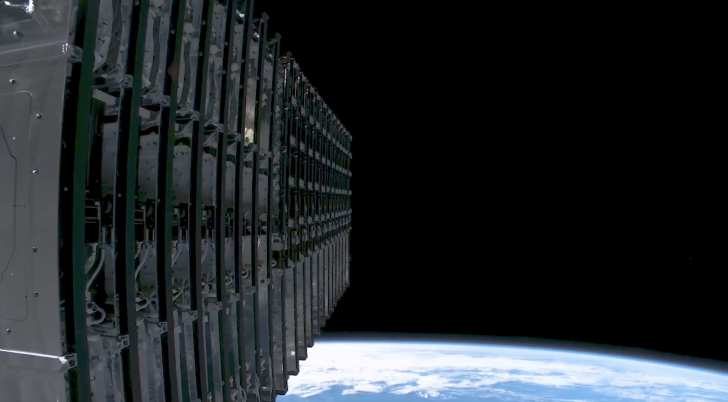
This acquisition is more than just a financial transaction – it’s a calculated play to dominate the direct-to-cell market and erase one of SpaceX’s fiercest competitors in orbit.
For years, EchoStar had stood as a roadblock to SpaceX’s ambitions to deliver satellite-to-phone connectivity. The rivalry escalated when the Federal Communications Commission (FCC) began scrutinizing EchoStar’s use of the 2GHz band, with SpaceX accusing its rival of leaving spectrum idle. Now, by absorbing EchoStar’s assets, SpaceX gains regulatory leverage and removes one of the biggest obstacles standing in its way.
At the heart of this move is Starlink’s transformation. SpaceX has already built a massive satellite internet network, powered by the workhorse Falcon 9 rocket, and started delivering cellular connectivity through its partnership with T-Mobile. The goal: eliminate dead zones worldwide, especially in rural and remote areas where traditional cell towers fall short. With the EchoStar spectrum deal, this dream edges closer to reality.
The real game changer comes with SpaceX’s next-generation direct-to-cell satellites. According to the company, these satellites will deliver twenty times more throughput than earlier models thanks to in-house silicon and advanced phased array antennas. The cumulative effect will be over one hundred times the capacity of the first-generation constellation. In practice, that means users should expect performance close to terrestrial LTE and even 5G, rather than the sluggish satellite internet speeds of the past.
SpaceX’s giant Starship rocket also looms large in this plan. Its recent test flight successfully carried dummy Starlink satellites into orbit, giving the company growing confidence that Starship will soon take over as the primary vehicle for launching these massive new satellites. If successful, this will reduce launch costs, allow for larger payloads, and accelerate the deployment of upgraded hardware at a pace unmatched in the industry.
For EchoStar, the deal is a lifeline. The firm’s financial health had been under a cloud, with doubts over its ability to meet interest obligations. As part of the agreement, SpaceX will also pay $2 billion in interest payments tied to EchoStar’s debt, stabilizing its outlook. Investors reacted swiftly, with EchoStar shares soaring nearly 24% in premarket trading, building on an already dramatic 196% year-to-date rally fueled by its earlier $23 billion spectrum arrangement with AT&T.
Gwynne Shotwell, SpaceX’s President and COO, summed up the mission simply: the end of dead zones on Earth. That vision is bold, and skeptics point out that the swelling number of satellites raises concerns about orbital debris and long-term sustainability. While the technological promise is undeniable, the challenge of responsibly managing the orbital environment remains unresolved. For now, though, the EchoStar acquisition signals a new era – one where Starlink moves from being a pioneering service into the backbone of a truly global communications network.
2 comments
starship carrying real starlinks soon gonna be wild to watch
imagine paying 17 billion just to kill off a competitor… musk playing chess while others play checkers lol