South Park has once again stepped directly into the heart of America’s most heated political and cultural battles, this time using its trademark satire to spotlight the controversies surrounding Federal Communications Commission (FCC) chair Brendan Carr. The latest episode, titled Conflict of Interest, aired on Comedy Central after a dramatic and highly scrutinized delay. The episode arrived with extra attention, not only because of its biting content but also because it was the show’s first new installment since the shocking assassination of right-wing figure Charlie Kirk earlier this month.
That delay set the rumor mill spinning. 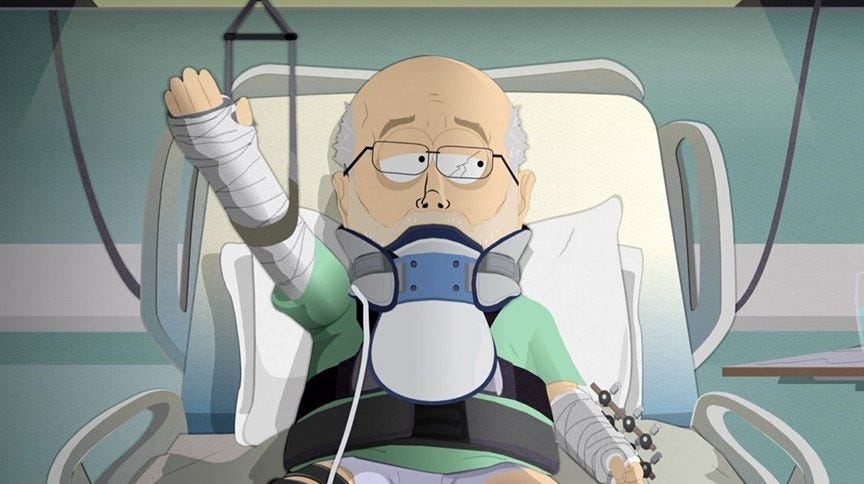
Many speculated that Comedy Central was spooked by possible backlash, especially since the scrapped rerun was an episode where Eric Cartman parodied Charlie Kirk in grotesque, satirical fashion, even inventing a ‘Charlie Kirk Award for Young Masterdebaters.’ Trey Parker and Matt Stone, the minds behind the series, claimed responsibility, saying the holdup was theirs alone. But critics and fans alike couldn’t help but wonder if the network was anxious about airing sharp commentary so close to a politically charged assassination.
South Park’s production process has always been chaotic and topical. Episodes are famously written and animated within a week, giving the show its razor-sharp immediacy. But for this season, the creators switched to a bi-weekly schedule, giving themselves more breathing room. While that allows for deeper polish, it also heightens expectations – and when an episode misses its mark on time, conspiracy theories are quick to follow.
Enter Brendan Carr: A Satirical Target
The new episode spares no punches, placing FCC chair Brendan Carr at the center of a bizarre plot involving Trump, Satan, and a baby whose existence threatens the political order. In the storyline, Trump tries repeatedly to eliminate the unborn child he shares with Satan, setting traps that ultimately backfire on Carr instead. Carr lands in the hospital after exposure to cat feces leaves him battling toxoplasmosis, and doctors warn that if the parasite reaches his brain, he may lose his ‘freedom of speech.’ The gag is obvious: South Park is lampooning Carr’s controversial role in recent free speech debates.
The satire draws directly from real events. Earlier this month, talk show host Jimmy Kimmel was suspended by ABC after making inflammatory remarks about Kirk’s assassination and mocking Donald Trump’s reaction. Kimmel’s biting commentary – describing Trump as mourning ‘like a four-year-old who lost a goldfish’ – enraged conservatives. Carr blasted Kimmel’s conduct as ‘the sickest possible’ and hinted that networks like ABC would face FCC scrutiny unless they acted. Shortly after, ABC suspended Jimmy Kimmel Live!, a move critics interpreted as blatant government pressure against dissenting voices.
Free Speech and Political Pressure
This controversy did not occur in isolation. President Trump has repeatedly complained that mainstream media coverage is stacked against him, suggesting that networks hostile to his administration should lose their broadcast licenses. The idea of weaponizing FCC oversight to silence criticism struck many as dangerously authoritarian, raising alarms among journalists, legal experts, and advocates of free expression. Carr insisted his words were misinterpreted and denied that he influenced ABC’s decision. Nonetheless, the optics made the FCC appear less like an impartial regulator and more like a political enforcer.
South Park’s version exaggerates for comic effect, but its satire lands because the underlying issues are real. In the episode, Carr’s hospital prognosis becomes a metaphor for a nation where speech itself seems precarious. The moment the doctor warns that his ‘freedom of speech’ is at risk, the show skewers the absurdity of bureaucrats and politicians claiming to defend liberties while undermining them in practice.
JD Vance and Political Intrigue
The episode also brings in Senator JD Vance, portraying him as eager to see Trump and Satan’s child eliminated so he can position himself as Trump’s rightful successor. Vance threatens Carr directly, telling him ominously, ‘We can do this the easy way, or we can do it the hard way.’ The line is more than just dark comedy; it echoes Carr’s real-world warning to networks that they could comply voluntarily or face FCC consequences. By giving Vance those words, the show highlights the growing perception that politics and regulation have fused into intimidation tactics.
Kimmel’s Triumphant Return
Meanwhile, in real life, Jimmy Kimmel has already returned to the airwaves. His comeback episode featured an emotional monologue condemning threats to free speech and warning of the dangers of chilling satire and commentary. To drive the point home, Robert De Niro appeared in a parody skit as the FCC boss, channeling his gangster roles with a volcanic outburst. When Kimmel accused the FCC of mob-like behavior, De Niro’s furious retort – “I am the FCC” – summed up the entire absurd situation with both menace and humor.
Why South Park Still Matters
For nearly three decades, South Park has thrived by dragging sacred cows into the mud, from religious figures to celebrity culture to political icons. The show’s latest season has been particularly brutal in its lampooning of Donald Trump, drawing some of the series’ highest ratings in years. The choice to expand production cycles reflects the creators’ commitment to keeping the series both biting and relevant, even if it means fewer episodes. After this latest installment, South Park will pause for two weeks before resuming its bi-weekly run, a schedule locked in until mid-December.
What makes this episode significant isn’t just the laughs but the sharp reminder that satire remains one of the last frontiers where truth can be spoken without filters. By placing Brendan Carr in such a ridiculous and humiliating plotline, the show underscores how fragile freedom of speech feels in a climate where regulators and politicians appear eager to punish dissent. Whether viewers laugh, cringe, or fume, the message is hard to miss: in today’s America, free speech may survive only if it’s defended as fiercely as South Park defends its own right to offend.
And so, as the dust settles from both a real-life tragedy and a fictionalized farce, South Park proves once again that comedy can sometimes hit harder than news headlines. By targeting Carr, Trump, and Vance in a single surreal narrative, the show forces viewers to ask the uncomfortable question: when does regulation become censorship, and who gets to decide when speech goes too far?
2 comments
Carr crying about free speech while silencing ppl is peak irony
south park went too far again? nah, perfect timing