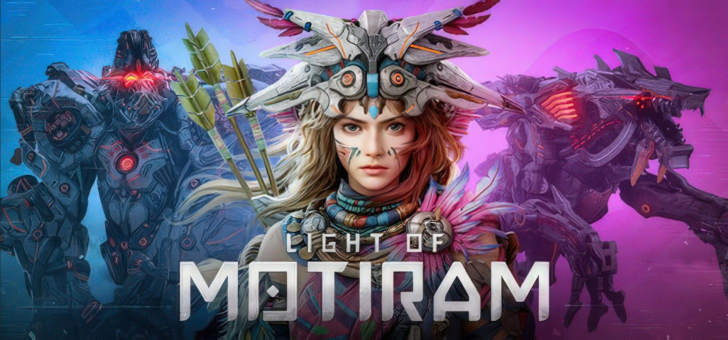
Sony and Tencent’s legal fight over Light of Motiram has shifted into a long, uneasy pause, one that keeps the game off the marketing grid while both sides prepare for a decisive day in a California courtroom.
When Tencent first showed Light of Motiram, the internet reaction was instant. Comparisons to Sony’s Horizon series flooded timelines, with players pointing to familiar robot creatures, tribal sci fi aesthetics, and a red haired hunter that looked, to many, like Aloy’s cousin. What might have been dismissed as a heavily inspired homage quickly turned into accusations of a near one to one copy.
Sony Interactive Entertainment decided not to treat it as just another lookalike. The company filed a lawsuit accusing Tencent’s project of being a slavish clone of Horizon, arguing that key visual ideas, worldbuilding elements, and character designs went beyond influence and straight into imitation. In a market full of open world action games, this case immediately stood out as a direct challenge over how far a publisher can lean on an established hit without a licence.
The latest court filing shows that the dispute has now entered a slower but strategically important phase. Sony and the Tencent related entities have jointly asked the court in the Northern District of California to extend the current briefing schedule and to hear two key issues on the same day: Tencent’s attempt to have the case thrown out, and Sony’s push for a preliminary injunction that would formally restrict what Tencent can do with Light of Motiram while the lawsuit is ongoing.
As part of that arrangement, Tencent has accepted a series of limits that effectively put the game on ice. There will be no new promotion, no fresh trailers, no public tests or betas for Light of Motiram during the injunction phase. The parties have also agreed that the extended timetable cannot later be used as an argument that Sony dragged its feet in seeking emergency relief, closing off a common procedural line of attack before it can even be raised.
The filing goes further on timing. Tencent has committed that the release of Light of Motiram will not be moved up to any date before the currently announced window of the fourth quarter of 2027. That removes the possibility of a surprise early launch designed to build an audience first and argue in court later. At the same time, Tencent will not seek expedited discovery tied specifically to Sony’s injunction request, reducing the risk that the early phase of the case explodes into a mini trial filled with urgent document demands and depositions.
Everything now funnels toward a single date. On 29 January 2026, the court is scheduled to hear both Tencent’s motion to dismiss the lawsuit and Sony’s motion for a preliminary injunction. In the run up, Tencent will file its reply to Sony’s injunction papers in mid December 2025, and Sony will answer that reply in early January 2026. By aligning these milestones, the judge gets a clearer view of the whole dispute at once instead of juggling fragmented arguments across multiple hearings.
Underneath the dry legal language, there is a clear signal that neither side is eager to spend years locked in open warfare. The filing notes that Sony and Tencent have already engaged in discussions aimed at resolving the dispute. That does not guarantee a settlement, but it strongly suggests that options like licensing, redesigning certain content, financial compensation, or some mix of all three are being explored behind closed doors while the public narrative remains cautious and controlled.
Among players, the case has reopened long running debates about originality in games. Some fans shrug and say they just want more big budget open world adventures; to them, a title that feels like Horizon but with new systems or co op could be a plus rather than a problem. One blunt comment that circulated online summed up that attitude in a very unfiltered way, saying they did not care how closely the heroine resembled Aloy as long as she looked attractive and the game was fun, because, in their words, sex sells. Others take a much harder line, arguing that if a project really began life as a pitch for an official Horizon spin off and then reappeared with a new name, that crosses an ethical and legal boundary.
For Sony, the stakes go well beyond hurt feelings over a flagship series. Horizon has become one of PlayStation’s defining brands, pushed across multiple games, PC releases, and an upcoming screen adaptation. Allowing what it regards as a close visual and conceptual match to launch from a global rival like Tencent could undercut that brand and weaken Sony’s position the next time it wants to defend its intellectual property, whether in a courtroom or in negotiations.
Tencent faces its own risks. The company has invested heavily in large scale games aimed at worldwide audiences, and Light of Motiram clearly targets the same broad sci fi frontier fantasy that helped Horizon stand out. Agreeing to freeze promotion and to live with a distant not before release window is a serious sacrifice in an industry where constant visibility is often as important as the product itself. The fact that Tencent signed off on those conditions suggests that it either believes strongly in its legal position, or that it sees a controlled pause and structured talks now as better than a chaotic fight later.
Until the January 2026 hearing arrives, very little will visibly change for players. No new trailers will appear, no hands on tests will leak impressions, and Light of Motiram will remain a game that everyone has an opinion about but almost nobody has actually played. Whether it eventually emerges as a legally cleared Horizon like, is reshaped into something more distinct, or quietly disappears into settlement paperwork will depend on what happens in that California courtroom.
Whatever the outcome, this clash between Sony and Tencent is likely to become a reference point the next time the industry argues about where influence ends and copying begins. As development budgets climb and publishers chase familiar formulas, that line keeps getting thinner, and cases like this one will help decide how much room creative teams really have when they build the next big game that looks just a little too familiar.
2 comments
If the game actually plays well I don’t mind a ‘Horizon but co-op’ vibe, but if they really pitched it to Sony first and then re-skinned it, that’s shady af
Q4 2027 at the earliest is nuts. By the time this finally drops we’ll all be on the next big thing, hype’s gonna be long gone