In November 2024, Tencent unveiled Light of Motiram, a massively multiplayer online (MMO) title that immediately drew criticism – from us and a broad swath of the gaming community – for appearing to be a near-mirror of Sony’s beloved Horizon series. The resemblance was so striking that when Sony formally sued Tencent, labeling it a “slavish clone,” hardly anyone was surprised. What unfolded next has become a legal and PR spectacle worth watching closely.
After the lawsuit was filed, Tencent quietly made tactical changes to its Steam storefront: removing or altering screenshots, rewriting descriptions to be more generic, and generally distancing the game from overt visual connections to Horizon. 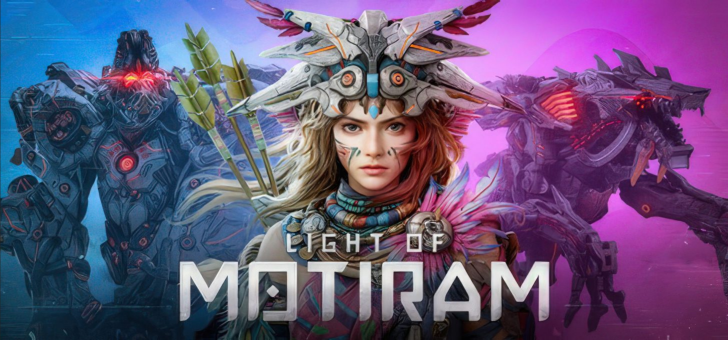
Those moves, however, were clearly reactive. In response, Tencent filed a motion to dismiss Sony’s suit – arguing among other things that Guerrilla Games (the maker of Horizon) had conceded Horizon itself wasn’t wholly original. That defense clearly irked Sony.
The Latest Back-and-Forth: Sony Hits Back
In a new filing first reported by The Game Post, Sony tore into Tencent’s dismissal attempt. The filing calls Tencent’s arguments “nonsense,” insisting that the damage Sony alleges is both real and ongoing – even if Tencent delays Light of Motiram’s release until 2027 (as the defense suggests). Sony writes,
“Tencent remarkably contends SIE’s claims are unripe because – despite having announced and continuously promoted its game for months – Tencent (purportedly) delayed Light of Motiram’s release until 2027 after SIE sued. This is nonsense. The damage is done, and it continues.”
Sony further accuses Tencent of continuing to market what it deems an infringing product, even after public outcry over the similarities. “Tencent remained undeterred,” Sony argues, “promoting its infringing game over SIE’s objection, refusing responsibility for its conduct.”
Blame the Shell Game
Sony draws attention to Tencent’s efforts to shield itself from legal exposure by shifting responsibility among related entities. The plaintiff contends that the real target should be Tencent Holdings (the parent company), not just the subsidiaries Polaris Quest and Aurora Studios (which handle development and publishing). Sony’s filing bluntly states:
“After SIE was forced to sue, Tencent attempted to avoid liability by playing a shell game with its brands and entities… trying to shield Defendants it owns and/or controls from service of process and now seeks to escape jurisdiction over the parent entity, Tencent Holdings.”
In Sony’s view, Tencent Holdings is fully immersed in the game business: it publicly states it owns Aurora Studios, reports all gaming revenue and debt on its consolidated financials, and promotes games under the “Tencent” name without making fine legal distinctions. Senior executives, the filing notes, include individuals overseeing international publishing of Tencent Games – further supporting the claim that Holdings is ultimately responsible.
Trademark Angles, Aloy Doppelgängers, and Public Outcry
Beyond copyright claims, Sony raises a bold allegation: trademark infringement. The red-haired heroine of Horizon, Aloy, has become an iconic symbol associated with PlayStation and Sony. According to Sony, Tencent’s own red-headed “lookalike” character in Light of Motiram is so overtly derivative that many in the media and fan community noted the striking resemblance. In its court filing, Sony cites statements like:
“If someone told me this is a spin-off of [Horizon], I would easily believe them.”
The complaint argues that merely changing character or asset names does not shield Tencent from liability when the design, behavior, and branding are transparently derivative.
What Sony Wants: Discovery and a Courtroom Fight
Sony’s current objective is to beat Tencent’s motion to dismiss and move forward into the discovery phase. That would allow Sony’s legal team to subpoena internal documents, design documents, internal correspondence, and versions of the game’s development. The aim is to uncover a paper trail proving Tencent knowingly leveraged Horizon’s structure, systems, and art to create a knock-off under a new name.
Regardless of how the court rules on motions, the case could become a bellwether for future copyright and trademark disputes in the video game space. Will courts accept broad similarities as actionable copying, or will “inspiration” continue to remain a legally fuzzy defense? The implications stretch far beyond this lawsuit.
Wider Context: Litigation in Games in 2025
This showdown between Sony and Tencent is not the only legal firestorm in gaming. In parallel, the industry is watching the ongoing battle between Krafton (developer of PUBG) and the cofounders of Unknown Worlds (makers of Subnautica and Subnautica 2). These lawsuits shed light on intellectual property, ownership, and creative borrowing in an era where tech giants and studios aggressively protect IP. We’ll keep tracking both. Meanwhile, here’s what commentators and gamers are saying:
“Lets hope CHINA gets a damper and they lose this Case.We all know that they stole it and were intending to make a Horizon Game…”
“At worst scenario, the game will be pulled from PS. But it’ll remain on PC via Epic store”
“I don’t see anything illegal about this. They didn’t use any stolen assets. Sony is pathetic for this one. ‘Oh no you stole our idea’. It’s a video game, so get over it.”
“We’ve long established game development shouldn’t copyright or patent ideas. Otherwise your VERY OWN GAMES, Sony, have been stealing all over the place from creations that came before yours.”
“Or it gets blocked outside China, worldwide and Tencent/the CCP gotta pay some money to SONY, 250M seems fairish… Though 500M seems fairer.”
“It’s very obviously a knock-off of Horizon Zero Dawn, but I’m not entirely sure what’s illegal. They didn’t use textures or models (as far as I know). It’s legal to make something heavily inspired. In the ’90s every FPS was called a ‘Doom clone’.”
These reactions capture both public passion and the murky line gamers feel exists between homage, inspiration, and outright copying.
Conclusion: Stakes, Risks, and What to Watch
The Sony vs. Tencent affair will test how the law handles derivative works in interactive media. If Sony prevails, it may chill nearly identical “inspired” titles. But if Tencent succeeds in its dismissal or defense, it could reinforce a permissive standard: that only verbatim copying is actionable, not resemblance or structure. For now, we’ll be watching for key court decisions, internal documents becoming public, and how other studios respond.
Stay tuned as this drama plays out – and don’t miss our coverage of the Krafton vs. Unknown Worlds battle too.
2 comments
It’s very obviously a knock-off of Horizon Zero Dawn, but I’m not entirely sure what’s illegal. They didn’t use textures or models (as far as I know). It’s legal to make something heavily inspired. In the ’90s every FPS was called a ‘Doom clone’
Or it gets blocked outside China, worldwide and Tencent/the CCP gotta pay some money to SONY, 250M seems fairish… Though 500M seems fairer