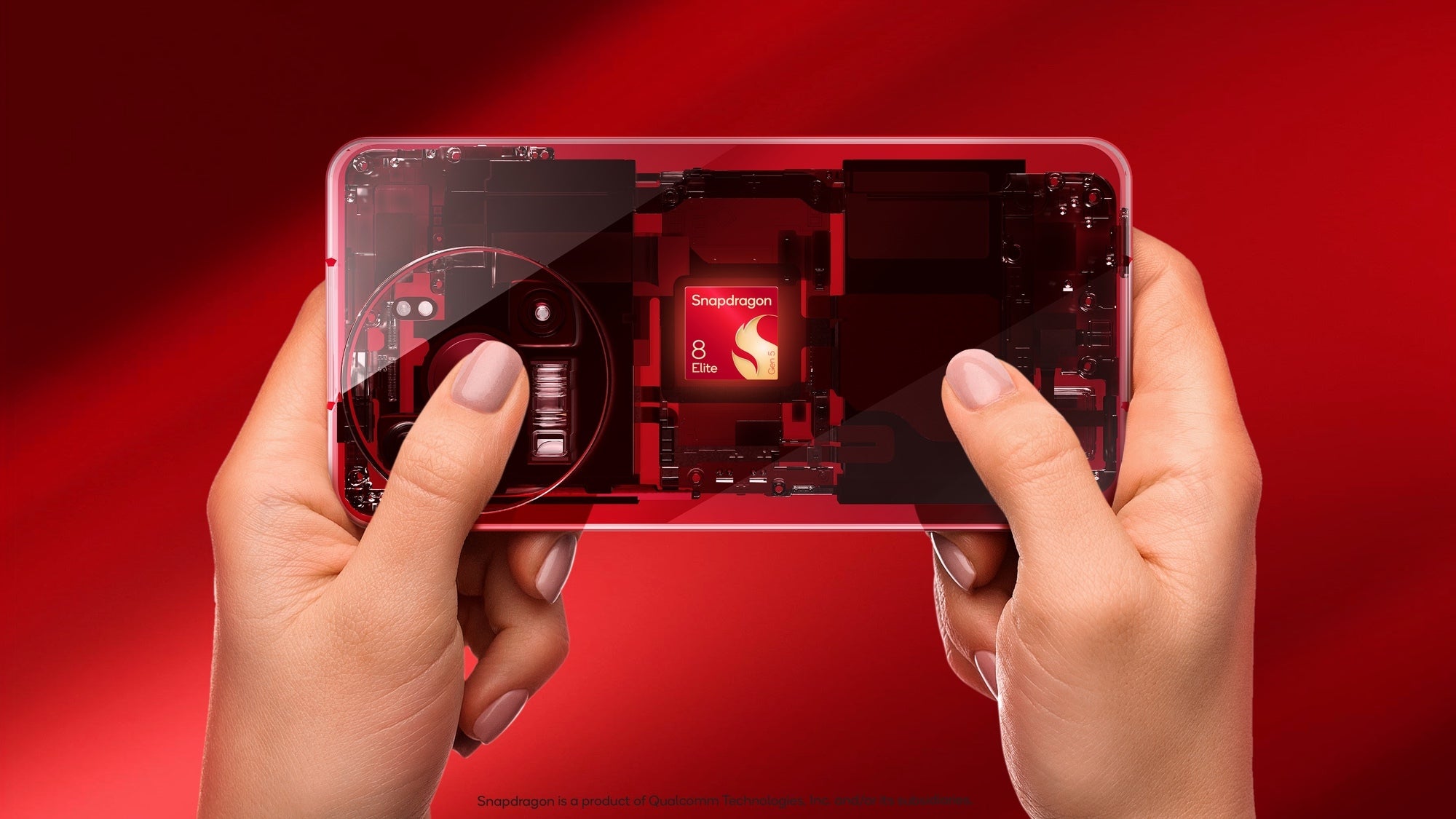
Snapdragon 8 Elite Gen 5: Blistering Speed Meets the Brick Wall of Thermals
Another year, another chart-topping flagship chip – and another reminder that physics doesn’t care about launch slides. Qualcomm’s Snapdragon 8 Elite Gen 5 shows frightening peak numbers, the kind that dominate headlines and reset leaderboards. But the story that matters in your hand after five, ten, or twenty minutes of heavy use isn’t the first explosive burst; it’s what survives once the heat shows up. In 2025, sustained performance – not a single benchmark run – is the real battleground.
Lab reality: two phones, two thermals, two very different stories
We first put the Snapdragon 8 Elite Gen 5 through its paces inside the RedMagic 11 Pro, a phone that treats cooling like a mission. It pairs a massive vapor chamber with a liquid-cooling loop that uses a nano ceramic pump, and – crucially – an active fan spinning at around 24,000 RPM. With that hardware, 3DMark’s Wildlife Extreme Stress Test told a rare, happy tale: roughly 80% stability across twenty loops. In plain English, the phone could flex its peak muscles and keep most of that strength once the heat built up. It even beat Apple’s A19 Pro in the iPhone 17 Pro Max across most tests, surrendering only the Geekbench 6 single-core run.
Then came a far more representative device: the Nubia Z80 Ultra. No spinning fan. No supersized vapor chamber. No liquid loop. Just conventional passive cooling in a thin, premium chassis – the sort of setup most flagships still ship with. Here the same Snapdragon 8 Elite Gen 5 ran hot. Internal temps crossed 50°C, the frame became uncomfortable, and performance fell off a cliff. By the end of the stress test, output had dropped by more than 50%. The numbers are blunt: a lowest loop score of 3064 points. For context, the Honor Magic V5 – an ultra-thin foldable using the previous-gen Snapdragon 8 Elite – managed 4443 points. Even the Xiaomi 14 Ultra on the older Snapdragon 8 Gen 3 posted a 4018 low score. When the heat sticks around, yesterday’s silicon in a well-balanced body often beats today’s chip in a thin, passively cooled shell.
Why your phone feels fast, then suddenly… doesn’t
Chip progress gives us higher peak clocks and bigger GPUs – but also higher thermal design power. A smartphone is a sealed slab with millimeters to spare; dumping and spreading heat quickly enough is brutally hard. After a short burst, the system hits thermal limits, and the governor throttles voltage and frequency to keep the phone safe. That “throttle spiral” can turn a monster SoC into a mid-tier performer within minutes, especially in thin, fanless designs.
Cooling architecture is now as important as the chip itself. Vapor chambers, graphite layers, high-conductivity frames, and (on gaming phones) micro-fans can delay or soften throttling. But software policy matters, too: Android’s thermal APIs, vendor governors, and per-app profiles decide how quickly the hammer drops. It’s why two phones with the same chip can feel like they came from different planets after ten minutes of Genshin or a 4K/60 video export.
Apple, Samsung, and the new honesty about “sustained”
Even the big three can’t ignore it anymore. Apple added a vapor chamber to the iPhone 17 Pro family and – unusually – talked about sustained performance on stage. On the Android side, our deep dives already showed the Galaxy S25 Ultra struggling, with roughly 46% stability in 3DMark’s stress loops. Looking ahead, US variants of the Galaxy S26 series are expected to use the Snapdragon 8 Elite Gen 5 with the familiar “For Galaxy” tuning – typically higher clocks for prettier peak scores, and, inevitably, more heat to manage. We don’t yet know Samsung’s exact thermal hardware for S26, but we can be confident about this: there won’t be fans or server-grade coolant inside. If the cooling stack hasn’t stepped up, “For Galaxy” risks becoming “Too Hot for Galaxy.”
The comment section had it right: stop worshiping peak scores
Readers keep asking a blunt question: Do we really need this much SoC? For ordinary use – social, browsing, camera, maps – modern mid-to-high silicon is already beyond smooth. The chase for thinner phones collides head-on with the chase for peak performance, and physics sets the terms. As one reader put it, we’re fueling the problem by buying based on meaningless one-shot benchmarks. That demand makes OEMs chase peak charts, which makes chip vendors push clocks, which makes heat the default story. The cycle continues until we reward different metrics.
So let’s reward them. Ask for sustained metrics, not just peak. Celebrate devices that deliver 20–30 minute GPU loops with high stability, not the ones that win a single run by torching their thermal budget. A great phone today should promise the highest stable frame rate per watt you’ll actually feel in a long game or a series of edits – not just a record-breaking first sprint.
How to buy smart in the thermals era
- Check stress tests, not just peaks: Look at stability percentages and lowest-loop scores from long-form runs like 3DMark Wildlife Extreme Stress. They predict real-world feel.
- Cooling counts as a feature: Vapor chamber size, heat spreader materials, and, on gaming models, active fans, are as consequential as the SoC brand.
- Mind the tuning: Vendor-specific “performance” bins (e.g., “For Galaxy”) raise clocks and heat. Great if the chassis can carry it; bad if it can’t.
- Software levers help: Performance modes, FPS caps, and adaptive resolution keep frames steadier and temperatures saner.
Practical tips to tame the heat you already own
- Use the phone’s balanced or sustained gaming mode rather than the max setting.
- Cap frame rate at 45/60 FPS in titles that allow it; fewer thermal spikes, smoother averages.
- Pop the case off for long sessions; many cases trap heat.
- If you game a lot, consider a clip-on fan. It’s not pretty, but it works.
- Keep the phone out of direct sun; ambient temps shift throttle thresholds dramatically.
The bottom line
The Snapdragon 8 Elite Gen 5 proves you can build breathtaking peak speed – and the RedMagic 11 Pro proves you can cool it well enough to keep most of that speed. But the Nubia Z80 Ultra proves the other half: without serious thermal design, the same chip can limp through sustained workloads, even trailing older generations. The lesson is bigger than one SoC. Flagships have entered the thermals era, where the winning formula is silicon plus cooling plus smart software policy.
If the Galaxy S26 line leans on higher clocks again, Samsung will need more than marketing to keep temperatures in check. And if the rest of us want phones that feel fast all the time, not just in the first two minutes, we should stop treating peak benchmarks like gospel and start demanding proof of stamina. Because speed you can’t sustain isn’t speed – it’s a party trick.
1 comment
RedMagic proves cooling matters. Nubia felt like a hand warmer after 10 mins, yikes