For years Samsung has reminded us that the best camera is the one that never leaves our side, quietly waiting in a pocket or bag. Each new Galaxy generation has arrived with bigger sensors, more lenses and increasingly clever software, nudging us to document everything from our morning coffee to late night taxi rides. Now, with Galaxy AI built deeply into its latest phones, Samsung is taking a surprisingly modest stance: maybe, just maybe, we should actually be taking fewer photos.
Think about how most of us behave the moment something interesting happens. 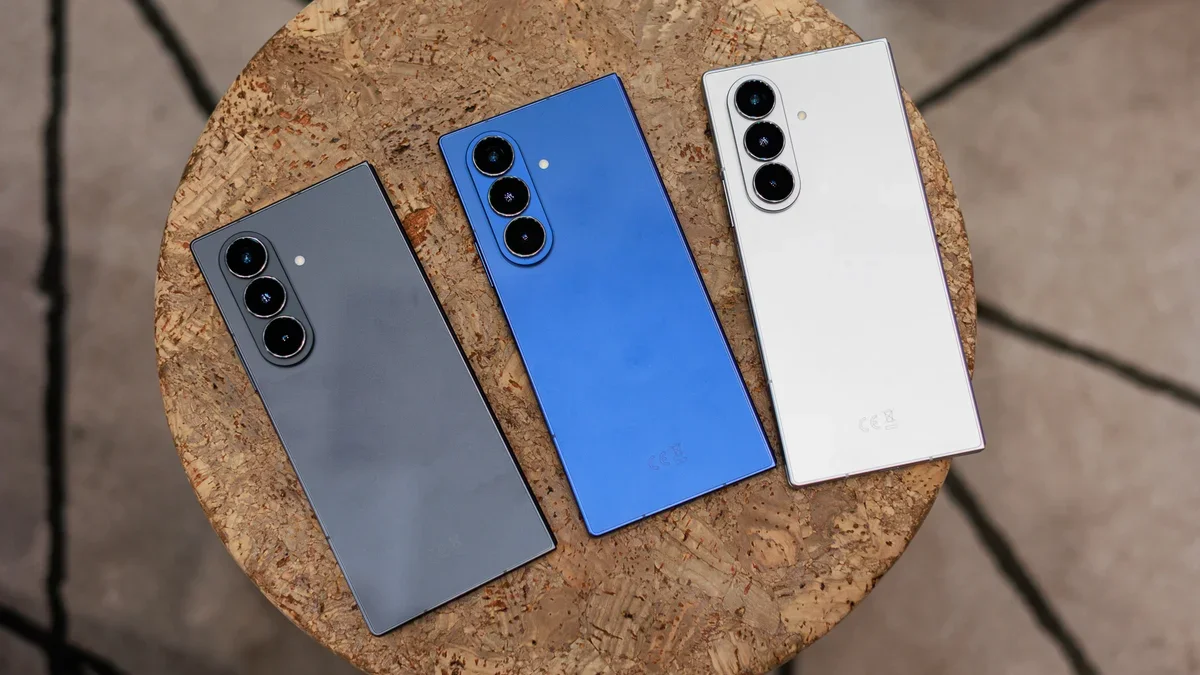
We walk into a birthday party, a concert, a holiday market or a weekend city break and instead of pausing to enjoy it, we pull out the phone and go into machine gun mode. Dozens, sometimes hundreds of almost identical frames follow, each one a tiny variation in angle, expression or lighting. The result is a camera roll that is overflowing and impossible to curate, and a memory of the event that is split between the real moment and the glowing rectangle in our hand.
That tension between capturing life and genuinely living it is exactly what Samsung is addressing with its new One Shot Challenge, an Instagram campaign built around a disarmingly simple idea. Instead of hammering the shutter button and hoping that somewhere in the chaos there is one good photo, Samsung wants Galaxy owners to slow down, compose a single intentional shot and then let Galaxy AI handle the polishing afterwards.
Beginning on 25 November, the One Shot Challenge encourages Galaxy users to share a single, carefully chosen image rather than a ten frame carousel. There are no glittering prizes, complicated entry rules or influencer-only tiers. The campaign itself is effectively a massive live demo of Samsung’s newest AI features, with a spotlight on Generative Edit as found on the Galaxy Z Fold 7. The message is clear and almost old fashioned: trust your own eye in the moment, then trust the phone to quietly take care of the technical clean up later.
To prove that this stripped-back approach can still produce gallery worthy results, Samsung has recruited acclaimed photographer Tom Craig. If you have flicked through magazines such as Esquire, Vanity Fair or Vogue, you have likely seen his atmospheric portraits and cinematic travel shots. For this campaign, Craig headed to London’s famously hectic Piccadilly Circus with only a Galaxy Z Fold 7 and the promise that he would obey the one shot rule: no bursts, no safety frames, no second chance.
He picked his subject, watched the shifting light, waited for the right expression and pressed the shutter once. The raw result looked exactly like Piccadilly Circus on any busy day: buses and cars creeping through the background, crowds spilling across the pavements, visual clutter in every corner of the frame. It was real, energetic and messy. Then Craig opened Generative Edit on the phone and began to refine.
With just a few taps, the traffic that had been clogging the background faded away. Distracting shapes and harsh blocks of colour were intelligently removed, leaving a calmer, more cinematic composition that pulls the viewer’s focus straight to the person in the foreground. What would normally demand painstaking planning, a perfectly empty street or dozens of repeated takes was distilled into one decisive shutter press followed by a short AI powered clean up session.
In Samsung’s material for the campaign, Craig underlines a truth that many photographers know instinctively: so much of great photography happens in a tiny sliver of time. A particular look, a fleeting alignment of light and shadow, a background that falls into place for a heartbeat and then disappears. Smartphones give us the power to catch those fragile moments anywhere, yet we often sabotage ourselves by obsessively chasing a flawless shot instead of accepting a good one. The spirit of the One Shot Challenge is to free people to capture the memory once, then return to enjoying it, reassured by the knowledge that Generative Edit can quietly tidy away the small distractions later on.
Samsung is backing that philosophy with fresh research from across Europe, and the headline findings will feel uncomfortably familiar to anyone who has watched an entire gig through their own camera app. Many respondents admit that taking photos can pull them out of the very experiences they are trying to savour. They feel pressure to document everything in a perfectly framed, share ready way for friends, family and followers, even though a large part of them simply wants to be more present and less anxious about missing the perfect angle.
The same research also shines a light on the everyday frustrations that keep people tapping the shutter again and again. Last second photobombers stepping into frame, strangers in clashing outfits, bins and road signs ruining an otherwise dreamy street, harsh shadows carving odd shapes across faces – all of these common annoyances push users to keep shooting in search of that elusive, perfectly clean frame. Ironically, most people rarely open the powerful editing tools bundled with their phones, even though those tools could solve many of these issues in seconds.
This is the gap Samsung hopes Galaxy AI will quietly fill. Generative Edit is designed to remove distractions, rebuild missing details and gently reshape a scene so that it comes closer to the photographer’s intention. If someone in a neon tracksuit wanders through the background of your portrait, you can soften, move or replace them. If a bright orange bin, awkward retail sign or stray cable ruins the mood of your travel snapshot, you can make it vanish rather than waiting for an empty street that never arrives. The technology bends reality just enough to match what you felt, not just what the sensor recorded.
Of course, the moment generative tools enter the frame, an old question returns: when does retouching cross the line into something that no longer feels honest? Long before AI, photographers argued about darkroom tricks, heavy airbrushing, skin smoothing and saturation boosting filters. Generative features push the debate further, because they do not merely enhance what already exists; they can remove or invent elements entirely. Purists will argue that erasing London traffic turns the image into a fantasy that never truly existed. Others will counter that photography has always been a blend of reality and interpretation, and that tools themselves are neutral – it is the intention and context that carry the ethical weight.
Viewed this way, AI features on the Galaxy Z Fold 7 become a powerful but subjective brush. If you are documenting a news event or a historic scene, deleting elements or filling in new ones would clearly be unacceptable. In that world, accuracy and trust matter more than flawless aesthetics. In creative travel photography, personal storytelling and social media portraits, however, cleaning up a stray bin bag or a distracting background character can feel no more dishonest than choosing a flattering focal length or waiting patiently for golden hour light.
Even within the One Shot Challenge, photographers are likely to draw different red lines. One person may choose to keep the rush of traffic and crowds in Piccadilly Circus because they see that constant motion as part of London’s soul. Another might strip the scene down so that all attention rests on the human subject and their expression. Samsung is not demanding blind faith in AI or a single rigid style. Instead, it is arguing for a shift in priorities: away from living permanently in burst mode, and back toward anticipation, timing and emotion, the same instincts that defined great photography long before smartphones flooded our pockets.
Meanwhile, the Galaxy Z Fold 7 and the wider Galaxy line sit in the background as quiet safety nets. If something small goes wrong in that split second when you finally press the shutter – a passerby appears, a shadow falls across the frame, a piece of clutter creeps into the edge – the phone’s AI tools are there to gently nudge the image closer to what you remember seeing. The outcome, at least in theory, is fewer photos, less stress and a camera roll made up of images you might actually scroll back to and enjoy, instead of an overwhelming wall of nearly identical shots you never have time to sort.
In a culture obsessed with documenting every meal, commute and sunset, Samsung’s message feels almost radical in its restraint. Your gallery does not need thousands of near duplicate snaps to hold your memories. What it genuinely needs is a smaller, more thoughtful collection of meaningful, carefully crafted images that tell the story of moments you were truly present for. The One Shot Challenge frames that idea in a very modern way: keep your Galaxy in your hand, let Galaxy AI and Generative Edit handle the heavy lifting, but let your attention return to the real world instead of being lost behind the lens.
2 comments
As a tired parent: if Galaxy AI can remove my toddler’s toy mess from the background, I’m in 😂
Tbh I already miss half my concerts staring at my phone, maybe this is the wake up call 😅