For years Samsung was held up as the bold Android brand, the company that tried wild ideas first and forced everyone else to catch up. Lately, though, it feels as if the roles have flipped. Samsung is still building superb hardware, but its biggest leaps suspiciously line up with moments when Apple threatens its territory. The question many tech fans are quietly asking is simple: is Samsung still leading, or is it just reacting to whatever Apple does next?
The pattern becomes clearer when you look at Samsung’s recent hardware roadmap. 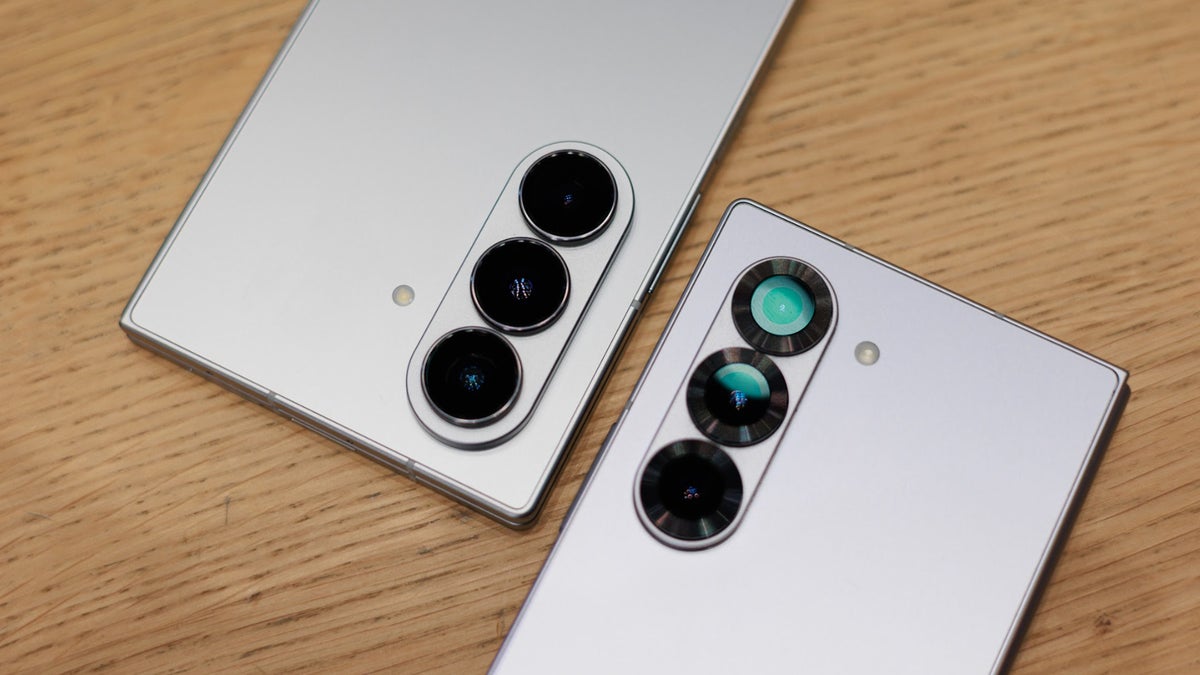
Instead of launching completely unexpected products that set the tone for the market, the company now seems to wait until Apple points a spotlight at a category, and only then does Samsung slam its foot on the accelerator. Foldables, ultra thin flagships, mixed reality headsets, even elements of its software design all show traces of this Apple shaped shadow.
Take the Galaxy Z Fold series. For several generations Samsung coasted on being the only mainstream foldable brand in the West, while Chinese rivals in Asia quietly leaped ahead with thinner, lighter and more ambitious designs. The early Z Folds worked, but they often felt like technology demos that barely cleared the bar rather than devices designed to delight. Then, almost out of nowhere, the Galaxy Z Fold 7 arrived and finally felt like the phone Samsung should have been building all along: refined hinge, slimmer frame, better cameras and software that actually celebrates the large inner display.
What changed? At roughly the same time, reports about a foldable iPhone started to gain momentum. Rumours of Apple testing flexible displays and experimenting with hybrid phone tablet concepts sent a clear message: the last safe corner of Samsung’s kingdom was about to be challenged. Suddenly Samsung was not merely iterating on its foldables, it was racing to make the Z Fold 7 a slam dunk and fast tracking a far more ambitious tri fold concept in the form of the Galaxy G Fold. When Apple stepped toward the foldable world, Samsung finally acted like it had serious competition.
The story repeats itself with ultra slim slab phones. Soon after leaks about an iPhone Air began circulating, word appeared that Samsung was working on a similarly sleek flagship. Not long after, the Galaxy S25 Edge arrived, a razor thin device that beat Apple to market and proved that Samsung can absolutely execute on this kind of design when it wants to. It did not feel like a coincidence; it felt like a preemptive strike launched the moment Apple’s plans leaked.
What makes the situation even more frustrating is that Samsung appears to have quietly walked away from the Edge experiment, at least for now. The idea of an ongoing Galaxy Edge line still has huge potential, especially if both Apple and Samsung adopt silicon carbon batteries that could unlock much larger capacities without making phones thicker. An iPhone Air and a Galaxy S26 Edge powered by next generation cells could redefine what a thin flagship can be. Instead, Samsung seems hesitant, as if it is waiting to see whether Apple fully commits before it dares to double down.
The Apple echo is not limited to hardware. On the software side Samsung has been drifting closer to Cupertino as well. The Now Bar, while useful in its own right, is an obvious answer to Apple’s Dynamic Island. Recent versions of One UI are visually cleaner, but their gesture navigation, layout choices and even some animations feel heavily influenced by iOS. To Samsung’s credit, One UI still keeps its own identity and remains more flexible than many Chinese Android skins, yet the inspiration is impossible to ignore.
Then there is the Galaxy XR headset, Samsung’s reentry into extended reality. On paper it is exactly what many enthusiasts wanted: a more affordable XR device in the same category as Apple Vision Pro, but backed by Android XR and potentially a much broader content ecosystem. In practice, you only need a quick glance to notice just how closely the physical design tracks Apple’s headset. The curved front, the general silhouette, even the vibe of the headband all land uncomfortably close to its rival.
Samsung has been accused before of borrowing Apple’s design language for earphones and smartwatches, but Galaxy XR feels like a different scale of imitation. More than that, Samsung openly positions XR as a kind of stepping stone while it works on true AR smart glasses, which is exactly the long term play Apple has hinted at for Vision Pro. Instead of defining its own long term vision for mixed reality, Samsung appears to be following a roadmap drawn by someone else and filling in the Android shaped blanks.
Of course, it would be unfair to claim that Samsung has no original ideas left. The company still experiments in areas like camera processing, mobile displays, foldable hinges and device ecosystems that link phones, laptops and wearables. The problem is that the loudest, flashiest moves, the ones that shape public perception, increasingly look like countermoves to Apple’s ambitions rather than bold first steps. When people talk about the future of Samsung’s lineup, they do so in relation to whatever Apple might be planning.
This raises uncomfortable questions for the years ahead. The Galaxy Z Fold 8 is widely expected to be excellent, building on the momentum of the Fold 7. But what happens if the first foldable iPhone lands with a thud or never appears at all? Without Apple breathing down its neck, will Samsung still feel pressured to push the Z Fold 9 to the next level, or will development slow once again? Similarly, if Apple drags its feet on adopting silicon carbon batteries, does that mean Galaxy flagships miss out on the technology too, simply because the rival that matters most is not chasing it yet?
The same anxiety surrounds the standard Galaxy S line. The Galaxy S26, at least in its current form, looks like a cautious upgrade over the Galaxy S25 rather than a breakthrough moment. Is that because Samsung has decided to funnel its risk taking into foldables, terrified of being outshone by a foldable iPhone, while letting the conventional flagship tick along with only safe yearly tweaks? If so, Samsung risks turning one of its most important product families into background noise.
Part of the issue is structural rather than purely creative. In the United States, where so much of the industry narrative is shaped, Chinese smartphone brands still struggle to gain real market share. That leaves Apple as Samsung’s only serious enemy in the premium space. When there is just a single rival you truly fear, it becomes tempting to fixate on that rival’s every step and calibrate your own moves accordingly. Unfortunately, that kind of reactive strategy rarely leads to genuine innovation; it leads to a permanent game of catch up, even when you technically arrive first.
None of this means Samsung is doomed. The company has the engineers, the manufacturing power and the global reach to set the agenda again. It could choose to pursue silicon carbon batteries aggressively on its own timeline, turn the Edge line into a long running series that reimagines thin phones, or push foldables in directions Apple would never dare, from tri fold devices to rugged, mid range models. It could give Galaxy XR a bolder visual identity and a clearer purpose that is not defined by comparison to Vision Pro.
For now, though, it is hard to shake the feeling that Samsung is waiting on Apple to move first. That might be good enough in a world where Chinese brands cannot properly enter the United States and challenge its position, but it shortchanges the people who buy Samsung products precisely because they used to be the ones taking risks. The hope is that the next wave of Galaxy devices, from Z Fold 8 and beyond to whatever smart glasses eventually arrive, will prove that Samsung still knows how to surprise the industry without needing Apple to light the way.
3 comments
Both companies copying each other is fine, but I’d love to see one really brave idea from Samsung that has nothing to do with Apple for once
I love my Fold but yeah, Chinese brands were miles ahead for years and Samsung only woke up when iPhone foldable rumors started lol
If they actually did a proper S26 Edge with crazy thin body and big battery I’d throw my money at the screen fr