Samsung Galaxy XR: The Android-Powered Future of Extended Reality
Samsung is making a serious comeback in the Extended Reality (XR) space, and this time, it’s playing to win. The new Samsung Galaxy XR isn’t just a headset – it’s a statement of intent. With the Galaxy XR, Samsung is positioning itself as the accessible, open, and innovative counterpoint to Apple’s ultra-premium Vision Pro. And the best part? It’s built on Android XR, giving users an ecosystem that’s already thriving, flexible, and familiar.
At $1,799, the Galaxy XR doesn’t come cheap, but it’s also not trying to be a toy or a passing tech experiment. It’s a fully realized XR platform, packed with performance, AI intelligence, and endless potential. But to fulfill that potential, Samsung needs one thing from the public – belief. Without early adopters who are willing to dive in and support the ecosystem, even the best hardware can fade into obscurity. Yet, those who take the plunge may find themselves part of the next big technological leap.
Android XR: The Secret Weapon
Unlike Apple’s closed environment, the Galaxy XR runs on Android XR, part of the same family that powers billions of devices around the world. This means that Samsung’s headset isn’t restricted to proprietary software or an isolated app store. Almost any app designed for Android can be adapted to the XR space. That’s a huge advantage, one that Apple’s ecosystem – despite its polish – can’t easily match.
Even more compelling is the simplicity of development. Samsung and Google have provided clear, accessible tools for developers to port their apps into spatial environments with minimal effort. Developers can add spatial interactivity, gesture-based controls, or immersive 3D visuals to their existing apps in record time. And when developers find it easy to build, users get more content. When users get more content, they buy more devices. The result? A positive feedback loop that could cement Galaxy XR as the Android of immersive reality.
All Samsung needs is the spark of adoption. Once users start exploring, developers will follow – and the platform will evolve naturally. Give Galaxy XR a chance, and the content ecosystem will flourish almost organically.
AI at Its Core: Meet Gemini
Samsung didn’t just build another VR headset; it built an AI-first XR device. The integration of Gemini, Samsung’s intelligent digital companion, takes the Galaxy XR to a new level. Gemini isn’t just a voice assistant – it’s a fully aware companion that sees, hears, and understands context. You can ask it for directions in a strange city, seek help with a tough puzzle in a VR game, or even identify landmarks, cars, or art just by circling them in midair.
What’s striking is that Gemini works now – not “coming soon” or “in beta.” This is a real, working AI system designed from the ground up for spatial computing. It feels like the assistant you always wanted in your AR or VR experiences. Samsung’s competitors, including Apple and Meta, are also building toward AI-powered glasses, but Samsung’s approach feels grounded – useful today, not just aspirational for tomorrow.
The ultimate vision is clear: the Galaxy XR is a stepping stone to a pair of smart AR glasses that blend seamlessly with the real world. Think of it as a gateway to the next era of personal computing – where screens dissolve, and information simply exists in your field of view.
Entertainment Redefined
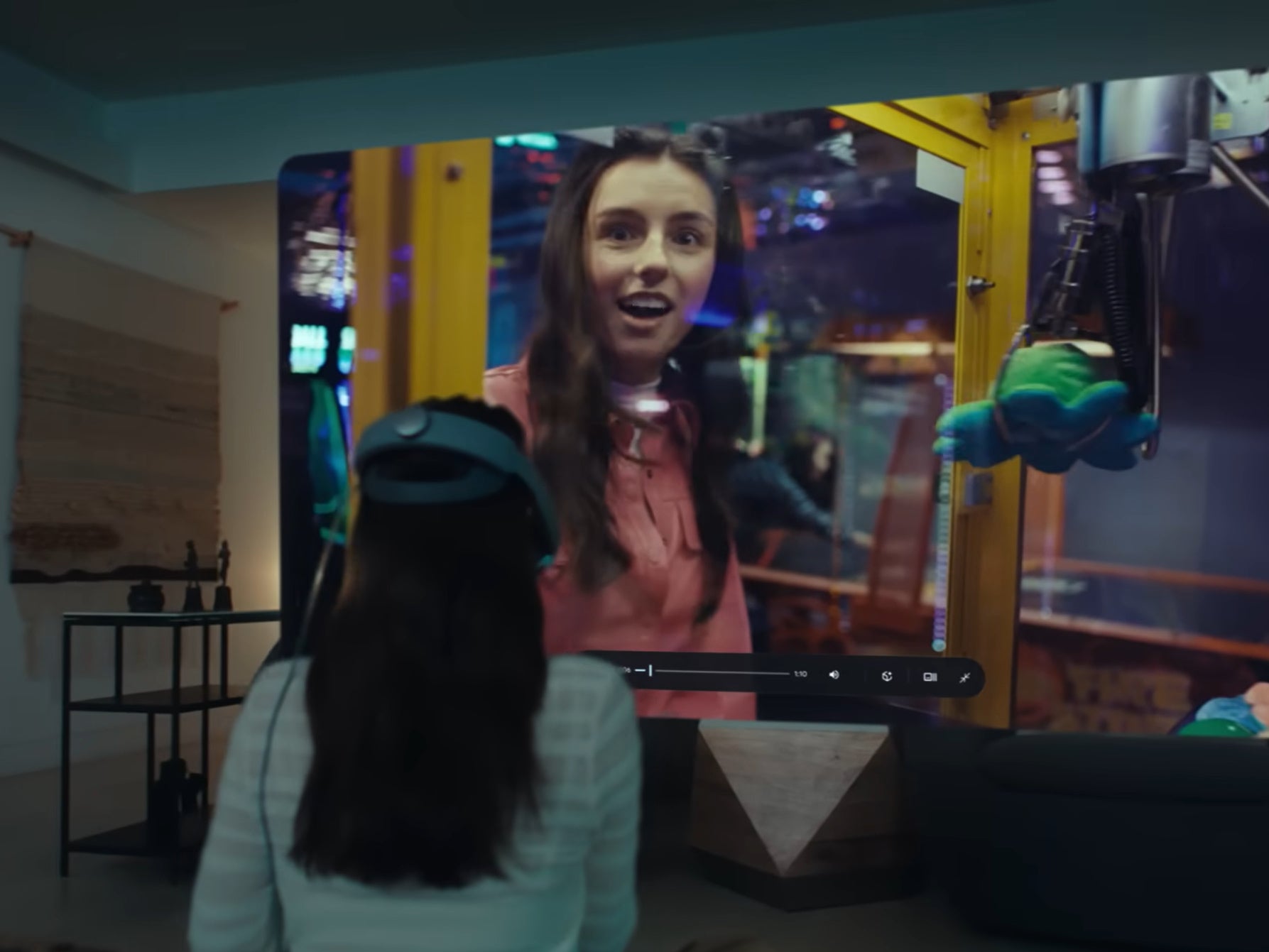
Beyond productivity and AI, the Galaxy XR delivers pure joy for entertainment lovers. Its high-resolution Micro-OLED displays rival Apple’s Vision Pro but at a significantly lower cost. Imagine watching your favorite show or movie on a virtual 200-inch screen that fills your entire vision. For cinephiles and casual streamers alike, it’s like having a private theater that fits in your backpack.
Samsung’s vision of entertainment goes even further. With XR experiences, multiple people could one day share a virtual space, watching a movie together as though they were sitting side by side – each seeing the same massive digital screen floating in midair. The implications for how we consume media, collaborate, and socialize are enormous. And because it’s Android-based, that future won’t be locked behind proprietary walls.
Even at launch, the Galaxy XR’s blend of comfort, clarity, and immersive design makes it one of the most compelling headsets on the market. At $1,799, it’s a serious investment – but for what it offers, it’s an incredible value compared to Apple’s $3,499 Vision Pro. Add in Samsung’s promotional bundles worth over $1,100, and it becomes even harder to ignore.
Beyond Fun: Real-World and Enterprise Use
The Galaxy XR isn’t just for gamers and movie buffs. Its design makes it highly relevant for businesses and professionals. From architectural walkthroughs to medical training simulations, the possibilities are vast. Enterprises that once balked at Apple’s steep pricing may find Samsung’s offering the perfect mix of affordability and functionality. And with Android’s open development platform, custom solutions are easier to create and deploy.
This is where XR begins to bridge the gap between novelty and necessity. It’s not just a gadget; it’s a tool – a new way of interacting with digital spaces that could redefine design, education, and collaboration.
The Verdict: Believe in XR
Some skeptics still dismiss XR as a passing trend, a “gimmick” for enthusiasts. But that kind of thinking ignores how every major technological shift begins – with curiosity and a small group of believers. The Galaxy XR is more than a headset; it’s an invitation to experience the next stage of computing. Whether you’re exploring new worlds, working in virtual offices, or simply relaxing in your personal cinema, Samsung’s headset opens doors that traditional screens can’t.
Give it time. Give it belief. And above all – give it a chance. Because once XR finds its rhythm, we won’t just be using computers anymore; we’ll be living inside them.
1 comment
wish i could afford it tho, 1799 still hurts 😭