Samsung just turned a strong earnings beat into a bigger story: a clear, confident tease of the Galaxy S26. 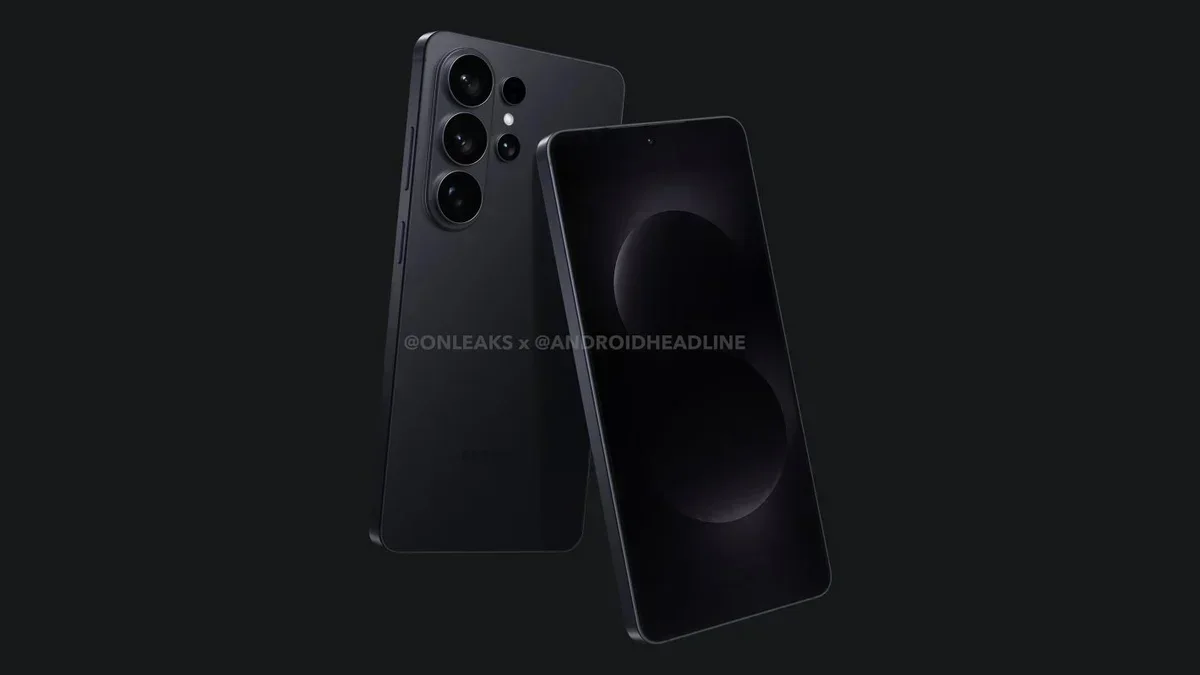
After more than doubling operating profit quarter over quarter, executives used the momentum to set expectations for a flagship that leans hard into on-device intelligence, fresh silicon, and upgraded camera hardware. It was not a full reveal, but the tone was unmistakable: the S26 family is being positioned as a generational step, not a routine spec bump.
From a standout quarter to an audacious pitch
Performance wins buy you permission to boast, and Samsung took it. During the company’s Q3 2025 call, leaders from the Mobile Experience division previewed what they described as revolutionary improvements coming to the Galaxy S26 line. The emphasis landed on three pillars: user-centric next-gen AI that feels woven into daily tasks, a second-generation custom application processor, and stronger all-around performance that includes camera sensor changes. Reading between the lines, Samsung is signaling holistic upgrades that touch speed, imaging, and the way features actually work together.
About that custom chip: Exynos 2600, Snapdragon, or both
The silicon strategy is the most intriguing part, because it shapes everything else. Industry chatter points to an Exynos 2600 built on a 2 nm process, Samsung Foundry’s most ambitious node to date. In parallel, there is credible talk of a regional split that reintroduces Qualcomm variants, likely a customized Snapdragon 8 Elite Gen 5 badged as a For Galaxy edition. Samsung has used this dual-sourcing approach before, and there are real benefits: supply flexibility, the ability to negotiate thermals and battery life differently by market, and a chance to tune AI workloads against each chip’s neural accelerators.
For consumers, the practical questions are simple: will the S26 feel cooler, faster, and more efficient, and will battery endurance finally take a leap? A 2 nm class design should help with power efficiency, while a bespoke Snapdragon option could keep peak performance competitive. Samsung kept the final decision close to the vest, saying chip choices are still being evaluated, which suggests the company is optimizing right up to the wire.
Next-gen AI that tries to be genuinely useful
Every brand says AI; the trick is making it disappear into the experience. Samsung’s framing points to user-centric intelligence: features that save taps, anticipate intent, and run locally for speed and privacy. Expect upgraded multimodal tricks like real-time transcription and translation on calls, context-aware photo and video enhancement, offline summarization of voice notes and meetings, and smarter routines that span phone, watch, buds, and even tablets. If Samsung nails the latency and reliability of on-device inference, AI ceases to be a headline and becomes a habit.
New camera sensors and a smarter imaging pipeline
The company also confirmed sensor changes, though it stopped short of naming exact parts. That alone is meaningful. New sensors typically bring larger photosites or better stacked designs, enabling cleaner low-light shots, more forgiving dynamic range, and faster readout for less rolling shutter. Pair that with improved computational photography and you can imagine richer detail from the main camera, a tighter portrait look with more natural bokeh separation, and telephoto that holds onto texture at longer ranges. The big unknown is configuration: does Samsung chase a larger primary sensor, refine the periscope, or both? Either way, fresh hardware gives the image pipeline more to work with.
Form factors: foldables today, new concepts tomorrow
Samsung’s playbook is not limited to slabs. The company reiterated that its next wave of foldables will be AI-forward as well, and hinted at innovative form factors in development. A tri-fold concept has floated around the rumor mill for years; the language about providing new experiences keeps that door open. If the S26 era becomes the umbrella for multiple device shapes that share a common AI layer, Samsung strengthens its ecosystem pitch: buy one device, learn the behaviors, and those behaviors travel across the family.
Wearables and audio join the AI chorus
The same strategy is set to reach Galaxy Watches and the next Buds. Think health summaries that speak your language, predictive coaching that adapts to routine changes, and earbuds that provide better voice pickup, translation assist, and ambient awareness. Samsung also nodded to expanding its true wireless lineup, making recent leak chatter about new Buds feel less hypothetical.
Pricing pressures are real
There was one sober note: some components, especially memory, are trending more expensive. That could translate into pricing that nudges upward, or into tighter differentiation between storage tiers. If Samsung holds base pricing, expect careful cost balancing elsewhere. If prices move, look for the company to justify it with meaningful AI utility, longer update pledges, and camera gains.
The battery elephant in the room
Power users keep asking for bigger or at least longer-lasting batteries, particularly on the Ultra. Many rivals now flirt with 6,000 mAh plus, and some niche devices are crossing 7,000 mAh. Capacity is not the only lever, but it is the most straightforward. The S26 generation’s best path would be a double approach: improved efficiency from the 2 nm class silicon and a denser cell architecture that preserves or increases capacity without making the phone a brick. If Samsung pairs that with faster but cooler charging and better longevity management, it will answer a criticism money-can’t-buy features cannot silence.
What to watch next
- The final chip mix by region, and how the Exynos 2600 compares to Snapdragon 8 Elite Gen 5 in sustained performance.
- The exact camera stack: sensor sizes, telephoto reach, and any variable aperture or new stabilization tricks.
- Concrete AI features that work offline and across devices, not just cloud demos.
- Battery capacity and measured endurance; efficiency is great, but real-world hours matter.
- Pricing and memory configurations if component costs keep climbing.
Bottom line: Samsung is talking like the Galaxy S26 is a reset button for its mainstream flagship. If the company threads the needle on silicon, delivers AI that feels invisible and helpful, and lands a camera system with obvious day-one benefits, the S26 will justify the swagger. If not, the conversation will quickly swing back to batteries and value. Either way, the stage is set for one of Samsung’s most consequential launches in years.
2 comments
If the sensors are new, keep the sharpening under control this time 🙏
7k mAh when? I don’t wanna carry a power bank anymore