Samsung’s Galaxy S26 family is finally starting to take shape, and the dust seems to have settled after months of conflicting leaks and speculation. Early chatter suggested that Samsung was ready to kill off the Plus model and replace it with a razor-thin Edge-branded phone, a sort of fashion-first device meant to grab attention in photos rather than in real-world use. That narrative clearly did not stick. 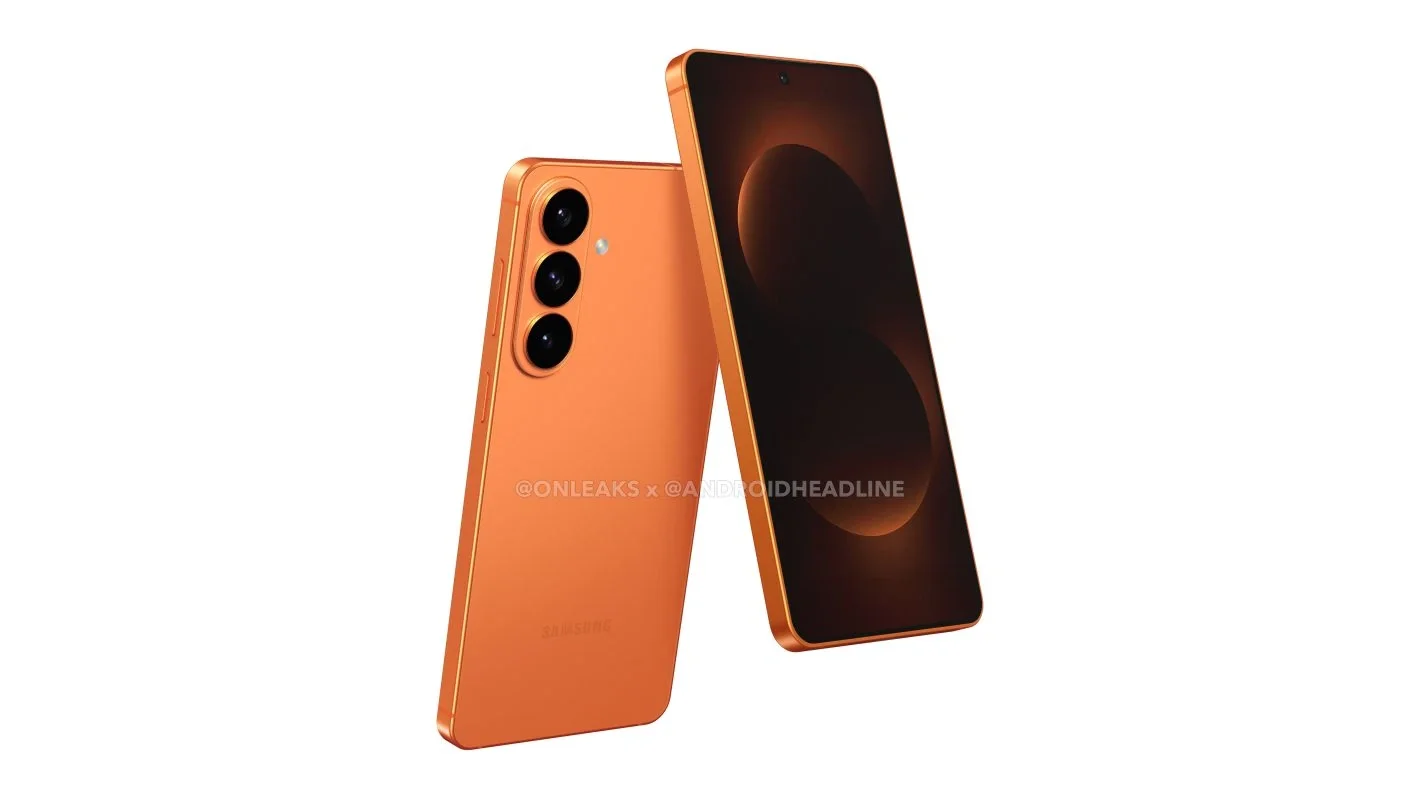
Whether the rumor mill was wrong from the start or Samsung quietly pivoted after looking at sales numbers for its recent Edge-style experiments, the result is the same: the Galaxy S26 Plus lives on. And honestly, that is the phone I care about.
The Galaxy S26 Ultra will inevitably dominate headlines, YouTube thumbnails, and flashy marketing campaigns. It always does. But for several generations now, the Ultra has felt more like a spec-sheet trophy than a phone made for people who just need something great. Its pace of meaningful innovation has slowed, its design is locked in around the built-in S Pen, and Samsung remains oddly stubborn about keeping that stylus even though many buyers rarely, if ever, use it. The Ultra is big, heavy, and over-equipped in some areas, yet it still manages to miss some simple quality-of-life upgrades.
The Plus, on the other hand, has been stuck in limbo. It sits in the middle of the lineup, priced like a true flagship but treated like an afterthought. Each year it comes tantalizingly close to being the perfect all-rounder, then Samsung holds back one or two key improvements to push enthusiasts toward the Ultra. With the Galaxy S26 series, that strategy needs to end. The S26 Plus should not feel like a compromise. It should be the sweet-spot phone, the one that delivers almost everything the Ultra offers in a more comfortable size and without gimmicks that only a minority of users care about.
The display Samsung keeps for itself
There is one area where Samsung is not just good but world-class: displays. Samsung Display supplies panels for some of the most expensive and acclaimed phones on the planet, including competitors that go head-to-head with Galaxy devices. High brightness, accurate colors, fast refresh rates – Samsung helped define the modern flagship screen. Yet when it comes to its own lineup, the company deliberately keeps one particular advantage locked behind the Ultra badge: the superb anti-reflective coating that debuted on the S24 Ultra and is now expected to be exclusive again on the S26 Ultra.
We are well past the days when the only metric that mattered was peak brightness. Today, usability outdoors is just as much about reflections as it is about raw nits. A bright panel still becomes a mirror in harsh sunlight if it is not treated properly. That special coating dramatically cuts down glare, reduces distracting reflections, and makes everything from text to HDR video easier to see in the real world. Once you use it, going back to a more reflective screen feels like a downgrade, no matter how high the brightness number might look on a spec sheet.
Despite this, Samsung seems determined to treat the anti-reflective coating as an Ultra-only perk. The unspoken logic is clear enough: if you want the absolute best display experience, you pay for the most expensive model. But the S26 Plus is not a budget option. It is a four-figure flagship in its own right. At that price, it should not be missing basic usability enhancements that could genuinely change how you experience the phone day to day. Bringing that coating to the S26 Plus would instantly elevate it above many rivals and might even tempt iPhone and Pixel users who are tired of fighting reflections on sunny days.
One truly great telephoto beats a redundant pair
Samsung loves to show off the Ultra’s zoom system. Two separate telephoto cameras look fantastic on a spec sheet and make for dramatic marketing lines about 5x or 10x zoom. In isolation, there is nothing wrong with pushing zoom boundaries. The problem is that in actual use, the dual-telephoto setup is overkill for most people. Everyday photography rarely needs simultaneous 3x and extreme long-range zoom. In fact, a lot of users would be perfectly satisfied with one well-designed telephoto camera backed by smart sensor cropping and strong image processing.
Chinese manufacturers have quietly converged on a different philosophy: a single telephoto around the 3x to 4x range with a large sensor, high-quality optics, and enough resolution to crop in without ruining detail. That approach delivers around ninety percent of the real-world versatility of a dual-telephoto setup, while often producing cleaner photos in low light, better portrait shots, and more consistent colors. The Galaxy S26 Plus technically already has a telephoto camera, but its small sensor and aging hardware mean that it struggles when the light drops and often feels like a second-class citizen compared to the main camera.
This is where Samsung could transform the S26 Plus into a photographer’s everyday companion. Keep the familiar 3x focal length, but give it a serious sensor upgrade. A larger sensor with improved dynamic range and better stabilization would make zoom portraits sharper, night zoom shots less noisy, and video recording more stable and cinematic. Add telephoto macro capabilities so users can capture fine textures, food details, or product close-ups from a flattering distance. Instead of chasing headline-grabbing but rarely used 100x zoom numbers on the Ultra, the S26 Plus could focus on being the phone that nails the shots people actually take every single day.
Battery life that matches real life, not marketing slogans
One unavoidable consequence of the Ultra’s built-in S Pen is the space it occupies inside the phone. Every cubic millimeter devoted to the stylus and its silo is space that cannot be used for battery cells. On paper, the Ultra’s battery capacity still looks respectable, but as processors get more powerful, displays get brighter, and on-device AI features start running in the background, "respectable" is no longer enough. If Samsung is determined to keep the S Pen as the defining feature of the Ultra, then the logical move is to let the S26 Plus become the battery champion of the lineup.
The Plus model has no stylus bay to worry about and sits in a size category that is large enough to house a serious battery. Instead of relying on vague AI optimizations or power saving modes that dim your screen and throttle performance, Samsung should simply give the S26 Plus a larger, denser battery and engineer it to deliver consistently strong endurance, no matter how you use it. Gaming, GPS navigation, social media doom-scrolling, a mix of video calls and camera use on a busy workday – the phone should comfortably handle all of it without forcing you to cling to a charger by evening.
Emerging technologies like silicon-carbon batteries hint at a future where higher capacities fit into the same physical space and longevity improves at the same time. Samsung is well positioned to experiment with such advances, and the Plus line would be the ideal place to showcase meaningful gains. Make the S26 Plus the device you can take on a weekend trip, heavy photo walk, or overnight business flight without anxiety. A phone with serious camera aspirations deserves equally serious battery life.
Qi2 and the magnetic charging future
Wireless charging has been around long enough that it should feel completely seamless, yet on many Android phones it still feels awkward. You drop the device on a pad, hope you centered it correctly, and discover hours later that it barely charged because it was slightly off the coil. That is precisely what the Qi2 standard is meant to fix. By adding magnets to align the phone and charger perfectly, Qi2 turns wireless charging from a party trick into something genuinely reliable and convenient, whether the phone is on a desk, bedside table, or mounted in a car.
Adoption, however, has been painfully slow. With the Pixel 10 finally jumping onboard, the pressure is rising for other major Android brands to stop dragging their feet. Samsung cannot afford to sit this one out for another generation. The Galaxy S26 series, and especially the S26 Plus, should embrace Qi2 magnets on the back so that pucks, stands, power banks, and in-car mounts snap into place with satisfying precision. That would not only make casual wireless charging far more dependable, it could also help Samsung push beyond its current 10 to 15 watt comfort zone and aim for faster, more consistent wireless speeds thanks to perfect alignment.
Imagine pairing a big battery S26 Plus with Qi2 magnetic charging and a compact travel charger or slim power bank. Toss it all in a bag, snap the phone into place on a plane tray table or train seat, and top up without juggling cables. In the car, a magnetic charging mount could hold the phone steady during navigation and keep it charged even on long road trips. These are the quiet upgrades that change how people experience their phones every single day, yet they are still conspicuously absent from Samsung’s mainstream lineup.
A selfie camera built for how we actually use phones
Selfies have long stopped being a niche form of vanity. The front-facing camera is now one of the most important tools on any smartphone. It powers video calls for remote workers, quick scans of documents or products, casual group photos, and, of course, the endless stream of social content that dominates Instagram, TikTok, and messaging apps. Despite that reality, many flagship phones still treat the selfie camera like an afterthought. Samsung, in particular, has stuck with a relatively narrow field of view on the front camera, which makes it frustratingly hard to fit a small group of people or a wider background into the frame without awkward stretching.
Other brands are experimenting in this space. The iPhone 17, for example, has popularized the idea of a more flexible front camera design with features like a square sensor that lets you rotate between portrait and landscape framing without physically rotating the phone. That kind of thinking acknowledges how people actually shoot photos and videos today. The Galaxy S26 Plus needs its own leap forward. A wider, sharper selfie camera with improved low-light performance, natural-looking skin tones, and rock-solid stabilization would meaningfully improve everyday use. Add support for high-quality front-facing video at higher frame rates, along with better microphones and background blur options, and suddenly the S26 Plus becomes not just a "good enough" selfie phone, but a creator-friendly device.
Crucially, this is not about chasing massive megapixel counts. It is about making the front camera versatile and reliable. Better autofocus so you stay sharp even when you move, smarter HDR to keep skies and faces balanced, and software that reduces distortions at the edges of the frame when using a wide angle. People spend an enormous amount of time looking into that tiny camera; it deserves the same attention Samsung lavishes on its rear shooters.
A real camera button for people who actually shoot
There is one more feature that would immediately signal that Samsung is serious about everyday photography on the S26 Plus: a dedicated camera button. It is almost absurd that in 2025, when smartphones have definitively replaced point-and-shoots for most of the world, only a handful of devices offer a physical shutter key. Samsung has carved out precious internal space for the S Pen on the Ultra, yet most of its phones still expect you to double-tap a side key or jab at an on-screen icon when you want to capture a fleeting moment.
Anyone who has used a phone with a proper camera button knows how quickly it becomes second nature. Press, hold, and the camera is open. Half-press-style behavior can be emulated in software: a gentle press for focus and exposure lock, a full press to capture. That physical feedback makes taking pictures feel more deliberate and more satisfying. It is also simply faster and more reliable than fishing for a tiny icon on a slippery display, especially when your hands are cold or wet.
On the Galaxy S26 Plus, a programmable camera button could go even further. Users could set a long press to jump straight into portrait mode, night mode, or video. Power users could assign it to launch a pro camera interface or a favorite third-party app. For those who do not care about photography, the button could be remapped entirely. The important part is the hardware itself: a clear sign that Samsung understands that people are constantly capturing their lives and that the phone should serve that instinct, not slow it down.
The S26 Plus should be the people’s Ultra
When you put all of these ideas together, a picture emerges of what the Galaxy S26 Plus could and should be. It is not about copying every last feature from the Ultra. It is about focusing on the fundamentals that shape everyday experience. Give the S26 Plus the anti-reflective display so it stays visible under harsh sunlight. Equip it with one outstanding telephoto camera rather than a redundant pair of lenses. Let it house the biggest and most advanced battery in the lineup, then supercharge the experience with Qi2 magnetic wireless charging. Upgrade the selfie camera so it truly matches how people use their phones in 2025. And crown it all with a dedicated camera button that makes photography feel instant and intentional.
If Samsung does that, the S26 Plus will stop being the awkward middle child and become the star of the S26 family. The Ultra can continue to exist for stylus fans and spec-chasing enthusiasts, but the Plus would finally earn its place as the true default Galaxy: the phone you recommend to friends and family without hesitation. I do not need another oversized slab weighed down by features I rarely touch. I need a Galaxy S26 Plus that feels thoughtfully designed for the way people actually live, work, and create. This year, Samsung has the opportunity to turn the Plus into the real flagship of its lineup. It would be a shame to waste it again.
1 comment
Anti-reflective display alone would sell me, I’m tired of using my phone as a mirror outside 🤦♂️