As the year winds down, the spotlight inevitably swings to Samsung and its next big act: the Galaxy S26 family. The pre-launch season should feel like an overture, a carefully orchestrated build-up that hints at themes without giving away the entire score. Instead, this cycle is playing like a late-night jam session – noisy, improvisational, and occasionally off-key. 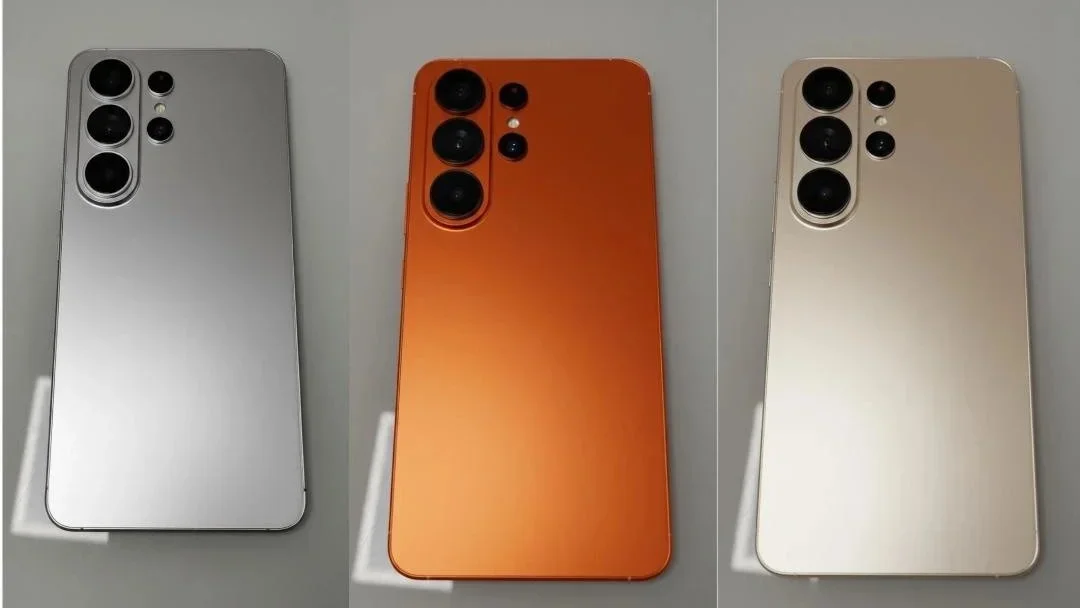
The question everyone is asking is deceptively simple: is this controlled chaos – a savvy engagement strategy – or just chaos, full stop?
Let’s get one thing out of the way: this isn’t about whether you prefer curved glass or the cleaner, slabby silhouette that made last year’s boxier Ultra polarizing for some and beloved for others. Design will always be subjective. What’s harder to ignore is the sense that Samsung’s S26 narrative keeps shifting under our feet. The rumor mill has always churned, but lately it feels like the mill swapped its stones for roller blades.
The naming riddle that wouldn’t sit still
Rumors first teased a rebrand for the base model – whispers of a move to Pro that sounded like Samsung borrowing Apple’s dictionary while promising its own grammar. Then the pendulum swung back: perhaps the ‘vanilla’ name remains. Cue the old Edge ghost walking onstage, rumors insisting the S26 Edge was gone, then penciled back in, and then maybe delayed. The Plus model suffered similar whiplash – cut, revived, somewhere in between – depending on which leak you woke up to. When product names wobble this much in the rumor stream, shoppers understandably wobble with them.
Dates that dance, prices that wobble
Release timing – traditionally a Samsung constant – has looked equally unsettled. January bowed out, March stepped in, then February reclaimed the mic. Price talk followed the same zig-zag: insulation from hikes one day, fresh numbers creeping north the next. None of this is unusual in isolation; rumors aren’t press releases. But the sheer volume of contradictions has been unusual, and the cadence has lost the steadiness that used to define Samsung’s run-up to Unpacked.
How leak seasons usually work – and why this one feels different
Most big phones follow a predictable leak rhythm: early CAD renders from case makers and supply chains; component tidbits hinting at camera, battery, or silicon; a nod from Qualcomm; then a neat, confident reveal. What we’ve seen around S26 feels less like a breadcrumb trail and more like a handful of croutons tossed into a gusty wind. You can still make a salad from it, but it’s a messy lunch.
There are plausible, benign explanations. Modern flagships exist as families of regional variations – different modems, bands, and sometimes different chipsets. Hardware trials overlap; regulatory filings pop up; suppliers hedge. A name on a sticker doesn’t always equal a name on a box. And yes, companies sometimes A/B test messaging informally, keeping their ears to the internet ground to gauge sentiment.
Strategy – or the performance of strategy?
Which brings us to the spicy theory: that Samsung is letting the noise run, maybe even nudging it, to “listen” at scale. Think of it as algorithmic product marketing – the rumor cycle as a focus group. Float an Edge return here, a Plus cancellation there, a price scenario on Tuesday, a launch window rumor on Thursday, then measure what sticks. It’s a seductive idea because it fits our moment: fan communities are fast, vocal, and measurable. But there’s a cost. When the pre-launch story looks like a mood board, leadership starts to feel like followship.
Rivals provide useful contrast. Apple’s cadence, even when predictable, frames stability as a feature. Google has leaned into radical transparency by teasing hardware months early, but the teases are curated and coherent. Xiaomi, famous for dizzying name jumps, illustrates the opposite: momentum through volume and velocity, even if the numbering gives some users a headache. Samsung typically lands in the middle – big-tent polish, broad reach, and a reassuring calendar. The S26 drumbeat hasn’t quite found that tempo.
Why this matters to regular buyers
Most people don’t parse every leak. But ambiguity trickles down. If shoppers can’t tell which models will actually exist, when they’ll arrive, or whether a price bump is looming, the default move becomes hesitation. Hesitation delays upgrades. Delays warp launch-week buzz. And when your brand is the standard-bearer for Android, you want decisiveness – not just at the keynote, but in the weeks that make the keynote meaningful.
The signals that would restore clarity
- Coherent naming: Pick a schema and ride it for several cycles. If “Pro” or “Edge” returns, define it in a way consumers can instantly understand.
- Lineup simplicity: Whether it’s two models or three, make the use-cases obvious – camera-first Ultra, compact performance for the base, productivity middle-ground for the Plus/Edge, if such a model exists.
- Calendar discipline: Even if supplier realities force flexibility, anchor expectations early and only move them once.
- Price storytelling: If hikes are coming, justify them with durable value – longer support windows, demonstrably better cameras, or on-device AI that does more than generate wallpaper.
About that feature talk
It’s easy to whip ourselves into a checklist: camera sensors, zoom ranges, silicon bins, battery sizes, charging speeds, and an alphabet soup of AI. The truth is, any of those could move the needle if woven into a clear experience story. “Here’s what you can do now that you couldn’t last year” is still the most persuasive sentence in consumer tech. If Samsung wants the S26 cycle to stop feeling like it’s chasing reactions, it should center that single sentence and back it with specifics at launch.
How to read the leaks without losing your mind
- Look for convergence: When independent sources start repeating the same details, pay attention.
- Weight regulatory breadcrumbs: Certifications don’t reveal everything, but they usually mean a device is real and near.
- Map to precedent: Samsung rarely abandons rhythms forever. Past launch months and pricing tiers can be quiet guides.
- Beware of absolutism: A rumor that declares with 100% certainty months out is often wrong in interesting ways.
The bottom line
The Galaxy S26 lineup could still land brilliantly. Samsung has the scale, the engineering, and the brand gravity to pivot from noise to narrative the moment the lights go up. But spectacle without structure creates fatigue, and this prelude has flirted with that line. If what emerges in the end is a sharper camera story, smarter on-device intelligence, confident naming, and a price that feels earned, the hand-wringing will evaporate. If not – if we get a familiar upgrade dressed in louder hype – fans may start asking why the biggest name in Android suddenly feels like it’s trying to prove it’s the biggest name in Android.
For now, we watch the rumors, we separate signal from static, and we hope the finale justifies the rehearsal. A little mystery is fun. A little mess can even be healthy. But leadership, especially at Samsung’s scale, is best told as a clear story – one the S26 deserves.
1 comment
ngl this rumor season feels like a soap opera 😂