The Galaxy S26 Edge may look like the next big thing in Samsung’s lineup, but it’s also a glaring indication of how the company is mirroring Apple’s approach – and that’s not a good thing. The trend of super-slim flagships has been gaining momentum in the smartphone world, despite what many users actually want from their devices. A common sentiment is that people would rather have a slightly bulkier phone if it means better battery life. 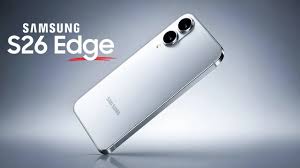
In other words, they’re all about longer-lasting power and are willing to trade off slimness for it.
But Samsung, in its infinite wisdom, has decided to buck this trend. The Galaxy S25 Edge already features a thinner body than the rest of the S series models, with a noticeably smaller battery to boot. And now, it seems the company is planning to push the boundaries even further with the Galaxy S26 Edge – a device that will be even thinner than its predecessor, but with a marginally larger battery that’s still comparatively small.
At first glance, it seems like Samsung is making a sacrifice that doesn’t really align with the users’ most important priorities. The aesthetics of the device are clearly taking precedence over what people value most – battery life. But what’s even more perplexing is that this sacrifice doesn’t seem to be necessary in the first place.
There are better battery technologies available now, ones that offer larger capacities without requiring a thicker device. However, Samsung continues to stick with traditional lithium-ion batteries, seemingly because this is the safer and more familiar option. In that sense, Samsung appears to be following in Apple’s footsteps, even when it doesn’t have to.
Samsung used to be a company synonymous with innovation and risk-taking. In its earlier years, Samsung led the charge in smartphone technology, regularly introducing new features that pushed the envelope. Whether it was adding more functionalities or experimenting with new designs, Samsung was always at the forefront of smartphone advancements.
By contrast, Apple has historically been more cautious, preferring to let new technology mature before embracing it in their devices. This cautious approach was evident when Samsung introduced the Galaxy Note, a pioneering big phone that ultimately changed the smartphone market. It took Apple several years to catch up with the iPhone 6 Plus, and even longer for the company to release the iPhone 7, its first major leap in smartphone design. Meanwhile, Samsung was already paving the way for foldable phones with the Galaxy Z Fold and Z Flip – devices that Apple has yet to follow suit on, despite the increasing popularity of foldable phones.
Of course, Samsung’s approach has not been without its pitfalls. We all remember the Galaxy Note 7 fiasco, which saw its battery catching fire. And then there was the launch of the Galaxy Z Fold series, which had its own share of growing pains. However, Samsung has shown resilience in the face of such challenges, learning from its mistakes and improving its technology. These experiences helped the company grow and refine its products – even if they came at a significant cost.
Fast forward to today, and Samsung seems to have lost its edge. The Galaxy S26 Edge was expected to be a bold step forward, bringing a fresh mix of sleek design and cutting-edge battery technology. Instead, Samsung is playing it safe, sticking to outdated battery tech while others in the industry – particularly Chinese manufacturers – are embracing new and exciting developments.
Companies like Oppo, Honor, OnePlus, and Realme have already launched devices with massive battery capacities. Oppo’s Ace 6 Max features an impressive 7,000 mAh battery, while Honor launched an 8,000 mAh phone earlier this year. Even OnePlus is rumored to include a 7,000 mAh battery in its upcoming OnePlus 15, and Realme recently revealed a concept for a 15,000 mAh phone. These companies are not just pushing boundaries with new designs – they’re innovating in the battery department as well.
Yet, Samsung, for all its resources, appears content with sticking to its 5,000 mAh battery in the Galaxy S26 Ultra, a size that’s been the standard in its flagship devices since 2020. And if that wasn’t enough, Apple is similarly lagging behind. The iPhone 17 Air is rumored to feature a measly 2,900 mAh battery, sticking to the same pattern of small batteries despite increasing user demand for longer-lasting power.
It’s a shame to see both Samsung and Apple, the two biggest players in the smartphone market, heading in the same direction: a direction that leaves innovation by the wayside. For Apple, this is simply business as usual – a continuation of its long-standing strategy of waiting for new technology to mature before it takes the plunge. But for Samsung, this is a clear step backward, and it’s a sad reality for anyone who remembers the company’s former boldness and willingness to take risks.
In conclusion, while the Galaxy S26 Edge and iPhone 17 Air may be impressive in their own right, their lack of innovation in battery technology is disappointing. As the smartphone industry continues to evolve, it’s crucial that manufacturers push the envelope to provide users with the best possible experience. Hopefully, we’ll see a return to risk-taking in the future, but for now, it’s hard not to feel like we’re missing out on something great.
2 comments
Imagine how cool it would be to have a phone with a 10,000 mAh battery. 😍
Sad to see Samsung playing it safe now… They used to be so daring. 👎