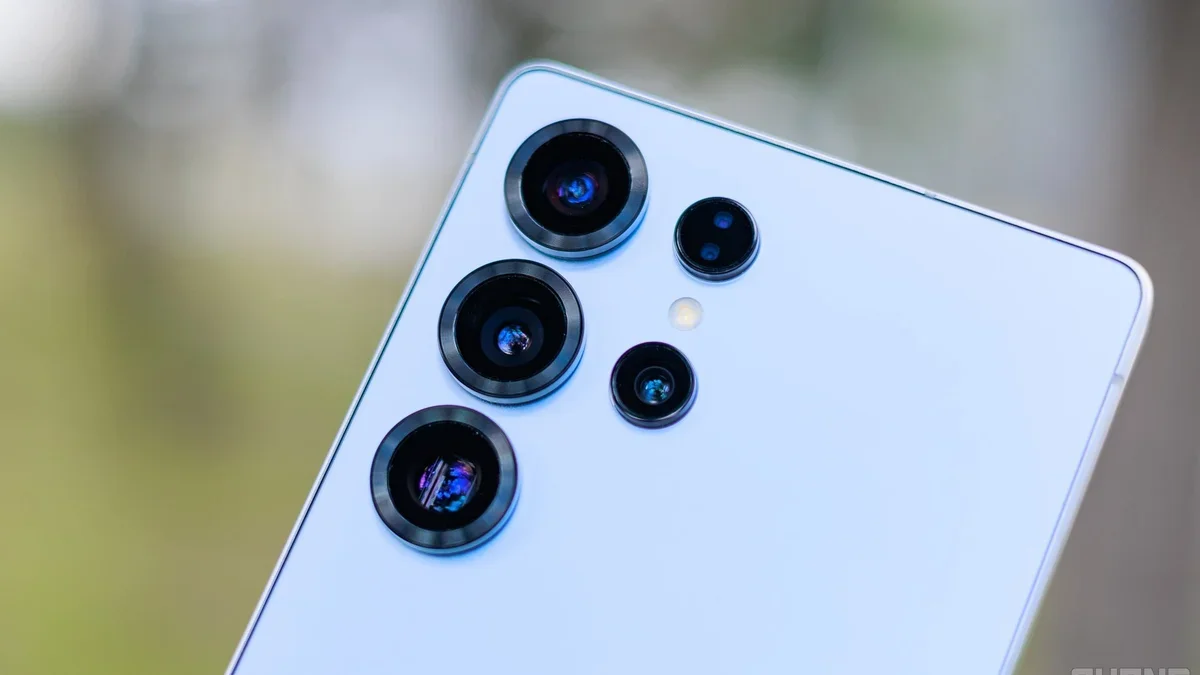
Galaxy S26 cameras: the real story on telephoto, sensors, and performance
If you were crossing your fingers for a seismic camera leap on Samsung’s Galaxy S26 series, temper those expectations. Early information points to a strategy that prioritizes refinement over reinvention, especially in the zoom department. That doesn’t mean the pictures will be bad – far from it. The S25 family already sits among the best mobile shooters. But for anyone hoping the 3x lens would finally get its long overdue makeover, the S26 generation looks set to play things conservatively.
What seems locked in: a familiar 3x telephoto
Across all three models – Galaxy S26, S26 Plus, and S26 Ultra – the 3x telephoto is tipped to use a 10 MP ISOCELL sensor paired with an f/2.4 lens and a roughly 36° field of view. The sensor size is said to be around 1/3.94-inch with 1.0 μm pixels. If that combination sounds familiar, it’s because it is; the spec sheet mirrors what we’ve seen before, only now with Samsung’s own ISOCELL replacing the Sony unit used in earlier iterations. A silicon swap can change color science and noise texture, but no one should expect a night-and-day transformation from portraits or medium-range zoom.
This matters because 3x is the workhorse focal length for people shots, street details, and quick reach without the framing gymnastics of 5x or 10x. A fresh, higher-resolution quad-bayer sensor here could have unlocked tighter crops, sharper 4K video at 3x, and cleaner 6x digital zoom. Sticking to 10 MP suggests Samsung will lean on sharpening, multi-frame fusion, and its matured face/skin tone models rather than brute-force hardware.
Base and Plus models: steady kit, possible main-camera refresh
The vanilla S26 and S26 Plus are expected to keep a familiar trio: a 50 MP wide, a 12 MP ultra-wide, and that 10 MP 3x telephoto, plus a 12 MP selfie camera. The interesting wrinkle is a rumored new primary sensor on at least one of these models. A newer 50 MP wide with better full-well capacity and improved microlenses could lift dynamic range and low-light rendering, particularly for moving subjects where longer merges struggle. Think faster HDR, fewer blown highlights, and less motion ghosting – upgrades you notice even if the bullet points look unchanged.
S26 Ultra: incremental hardware, potentially meaningful optics
On the Ultra, the outline also tracks closely with today’s champion: a 200 MP main, a 50 MP ultra-wide, and a dual-tele pairing – 50 MP 5x periscope plus 10 MP 3x. The selfie camera again is expected to be 12 MP. Two rumors, however, could shift the Ultra’s character: a larger 1/1.1-inch Sony primary sensor or a brighter f/1.4 main-lens aperture. Either change increases light intake, which pays dividends for detail retention, nighttime color fidelity, and low-ISO operation. A brighter lens also reduces reliance on aggressive denoising and sharpening, preserving micro-contrast in foliage, hair, and fabric.
Remember, that 200 MP number isn’t just marketing. Samsung’s binning schemes – 16-to-1 or 4-to-1 depending on the mode – give the pipeline flexibility: shoot huge for daylight detail or bin hard for silky low-light frames. Pair that with a larger photosite footprint or faster optics and you get cleaner files that respond better to the post-capture pipeline.
Software is where the gains add up
Even without headline hardware, Samsung’s camera app – likely arriving as part of One UI 8.5 – can deliver real-world improvements. Expect refinements to multi-frame HDR, tone mapping tuned for tricky backlit scenes, and smarter semantic segmentation so the phone treats sky, skin, foliage, and architecture differently in the same frame. Edge detection for portraits, especially at 3x, should benefit from better depth priors and improved subject cut-outs around hair and glasses.
Nightography remains a Samsung calling card, and the company has steadily reduced that telltale over-processed look. Look for subtler deconvolution sharpening, less haloing around bright signage, and improved color consistency between the main and the zoom lenses after sunset. Those kinds of tweaks don’t light up a spec sheet, but they make your photos feel more natural.
Video: stabilization, color matching, and all-lens 4K polish
Video improvements often come from coordination, not parts. Expect tighter optical-plus-electronic stabilization handoffs, better horizon leveling for walking clips, and more consistent white balance as you jump from ultra-wide to 3x to 5x mid-recording. Samsung has pushed to deliver 4K60 across more lenses; if that extends seamlessly to 3x and 5x with fewer exposure jumps, creators will notice immediately.
Where Samsung may be playing it too safe
There’s a strong case that the 3x system is due for a reboot. A larger, higher-resolution sensor at that focal length could unlock 2x-to-6x coverage with less quality penalty, enable crisper portrait video, and deliver tele-macro fun without resorting to digital trickery. For now, the message seems to be: perfect the existing formula and let software carry the torch. Given how good the S25 Ultra already is, that approach is defensible – but it’s also why some enthusiasts will feel under-whelmed.
Performance, launch timing, and a possible price ripple
Outside the camera bubble, two broader storylines stand out. First, launch timing: chatter suggests the S26 line could arrive a bit earlier than typical. Second, silicon: the Ultra model is heavily rumored to adopt Qualcomm’s Snapdragon 8 Elite Gen 5, the chip many performance-hungry buyers want. If that silicon is exclusive to the Ultra – while other models run different platforms – that split could explain another rumor: a price bump versus the already premium S25 Ultra. Faster AI inference, improved ISP throughput, and better thermal behavior would bolster camera features too, shortening multi-frame merges and enabling heavier real-time denoise without jello or focus wobble.
Who should upgrade?
If you own an S23 or older, the S26 family – especially the Ultra – will feel like a leap thanks to better HDR, night work, and stabilized video, even if the 3x lens itself doesn’t headline. S24 owners will see cleaner low-light files and smoother video transitions. S25 Ultra users who were hoping for a transformed 3x telephoto may be better off waiting another cycle unless the rumored main-sensor or lens changes, earlier ship date, or the Snapdragon 8 Elite Gen 5 clinch the decision.
Bottom line
Samsung appears ready to double down on a winning camera blueprint: keep the familiar focal lengths, apply a gentle sensor swap at 3x, investigate a more capable primary module for the Ultra, and let algorithms do the heavy lifting. That path won’t ignite spec-sheet fireworks, but it may produce the most important result of all – more keepers in your gallery. For photography die-hards, the dream remains a modernized 3x module. For everyone else, the S26 generation looks like a smarter, steadier Galaxy that trusts its software to finish the shot.