Samsung’s next flagship family, the Galaxy S26 series, is already making headlines – but not for revolutionary changes. According to fresh reports from South Korea, the company has now locked in the final camera hardware lineup for the Galaxy S26 range, and the news may feel familiar: once again, Samsung is sticking with evolutionary tweaks rather than bold hardware leaps.
In recent years, Samsung has kept its premium Galaxy S cameras largely unchanged since the Galaxy S21 era, relying heavily on computational photography and software refinements to stay competitive. 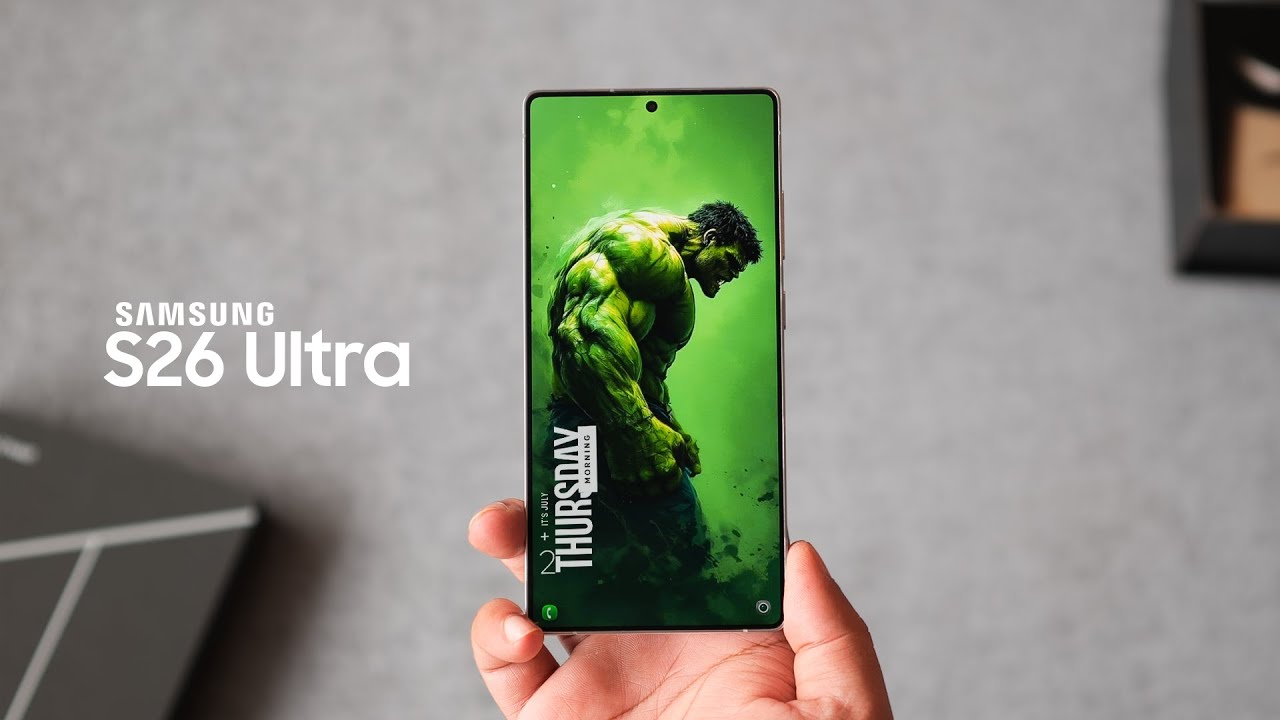
With the Galaxy S26 line, history looks set to repeat itself. Industry insiders claim Samsung has no plans for sweeping upgrades across its three S26 models launching next year.
The lineup itself is changing though. Much like Apple’s restructuring, Samsung is said to be dropping the “Plus” branding entirely. The Galaxy S26+ is gone, replaced by the Galaxy S26 Edge. Meanwhile, the standard model could adopt a new name – Galaxy S26 Pro – though hardware continuity is the theme. The base S26 Pro is tipped to feature a 50MP primary camera, a 10MP 3x telephoto lens, and a 12MP ultrawide, essentially mirroring the S25.
The Galaxy S26 Edge will be positioned as the design-forward option. It will retain the showpiece 200MP main camera, while the ultrawide sensor reportedly gets a meaningful jump to 50MP – borrowed directly from the Galaxy S25 Ultra. Despite this technical increase, past reviews have noted limited perceptible change in ultrawide performance, suggesting real-world gains may depend more on software tuning than sheer megapixels.
As for the photography powerhouse of the lineup, the Galaxy S26 Ultra, expectations should be tempered. The Ultra is not set to receive headline-worthy upgrades this cycle, despite rumors and consumer hopes for a better 3x telephoto module to replace the dated 10MP sensor. Samsung appears content to refine, not reinvent.
That doesn’t mean picture quality will stagnate. Samsung is expected to lean heavily into AI-assisted photography, computational processing, and multi-frame techniques to maximize the output from existing sensors. The company’s software-first strategy could help deliver improvements in dynamic range, low-light shots, and video stabilization even without flashy hardware changes. With rivals like Apple and Google also prioritizing software-driven imaging, Samsung is clearly betting that camera innovation in 2025 will be less about sensor size and more about smart processing.