The smartphone camera arms race is once again heating up, and this time Samsung is preparing to strike directly at one of Apple’s biggest creative selling points: ProRes video. With the upcoming Galaxy S26 series, Samsung is set to introduce its own professional-grade codec, called APV (Advanced Professional Video), and the implications could be massive for videographers and everyday users alike. Rather than just playing catch-up, Samsung appears to be leaning into efficiency and flexibility – two areas where Apple’s ProRes has often been criticized.
APV codec: the next frontier in mobile video
According to reliable insider @UniverseIce, the Galaxy S26 will debut with the APV codec, making it the first mainstream smartphone line to embrace this technology. 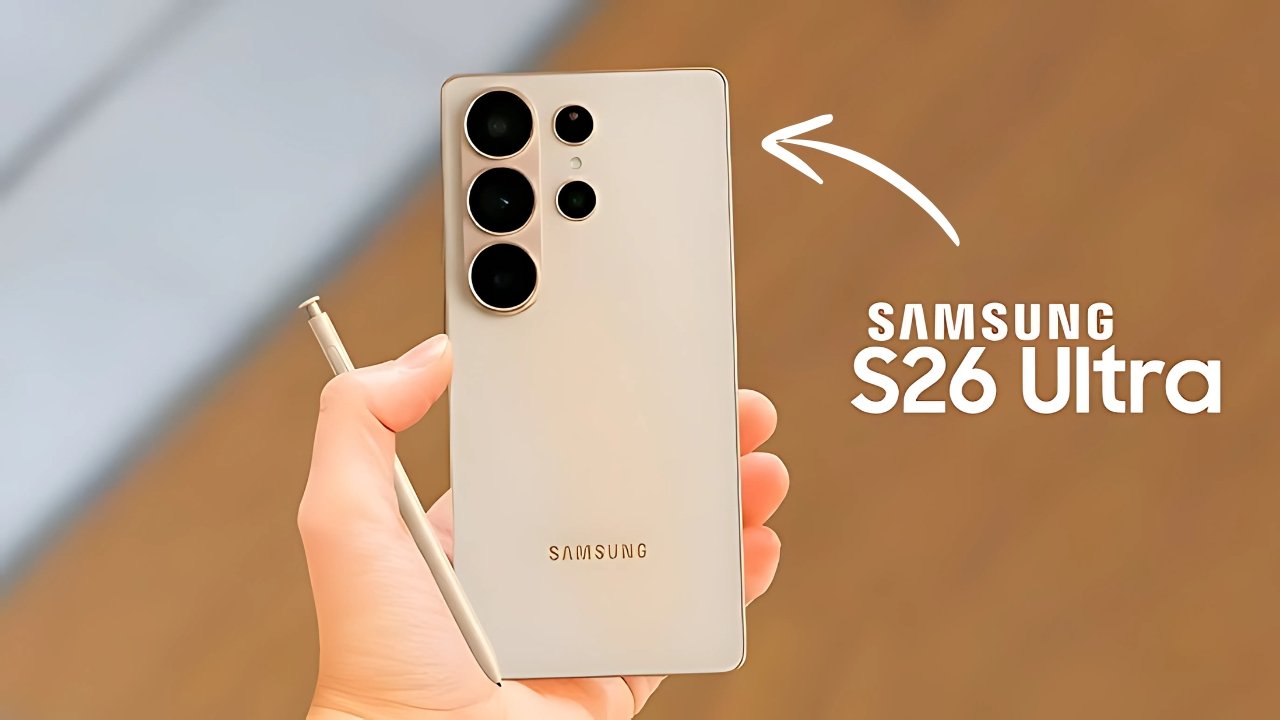
APV was originally announced in 2023 and was integrated into Android 16 by Google earlier this year. Its arrival in Samsung’s flagship marks a significant turning point. While Apple’s ProRes has been celebrated for giving filmmakers greater editing flexibility, its notorious storage demands and heavy file sizes have been a sticking point. Samsung wants to solve that problem head-on.
Samsung claims APV offers up to 20% more storage efficiency compared to existing pro-level codecs like HEVC and even ProRes itself. That means sharper detail, broader dynamic range, and richer colors, without filling your phone’s memory in just a few minutes of recording. For creators who balance quality with practicality, this could be the holy grail – professional video output without the baggage of massive file management.
Deep color science: 12-bit, HDR, and beyond
Where ProRes brought credibility, APV brings ambition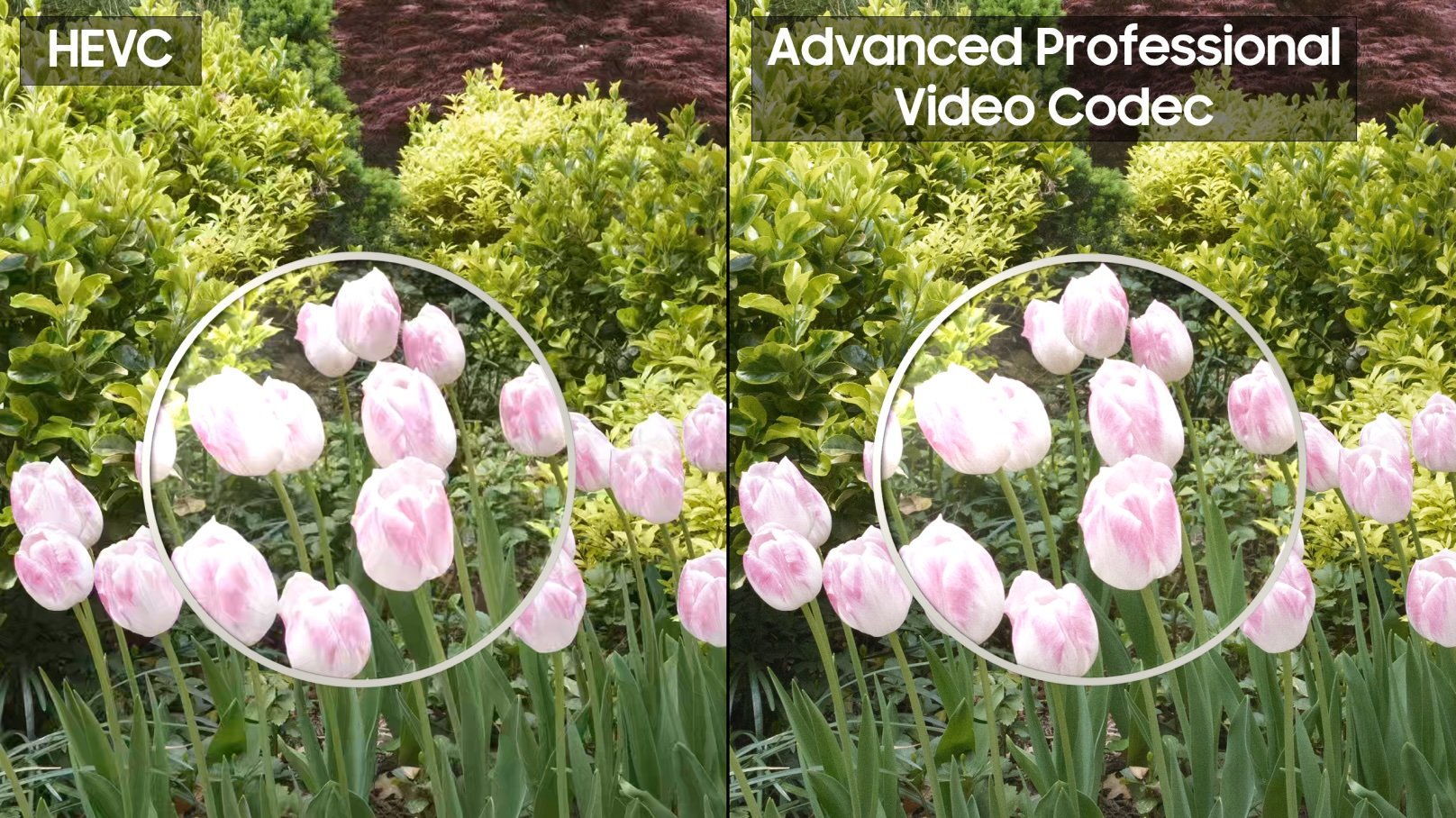
. Leaks suggest that the codec supports 12-bit color depth, giving videographers far smoother gradients and virtually eliminating banding issues. On top of that, HDR10 and HDR10+ compatibility ensure that videos capture breathtaking highs and lows of brightness. Color fidelity should also improve thanks to 4:4:4 chroma subsampling, which is critical when shooting in challenging lighting conditions.
This combination is more than just a spec sheet upgrade; it represents Samsung’s commitment to serious creators. 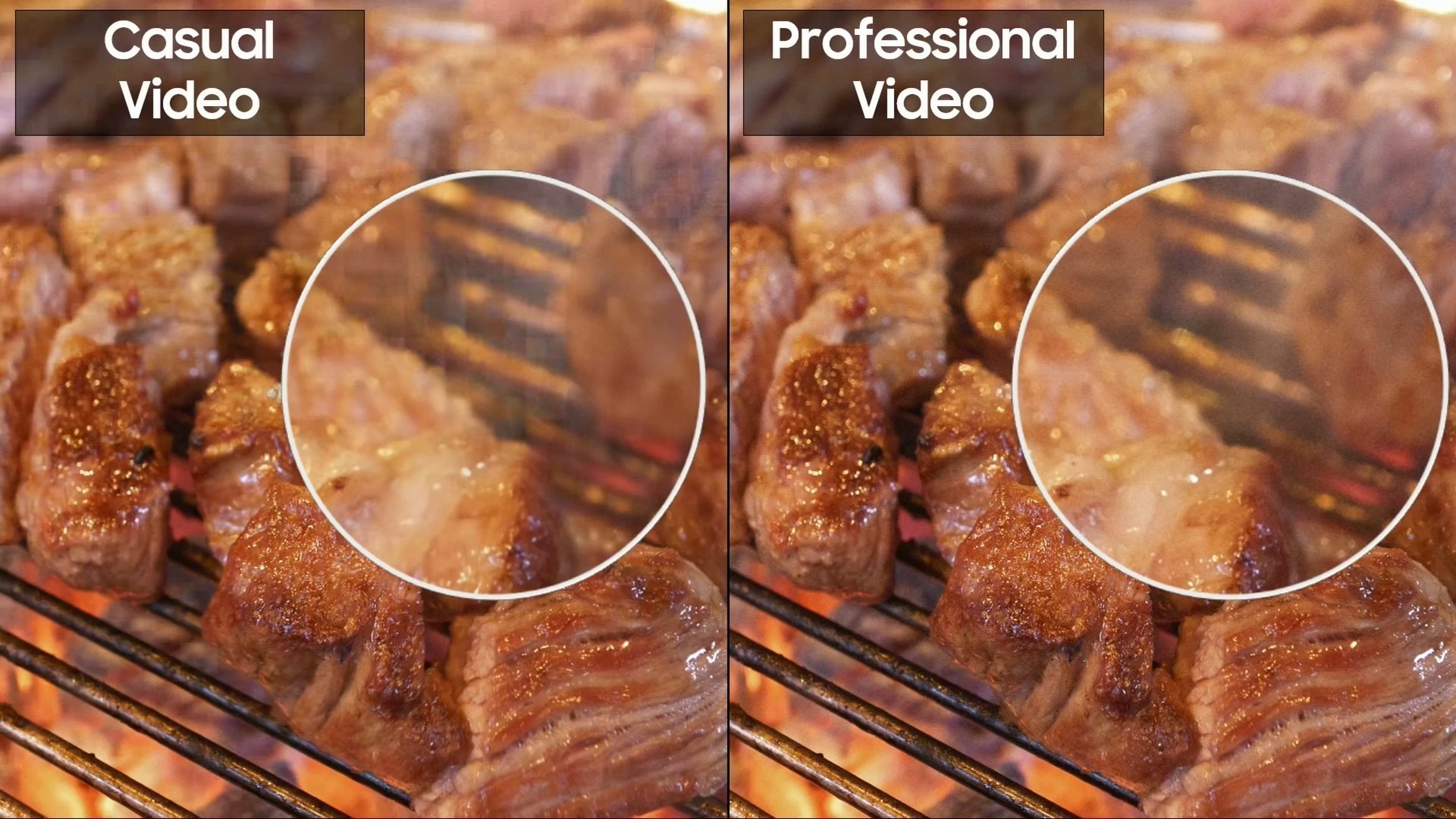
Professional color grading requires as much headroom as possible, and APV looks ready to deliver it.
Standardized and future-proof
Another feather in Samsung’s cap is APV’s standardization by the Internet Engineering Task Force (IETF). This makes it more than just a proprietary gimmick – Samsung is laying the groundwork for broad industry acceptance. Among the futuristic features already baked in is support for stereoscopic 3D video. That could tie neatly into Samsung’s forthcoming XR headset, offering immersive video experiences captured directly from a phone camera.
Creative freedom: LOG profiles and LUTs
For those who prefer complete control over their footage, APV’s LOG support is essential. Shooting in LOG allows filmmakers to capture footage with a flat color profile, maximizing flexibility in post-production. Samsung is also smoothing the workflow with built-in LUT (Look-Up Table) options inside its Gallery and Studio apps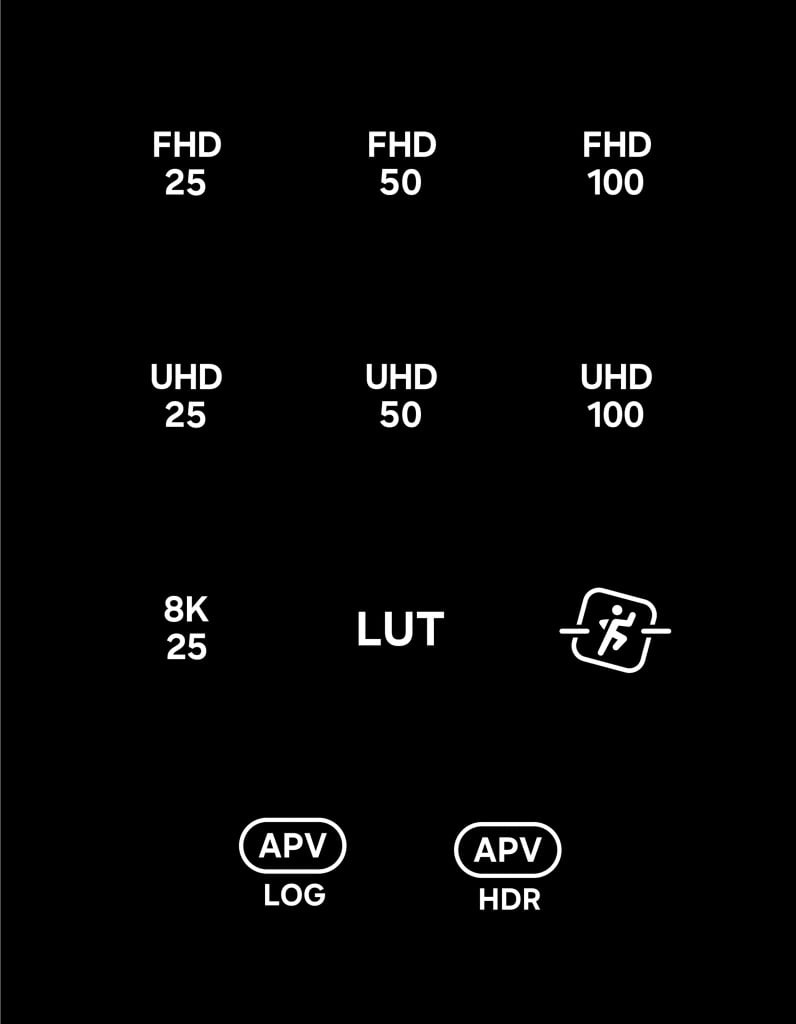
. That means users can apply cinematic looks instantly or fine-tune them later in editing software – an appealing blend of speed and artistry.
Resolution and frame rate flexibility
Samsung isn’t stopping at codecs and color science. APV reportedly supports a wide range of resolutions and frame rates, including everything from Full HD and 4K to 8K recording. The ability to adjust frame rates opens the door to professional slow-motion effects, buttery-smooth cinematic recording, or ultra-detailed archival footage. Creators won’t be boxed into one workflow – they’ll have the freedom to adapt.
Horizon Lock and smarter camera tools
The S26 series won’t just be about pro-level codecs. Reports suggest Samsung is also adding Horizon Lock, a stabilization tool similar to what we’ve seen in GoPro’s Hero 11 and beyond. This will allow creators to capture fluid, gimbal-like footage without investing in extra equipment. For vloggers and action enthusiasts, that’s a big win.
Practical tools are also in the mix. The new phones are said to enable multi-page document scanning – a feature missing from earlier models – and give more flexibility in Motion Photos. Users could soon tweak pre- and post-shutter timing, alter shutter sounds, and control more granular aspects of how photos and clips are captured. These small quality-of-life changes show that Samsung is targeting both professional filmmakers and casual users who just want smarter, friendlier camera tools.
A real challenge to Apple’s dominance?
Apple has long marketed its iPhones as the gold standard for creative professionals, with ProRes as a badge of seriousness. But APV’s efficiency, flexibility, and forward-looking features could change that perception. If Samsung succeeds, the Galaxy S26 might not just rival the iPhone 17 – it could set a new benchmark for what mobile filmmaking can achieve.
For consumers, this competition is nothing but good news. Whether you’re a filmmaker looking to push boundaries or a casual user who values both space and quality, Samsung’s Galaxy S26 could very well redefine smartphone video creation in 2025 and beyond.
3 comments
12-bit hdr on a phone?? insane if true
apple fanboys gonna be mad about this one
samsung always adds cool features but battery better last 😅