Living with a futuristic phone every single day is very different from rushing through a launch week review. Four months after the Galaxy Fold 7 replaced my regular slab phone and my older Fold 6, the honeymoon phase should have been over. 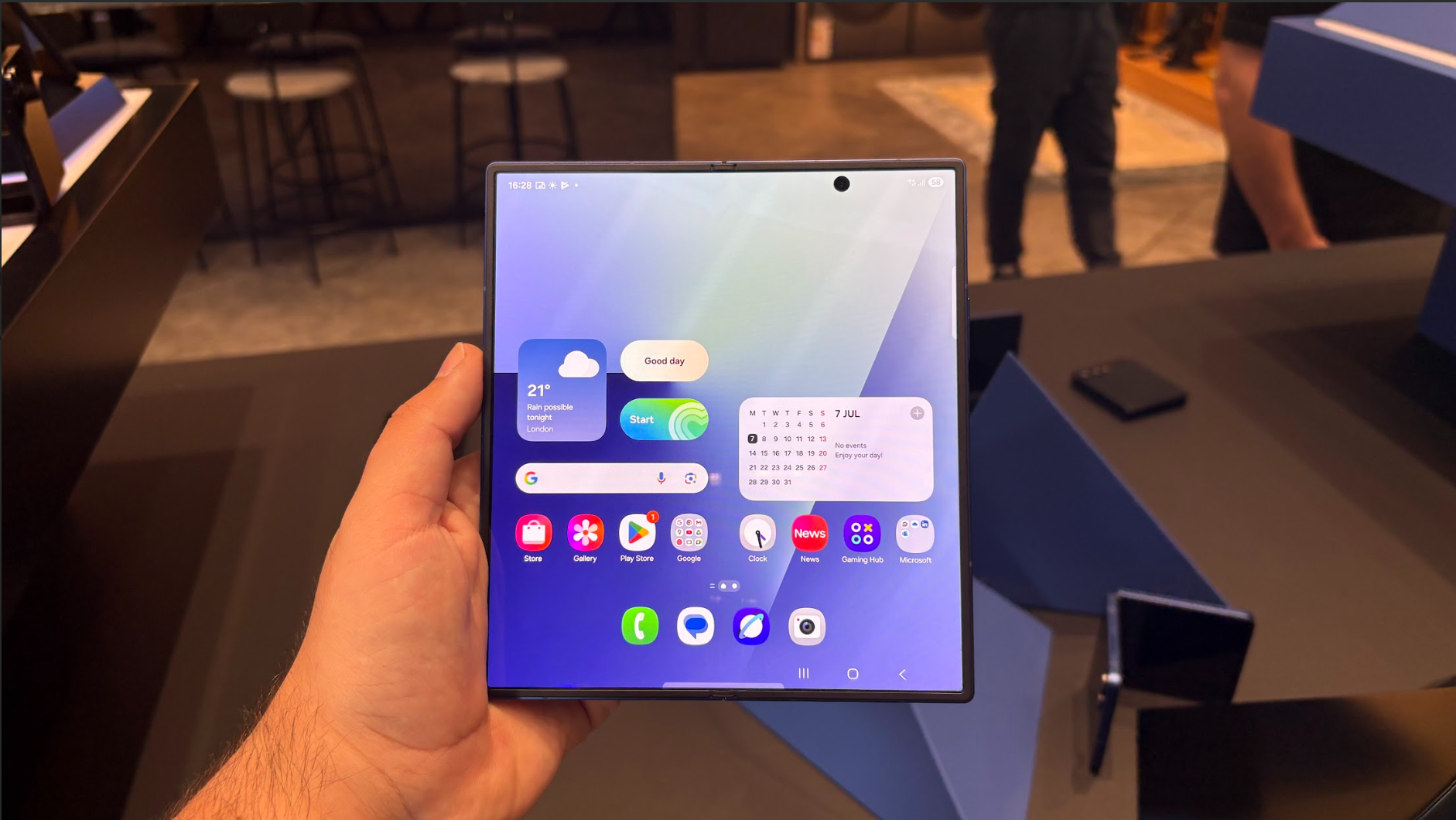
This is usually the point where small annoyances stop being cute quirks and start feeling like genuine problems, and where the wow factor either turns into a solid long term relationship or quietly fades away. The surprising thing is that the Samsung Galaxy Fold 7 still feels more like the first camp than the second. It has not only held up better than I expected, it has also made it harder to imagine going back to a traditional smartphone.
Over this period I have used the Galaxy Fold 7 as my main device, while keeping the Fold 6 nearby as a constant point of comparison. That has made it very easy to see where Samsung has genuinely moved the series forward and where it has made compromises that age less gracefully. After months of commuting, traveling, doom scrolling on the couch and answering emails far away from a laptop, some patterns are clear. This long term review looks at what still feels special about the Galaxy Fold 7, what already feels like it needs an update, and what Samsung absolutely has to fix for the inevitable Fold 8.
Design and hardware: thin, sharp and still ahead of the pack
The first thing that continues to impress is simple to describe but hard to overstate in real life use: the Galaxy Fold 7 is remarkably thin for what it does. Foldable phones used to feel like two handsets taped together with a hinge in the middle. The Fold 6 had already trimmed a lot of that bulk, especially if you avoided a heavy case, but the Fold 7 goes meaningfully further. Every time you pick it up from a table or slip it into a pocket, you are reminded that this is a device that rewrites expectations for what a book style foldable can feel like in the hand.
Samsung has been obsessively shaving millimeters and grams off the Fold line and the Fold 7 feels like the payoff for years of iteration. In photos the changes can look minor; in daily life, they are anything but. Rounded edges and a tighter hinge help the phone disappear in a pocket in a way older Folds never quite managed. Even after weeks of use the hardware still gives those little bursts of joy when you close it with a soft click or unfold it and the inner screen glides open like a tiny tablet. The hardware looks and feels premium in a way that justifies its price, which is more than you can say for every experimental form factor on the market.
Four months on there is also a nice side effect to this design progress: nobody has really leapfrogged it yet, at least in the markets where Samsung sells the Fold 7 widely. Rivals have caught up in some specific areas, but if you want a book style foldable that feels relatively slim, tidy and polished, the Galaxy Fold 7 still feels like the benchmark that others are measured against.
Weight and comfort: 215 grams that genuinely make a difference
Thinness is only half the story. Weight matters at least as much when you are dealing with a device that spends hours per day riding in a pocket or being held above your face late at night. Previous Fold models, including the Fold 6, could develop a slightly comical habit of dragging lighter fabric pants down. Anyone who has carried a heavy flagship knows the feeling of constantly nudging a phone back into place or shifting it when sitting down.
The Galaxy Fold 7, at roughly 215 grams, finally feels like Samsung broke that pattern. It is not a featherweight, yet compared with older Fold generations and other oversized flagships, it simply feels more manageable. You notice the difference when you swap from the Fold 6 back to the Fold 7 in the same day: the newer phone sits more comfortably in the pocket, does not swing around as much when walking and is easier to hold one handed for quick tasks on the cover screen.
Over four months this has translated into less fatigue during long reading sessions on the inner display and fewer moments where I consciously thought about the weight of the device. That, ultimately, is the goal of good design: to become something you stop noticing. The Fold 7 is not invisible, but it is far more discreet than early foldables and that subtle shift improves daily life more than spec sheets alone suggest.
The inner display: life without a crease is hard to give up
The headline upgrade for the Galaxy Fold 7 is the inner display. It is not just bigger or brighter; it is finally, properly crease free in everyday use. Previous Folds never had a truly terrible crease, and you can adapt quite quickly, but there was always a visible and tactile reminder that you were looking at a flexible panel. On the Fold 6, for example, the crease is something your finger crosses every time you swipe down the middle, and depending on the lighting it can catch the eye.
On the Fold 7, that ridge is essentially gone as a day to day factor. If you hunt for it under harsh lighting you can still detect the underlying fold, but for reading, sketching, gaming or browsing, the panel presents itself as a smooth, continuous slab. That has a surprisingly big impact on how immersive the phone feels. Ebooks read more like they do on a small tablet. Web pages look less like they are straddling two halves of a display. Watching video is cleaner, especially for content with dark scenes, since reflections are more uniform.
Four months later the effect has not worn off. Every time I briefly pick up the older Fold 6, the crease jumps back into awareness and makes the Fold 7 feel like a generational change. It also makes the lack of S Pen support, which we will come back to later, sting a little more, because this is exactly the kind of inner display that begs to be written and drawn on.
The cover display: finally wide enough to live on
If you have used earlier Samsung foldables, you know the story of the outer screen. It was tall, narrow and strangely cute, like a remote control pretending to be a phone. For quick tasks it worked fine, and there was a certain charm to that slim silhouette. The problem came when you tried to type longer messages, respond to emails or edit documents. The cramped keyboard meant more typos, more mis taps and more frustrations.
The Galaxy Fold 7 is the first Samsung foldable that truly fixes this issue. The cover display now has a more normal smartphone aspect ratio and a diagonal around 6.5 inches, which hits an excellent balance between usability and overall device size. Inside a pocket the handset still feels compact enough, yet the moment you start typing on the outer screen you feel a huge difference. Keys are properly spaced; swipe typing is more accurate; hitting links or small UI elements is easier. Over the course of months, that means fewer corrections, less irritation and less temptation to constantly open the phone for tasks that could live perfectly well on the cover panel.
The important thing is that Samsung did not overcorrect. Go much wider and the folded device would become awkward to grip or too large for smaller hands. As it stands, the Fold 7 feels close to a sweet spot. For a lot of everyday tasks you forget you are holding a foldable at all, because the cover display behaves so much like a regular flagship phone. Then, when you need more room, you open it and jump into tablet mode. That seamless switching is what the Fold idea always promised, and this is the first generation where it feels properly realised.
Camera performance: reliable main shooter, underwhelming zoom
The Galaxy Fold series has always made some camera compromises in order to prioritise size, weight and internal space. The Fold 7 does not change that fundamental trade off, but it does deliver a camera system that has been perfectly adequate in day to day use. The main rear camera continues to be the hero, producing sharp, vibrant photos in good light with pleasing dynamic range. Family shots, food pictures and city scenes generally look rich and satisfying straight out of the gallery app, and most people will be happy sharing them as is.
Where things get less impressive is telephoto performance. I rely heavily on zoom for framing, whether it is capturing details on buildings from a distance or trying to get a closer look at something happening on stage at an event. On the Fold 7, zoom shots in bright daylight are fine, but as soon as you move indoors or into low light, noise creeps in. Fine textures smear, edges lose crispness and the images often feel like they are struggling to balance detail and noise reduction at the same time.
This is not unusual for thin devices, and Samsung clearly prefers not to bolt an enormous camera bump onto the back of the Fold 7. Even so, it feels like there is room for improvement through software tuning. Slightly different processing on zoom shots, especially in dim conditions, could push out a bit more detail without making images look crunchy or over sharpened. For now, the Fold 7 camera setup is best described as good enough with caveats: great for most casual photography, weaker when you lean on the telephoto lens in tricky light.
Everyday performance and multitasking: a pocket sized productivity machine
In terms of raw performance the Galaxy Fold 7 has enough power to feel fast and responsive months later. Apps launch quickly, heavy games run smoothly with high graphics settings and juggling multiple apps in split screen never feels sluggish. One UI on top of Android has matured into a very capable multitasking environment on large foldable displays, with features like app pairs, a taskbar and drag and drop between windows making real use of the extra canvas.
The inner screen is particularly well suited to the kind of work that would normally wait for a laptop. Drafting emails while referencing documents, reading long articles side by side with chat apps, organising files in cloud storage or managing spreadsheets all feel more comfortable than on a narrow phone display. When you are travelling or simply away from a desk, the Fold 7 can genuinely step into the role of a compact productivity device in a way earlier generations only flirted with.
There are still quirks. Not every app plays perfectly with the foldable layout, and some services treat the inner display like a giant phone screen rather than a small tablet, wasting space. Yet the general story after months of use is positive. This is one of the few smartphones that genuinely changes how often you reach for a computer, and that effect has only become more obvious over time.
S Pen support: the compromise that hurts the most
All of that praise makes one omission stand out even more: the Galaxy Fold 7 does not support the S Pen. Samsung removed the digitiser layer needed for advanced stylus input in order to push the phone thinner and lighter. On paper, that sounds like a reasonable trade, and at launch it was easy to shrug and think that the average user might not miss the feature.
Four months later, it feels like a bigger sacrifice than expected. This is the first Fold that really behaves like a smooth, flat mini tablet when open. Its crease free inner display would be perfect for handwritten notes, precise annotations on PDFs, sketching diagrams or quickly illustrating ideas in a meeting. Unfortunately none of that is available in the way Galaxy Note and S series stylus users are accustomed to. Generic rubber tip styluses or Bluetooth pens simply cannot match the accuracy, pressure sensitivity or low latency of a dedicated S Pen system.
Using the Fold 6 alongside the Fold 7 makes the loss clearer. The older phone, while thicker and with a more noticeable crease, at least offers the option of S Pen input, giving it a unique angle as a productivity tool. On the Fold 7 I have repeatedly caught myself thinking that I would happily accept a slightly thicker device if it meant regaining proper stylus support. The hope now is that Samsung finds a way to bring the S Pen back without undoing the impressive strides achieved in thinness.
Dex on One UI 8: a more polished picture, fewer clever tricks
Samsung Dex has long been one of the most interesting extras on high end Galaxy devices. Plug your phone into a monitor or compatible display, pair a keyboard and mouse, and suddenly your handset behaves like a lightweight desktop computer. On a foldable that is already halfway between phone and tablet, Dex has even more potential, turning the Galaxy Fold 7 into a three in one machine.
With One UI 8, Dex on the Fold 7 arrived in an odd state. The good news is that it now handles higher resolutions and a wider range of aspect ratios more gracefully, which makes external monitors look sharper and more natural. Windows scale better, and there are fewer moments where the interface seems stuck in an awkward compromise between phone and PC.
The bad news is that this came at the cost of some valuable quality of life features. Early on, window management felt less flexible than on previous versions, with fewer keyboard shortcuts and little annoyances around snapping and arranging apps. Samsung has already patched some of the more glaring issues, especially around forcing apps into full screen mode when they insisted on running in phone style windows. Even so, after months of use the overall impression is that Dex has taken a small step back in day to day ergonomics, even as it improves on the technical side.
For the Galaxy Fold 7, that feels like a missed opportunity. This is exactly the device that can benefit most from a robust, laptop like Dex experience. A little more development effort focused on polish, keyboard support and window management could turn it into a truly compelling reason to pick the Fold series over any other flagship.
Battery life and charging: solid, not spectacular
Powering all this is a 4400 milliamp hour battery, which is on the modest side for a device that has to drive two displays, including a large inner panel that practically invites long streaming and reading sessions. The interesting thing is that the Galaxy Fold 7 has not caused outright battery anxiety during these months, but it also rarely ends days with the kind of safety margin you would get from a big battery slab phone.
Most typical days have ended with around fifteen to twenty percent left in the tank after mixed use: messaging, browsing, social networks, some camera time and an hour or two of video. That is enough to avoid emergency charging in the middle of the evening, yet close enough to empty that a particularly heavy day can start to feel risky. Long flights, navigation heavy days or extended gaming sessions will almost always push the battery into the single digits by night.
Charging speeds are serviceable rather than exciting. The wired 25 watt charging standard can replenish roughly half the battery in about half an hour and reach a full charge in the ballpark of an hour and a half if you use a compatible charger. Wireless charging at around 15 watts is handy for desk docks and bedside stands but even slower, taking over two hours to go from flat to full. None of this is terrible, yet in a world where some competitors brag about filling their batteries significantly faster, it is clear that Samsung is being conservative with power hardware on the Fold 7.
Looking ahead, this is exactly the place where next generation battery technology could work wonders. Higher density cells, such as silicon carbon solutions that some rivals are experimenting with, could allow Samsung to keep the device relatively light while still pushing capacity upwards. For a phone that often behaves like a tablet and sometimes doubles as a tiny laptop via Dex, that extra stamina would be incredibly welcome.
Price, value and who should upgrade
At launch the Galaxy Fold 7 was a very expensive proposition, with prices around the two thousand dollar mark. Four months later the picture looks a bit friendlier. Seasonal discounts and general market adjustments have brought the cost down, with deals around sixteen hundred dollars or even lower appearing, often before you even factor in trade in offers. That is still a lot of money, but it changes the equation compared with launch day pricing.
For owners of older foldables like the Fold 4, the Fold 7 feels like a significant and worthwhile upgrade. You get a much better cover display, a less bulky body, a more refined hinge and, of course, that crease free inner panel. Even if the camera system is not a massive leap, the overall experience of using the device is clearly more mature and less compromised.
For Fold 5 users the calculation is a bit more nuanced. The improvements in thinness, weight and display quality are real, but they might not justify the price of entry on their own if your current phone is still in excellent shape. Meanwhile, fans of the S Pen have to accept that moving to the Fold 7 means losing stylus support entirely, which is a serious downgrade if pen input is part of your workflow.
If you are still on a traditional smartphone and looking at your first foldable, this is a very good moment to jump in. The Fold 7 feels like the most balanced and future proof version of Samsung’s concept so far, and the fact that it is unlikely to be replaced immediately means you can buy one now without worrying that a dramatically better successor will appear next month.
Four months later: what Samsung got right and where the Fold 8 needs to go
After four months of living with it, the Galaxy Fold 7 feels like the most refined and coherent take on the book style foldable that Samsung has produced. The outer screen finally behaves like a real phone display rather than a compromise. The inner screen feels like a proper mini tablet, without a distracting crease down the middle. The thinner and lighter body makes carrying and handling the device noticeably more pleasant than older Folds.
At the same time, the last few months have exposed the cracks in the formula. The lack of S Pen support removes one of the most exciting ways to use a big inner display. Dex, while still powerful, has lost some of the user friendly touches that made it such a fun party trick in previous iterations. The camera system, while competent, does not push boundaries, particularly when you rely on zoom in challenging lighting. Battery performance is fine but not inspirational, and charging speeds are conservative in a market that is racing ahead.
The wishlist for the Galaxy Fold 8 almost writes itself. Bring back a proper stylus solution without regressing too far in thickness. Keep improving Dex until it feels like a real desktop replacement when docked. Revisit camera tuning, especially around telephoto noise and detail. Explore higher density batteries or more efficient hardware so that the Fold line can comfortably handle long heavy days without dipping into the red.
Even with those criticisms, the central verdict after four months is positive. The Galaxy Fold 7 is still the foldable that feels most like a fully realised product rather than a prototype you pay to test. It is not perfect, but it delivers a uniquely flexible blend of phone, tablet and lightweight computer that no slab device can match. If you are ready to live with its trade offs, there is still very little else on the market that can offer this particular mix of futuristic hardware and everyday practicality.