For more than a decade, Samsung has leaned heavily on its ISOCELL branding to sell the idea that its smartphones can compete with the best in mobile photography. From early Galaxy flagships to today’s Ultra models, the company’s in-house sensors have quietly evolved while Sony’s sensors often grabbed the headlines. 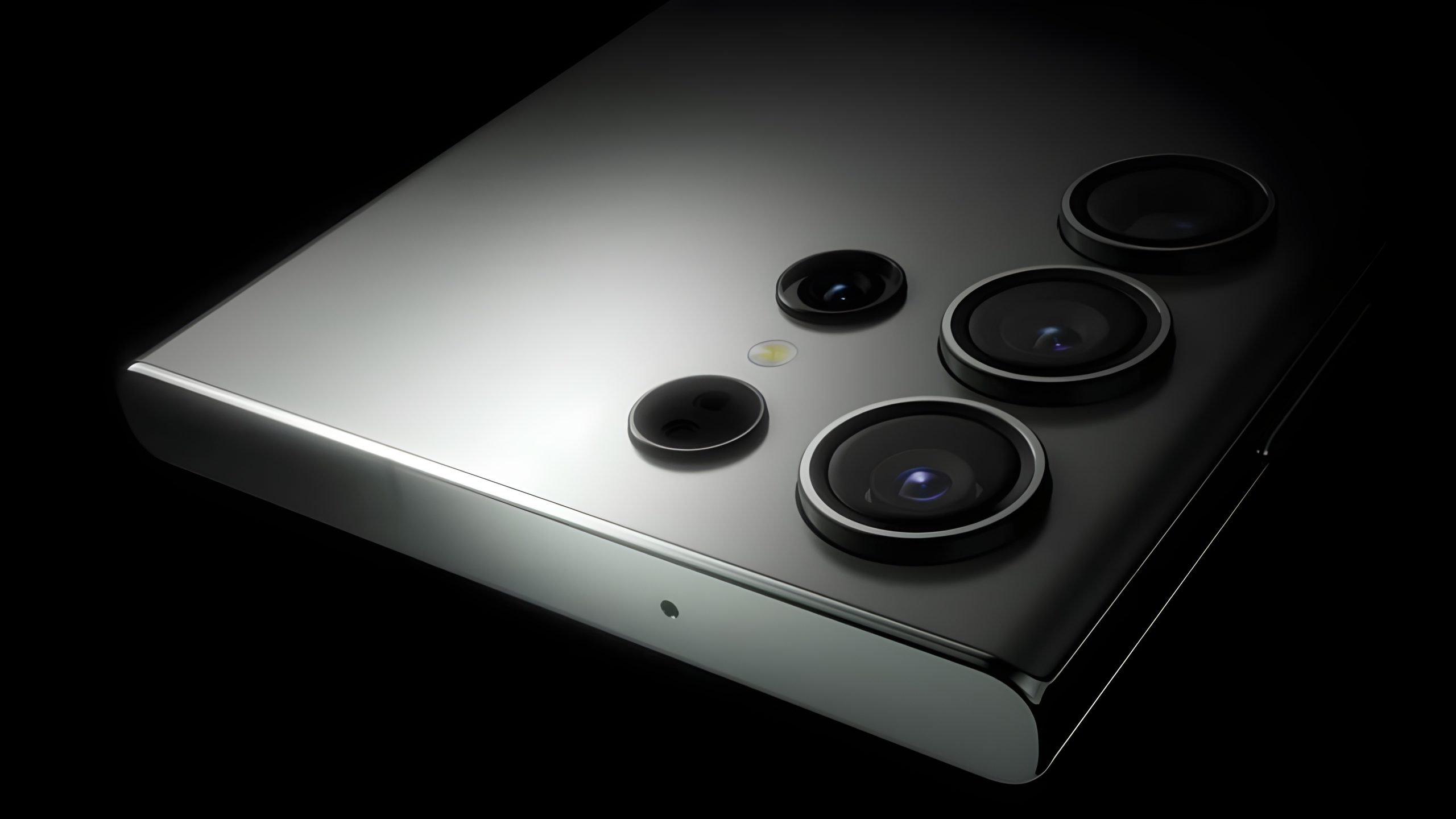
Now, a newly discovered name suggests Samsung is preparing a fresh chapter for its camera hardware: a sensor line reportedly called DeepPix.
According to trademark filings spotted in multiple regions, including the United States, the European Union, and Argentina, Samsung is securing rights to the DeepPix branding for use in imaging products. One Argentine filing even spells it out explicitly as a CMOS image sensor, strongly implying that DeepPix is not just a marketing slogan but an actual next-generation sensor family that may eventually sit alongside or even above ISOCELL in Samsung’s portfolio.
To understand why this matters, it helps to revisit what a CMOS image sensor actually is. A Complementary Metal-Oxide-Semiconductor (CMOS) image sensor is a tiny silicon chip packed with millions of light-sensitive sites known as pixels. Each pixel includes a photodiode that collects incoming light and a set of transistors that handle tasks such as amplification and readout. When photons hit the photodiode, they generate an electrical charge; the surrounding circuitry then converts that charge into a voltage signal that can be digitized and turned into the image you see on your screen.
Unlike older CCD (Charge-Coupled Device) sensors, where charge is shifted across the chip and read out through a small number of output nodes, CMOS sensors allow each pixel – or small groups of pixels – to be read in parallel. That architectural choice delivers a string of practical benefits that have made CMOS dominant in smartphones and almost every mass-market camera today.
Those advantages are not just buzzwords on a spec sheet. CMOS technology generally offers significantly lower power consumption, a crucial factor when your entire camera system runs off a phone battery. Because many pixels can be accessed simultaneously, readout is fast, enabling high-frame-rate video, advanced autofocus, and quick capture for burst shooting. Just as important, CMOS sensors can be manufactured using mainstream semiconductor processes, which improves yields and reduces cost compared to more exotic imaging technologies.
There is another major perk: the CMOS platform makes it relatively easy to integrate additional circuitry directly on the same die. Designers can place analog-to-digital converters (ADC) next to the pixels, implement dedicated noise-reduction hardware, and even add blocks for on-sensor image processing. For smartphone makers like Samsung, which already pack in complex computational photography pipelines, having more intelligence at the sensor level opens the door to smarter HDR, improved low-light performance, and faster multi-frame stacking.
This is where DeepPix becomes interesting. The name itself hints at a focus on extracting more information from the scene at a pixel-level depth – whether that’s better separation of highlights and shadows, richer color detail, or more accurate depth maps for portrait and AR features. While Samsung has not disclosed technical specifications, the CMOS label in the filings suggests DeepPix will build on the company’s experience with ISOCELL while potentially embracing new pixel architectures, on-chip processing tricks, or even AI-centric optimizations.
Despite the excitement, don’t expect DeepPix to suddenly appear in the very next Galaxy flagship. Current industry chatter points to the Galaxy S26 series closely following the camera formula of its predecessor rather than debuting an entirely new sensor family. The rumored Galaxy S26 Ultra setup illustrates this incremental approach: a 200 MP 1/1.3-inch ISOCELL HP2 main camera remains at the center, paired with a 50 MP ultrawide that could be either an ISOCELL JN3 or Sony’s IMX564, a 50 MP IMX854 periscope camera with 5x optical zoom (and possibly a wider aperture for better low-light shots), a 12 MP IMX874 front-facing selfie camera, and a 12 MP ISOCELL 3LD S5K3LD 3x telephoto module that may use a compact 1/3.94-inch-type sensor.
On paper, this configuration still leans heavily on existing ISOCELL parts and Sony’s proven telephoto and ultrawide options. That makes sense for a product line that ships in vast volumes; major camera changes are expensive, and Samsung has already tuned its software around these well-known sensors. DeepPix, if and when it arrives in commercial devices, is more likely to appear first in a single hero camera module or perhaps in a future generation beyond the S26 family, where Samsung can fully redesign its imaging stack.
However, it is impossible to discuss DeepPix without mentioning the elephant in the room: Sony’s LYTIA 901. Sony’s new 200 MP flagship sensor has been positioned as a showcase of what next-gen smartphone photography can look like. The LYTIA 901 reportedly features a 1/1.12-inch-type sensor size, tiny 0.7 µm pixels, and an advanced Quad-Quad Bayer Coding (QQBC) color filter array. On top of that, Sony is stacking in flagship-grade technologies such as DCG-HDR (dual conversion gain high dynamic range), fine 12-bit ADC for more precise tonal gradations, and HF-HDR for capturing scenes with extreme contrast while minimizing motion artifacts.
In practice, those technologies are aimed squarely at the same pain points DeepPix is likely to target: dynamic range, noise, low-light clarity, and detail retention when pixel-binning high-resolution images down to more manageable output sizes. If Samsung is preparing DeepPix as a new CMOS sensor line, it is hard not to see it as a direct answer to Sony’s LYTIA push, a way for the company to keep control over its own imaging roadmap rather than relying more heavily on a key competitor’s components.
Whether DeepPix can truly go toe-to-toe with LYTIA 901 will depend on features we haven’t yet seen: sensor size, pixel structure, readout speeds, HDR strategy, and how well Samsung integrates it with its image signal processors and AI algorithms. For now, the trademarks are an early but telling sign. After years of iterating quietly on ISOCELL, Samsung appears ready to introduce a fresh identity for its camera sensors – and in the increasingly crowded flagship arena, a bold new brand like DeepPix might be exactly what it needs to convince users that the next Galaxy really does see the world differently.