In a stunning reversal just months after launching its ultra-thin flagship, Samsung appears to be stepping away from its Edge ambitions. Reports now suggest the company is poised to scrap not only the upcoming Galaxy S26 Edge but also to quietly retire the S25 Edge entirely – once existing stock dries up. What seemed like a bold bet on elegant design may be turning into a costly misstep.
### How the ultra-slim gamble went wrong
Samsung launched the **Galaxy S25 Edge** in May 2025 as a bold experiment: a smartphone measuring just ~5.8 mm in thickness, pitched as the thinnest model in the Galaxy S25 lineup. 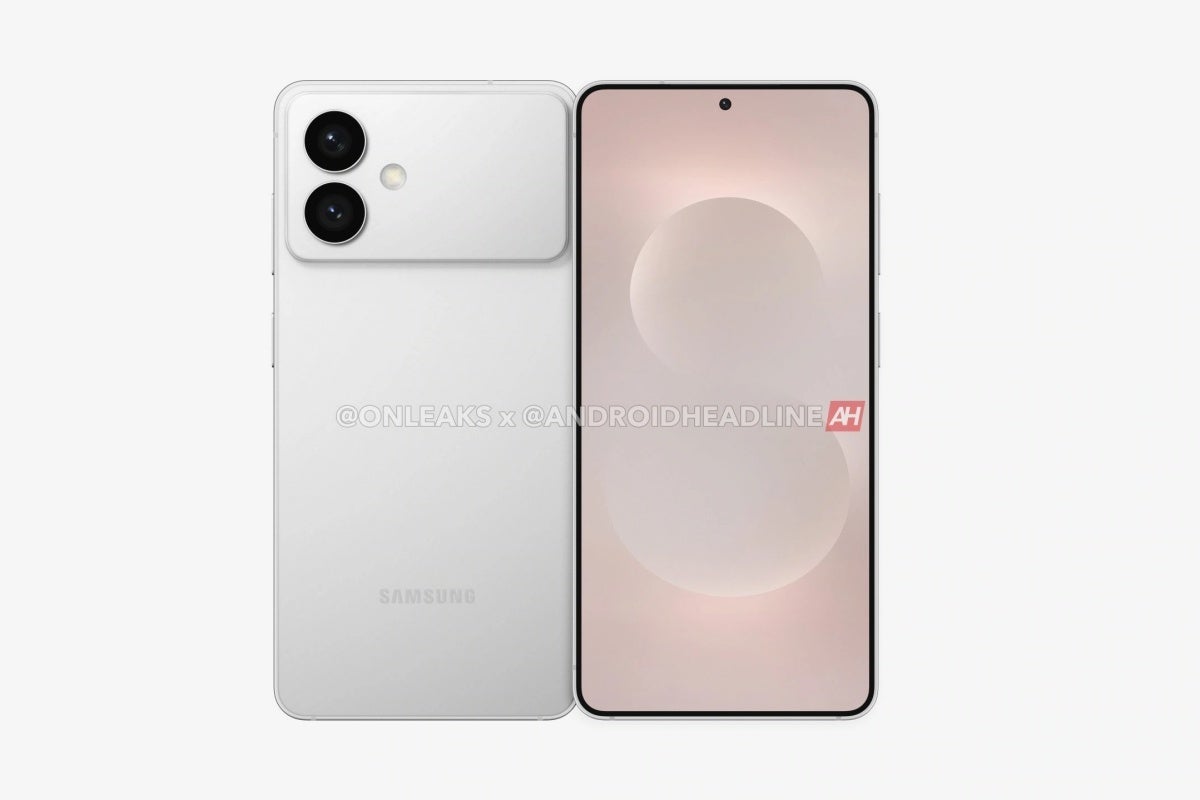
:contentReference[oaicite:0]{index=0} The promise was compelling: combine flagship-level hardware with a sleek, featherlight form factor. But by August, sales had stalled at just about **1.31 million units**, a far cry from the success of its siblings. :contentReference[oaicite:1]{index=1} Compare that with 8.28 million for the S25, 5.05 million for the S25 Plus, and 12.18 million for the S25 Ultra in the same period. :contentReference[oaicite:2]{index=2} The first month alone saw under 200,000 units shipped. :contentReference[oaicite:3]{index=3}
Those numbers triggered alarm bells internally. The S25 Edge traded much for its slimness: a compact 3,900 mAh battery, no telephoto zoom, and substantially higher pricing than the regular S25 or S25 Plus – yet fewer features. :contentReference[oaicite:4]{index=4} Many critics had warned the design sacrifices were too steep: consumers weren’t going to pay more for less just for a slimmer silhouette. :contentReference[oaicite:5]{index=5}
### S26 Edge: already dead (or at least on life support)
Shockingly, the **Galaxy S26 Edge** is already reported as “completed” in terms of development. Yet Samsung is now allegedly shelving the project entirely. :contentReference[oaicite:6]{index=6} The initial plan had been for S26 Edge to replace the S25 Plus entirely – part of a bold reorganization that would leave the standard, Edge, and Ultra models. :contentReference[oaicite:7]{index=7} But with the Edge sub-brand failing to gain traction, the company appears to be retreating to the safer three-model structure: **S26**, **S26 Plus**, and **S26 Ultra**. :contentReference[oaicite:8]{index=8}
Some reports leave a sliver of uncertainty: rumors suggest Samsung may still release the S26 Edge selectively in markets like South Korea, even if it’s not part of the global mainstream line. :contentReference[oaicite:9]{index=9} But the prevailing expectation is that this will be the final nail in the Edge coffin.
### What Samsung gains (and loses) by turning back
On paper, cutting the S26 Edge frees Samsung to consolidate R&D, marketing, and supply toward the stronger-selling models. Analysts call it a “cutting losses early” move – refocusing on what consumers clearly want, rather than chasing a stylistic showcase. :contentReference[oaicite:10]{index=10}
But there’s risk too. The Edge line embodied a vision: that phones could be powerful *and* elegantly slim. Abandoning it may signal caution creeping back into Samsung’s flagship strategy. Will future flagships revert to safe, incremental gains rather than bold experiments? The next Galaxy S26 Ultra leaks haven’t exactly set the tech world ablaze with excitement. :contentReference[oaicite:11]{index=11}
### Could the decision backfire?
Some question whether five months was enough runway to declare the Edge failure. As one Android Authority analysis notes, holiday season sales – Black Friday, Cyber Monday, end-of-year deals – might have given the S25 Edge a second wind. :contentReference[oaicite:12]{index=12} Critics say Samsung may have prematurely throttled a concept before it could build momentum.
Further, iterative improvements – better battery tech, more flexible camera modules, optimized thermal management – might have improved the next-gen Edge. But now, perhaps, that potential will be shelved in favor of models more likely to sell in volume. :contentReference[oaicite:13]{index=13}
### The trade-off: style vs. substance
Personally, I’ve always appreciated design ambition. I’d love to see four flagship models instead of three; the notion of a sleek, ultra-thin option still feels exciting. But knowing what I know now, I’m convinced Samsung was wise to press pause.
The **S25 Plus**, at 7.3 mm and packing a 4,900 mAh battery, already strikes an appealing balance between portability and endurance. Indeed, I’d wager that if the S26 Plus can creep past 5,000 mAh while maintaining a similar footprint, it will outsell even the most compelling Edge concept ever proposed.
I’ll admit: I was briefly smitten with the idea of the S26 Edge back in July – ultra-thin, elegant, futuristic. But that enthusiasm faded as leaks showed its battery and camera specs wouldn’t hold a candle to competitors like Motorola’s X70 Air. A phone that’s beautiful but unusable becomes a cautionary tale. Design should **complement** functionality, not compromise it.
A more grounded approach? Imagine a “thick” flagship that goes all in on battery (6,000–7,000 mAh), with flush camera modules and premium materials. Possibly that sells better than any Edge ever could.
For now, Samsung’s retreat signals a recalibration. Ultra-thin was a bold bet. Now it’s back to basics.
4 comments
I read about this yesterday on a post from Ice Universe, and it makes sense for Samsung to release the S26 Edge at a later time, since the S25 Edge came out months after the main S Series flagships. Hopefully, that’s what will happen instead of it being canceled
Lol Samsung thought everyone would sacrifice battery life for a millimeter thinner phone? Nope
As an S25 Edge owner, I had low expectations, but honestly, it grew on me. It’s lighter and thinner, and there wasn’t as much compromise as I thought there would be. I actually find myself using it more often than I expected
Bold idea, weak execution. They should’ve pushed the Edge line longer and improved it