Samsung is once again betting big on the future of semiconductor manufacturing, this time by doubling down on extreme ultraviolet (EUV) lithography at its Korean facilities. Reports indicate that the company is bringing in additional high-numerical aperture (high-NA) EUV machines from ASML, the Dutch equipment supplier that effectively holds a monopoly over this technology. The move is part of Samsung’s urgent effort to ramp up yields for its upcoming 2nm gate-all-around (GAA) process, the same advanced node set to power the company’s flagship Exynos 2600 chipset.
The Exynos 2600 is Samsung’s first confirmed 2nm GAA system-on-chip, and mass production has only recently kicked off. 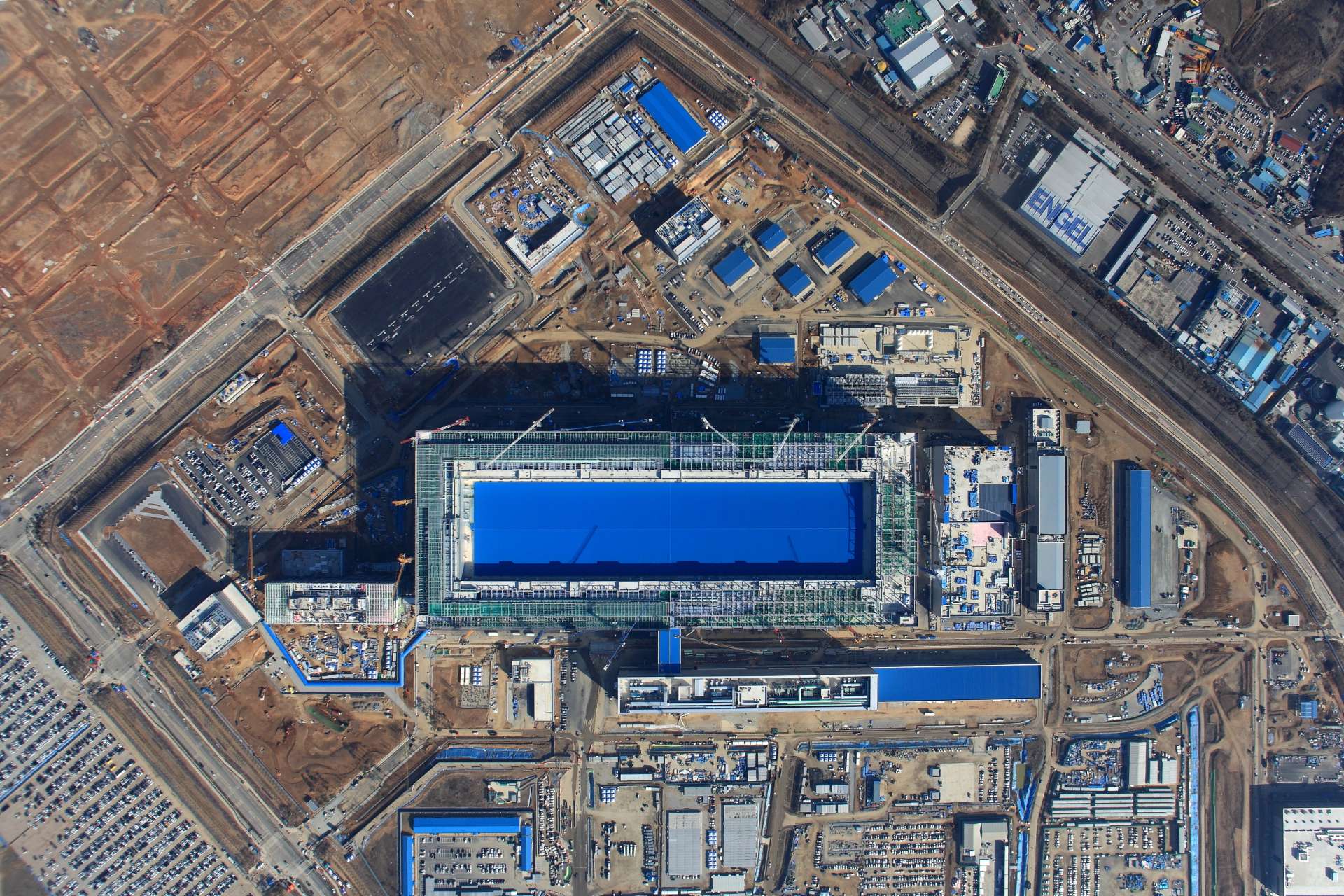
For Samsung, the stakes couldn’t be higher: if the company wants to rival TSMC at the cutting edge of semiconductor technology, it must prove it can manufacture chips reliably at scale. Yields from early test runs have hovered around 30 percent, far from the 70 percent threshold typically required to make high-volume production economically sustainable. Bringing in more ASML machines is Samsung’s calculated attempt to close that gap.
Of course, the cost of this strategy is nothing short of eye-watering. Each high-NA EUV system costs north of $400 million, making them among the most expensive industrial machines in the world. Even TSMC, widely considered the industry leader, has been cautious about committing to these machines, largely because its current EUV fleet is still capable of handling transitions down to the 1.4nm node. But for Samsung, which has struggled to catch up with TSMC in terms of consistency and trust from customers, the investment is seen as a necessary gamble.
ASML’s machines enable ultra-fine patterning needed for 2nm and beyond, but they are also scarce. The Dutch company can only produce about five to six units a year, with additional limitations imposed by government export controls. That means even if Samsung wanted to buy dozens of units, it simply can’t. Every order is a high-stakes negotiation, and securing just a few machines could be enough to tilt the balance for Samsung’s roadmap.
Right now, Samsung’s focus is squarely on its in-house Exynos 2600. Although it has completed early design work for a second-generation 2nm GAA node, it may be months or even years before outside customers trust Samsung to deliver at the scale and reliability they demand. Skepticism still lingers: the company’s 8nm process was once criticized for being little more than a rebranded 10nm node, and many in the industry remain wary of Samsung’s bold claims. Competitors such as Intel are also making noise, with its 18A process touted as a potential disruptor that could even lure Apple away from TSMC if promises are kept.
For now, the semiconductor arms race shows no sign of slowing down. Samsung’s willingness to pour billions into ASML’s high-NA EUV tools highlights the intensity of the battle for technological leadership. Whether this gamble pays off will depend not just on the machines themselves, but on Samsung’s ability to build trust in an industry where perception matters nearly as much as performance.
2 comments
shamesung & tsmc both kinda panicking rn, intel 18A might change the whole game
intel still da joke of industry lol 🤡