RTX 5060 Ti 16 GB Under $400, RTX 5070 At $479: Mid-Range GPUs Finally Start Making Sense
After years of eye-watering MSRPs and paper launches, the GPU market is finally doing something PC gamers have begged for: real price cuts on genuinely modern cards. The latest wave of deals on NVIDIA’s RTX 50 series and AMD’s RX 9000 lineup shows that mid-range and upper mid-range gaming rigs no longer need to feel like luxury purchases. With Black Friday looming and DRAM prices rising in the background, retailers are quietly racing to move inventory, and that means some of the best price-to-performance offers we have seen in this generation.
The result is a rare moment when 60-class and 70-class GPUs actually line up with what most gamers expect from those names: strong 1080p and 1440p performance, with enough VRAM to last a few years and ray tracing good enough to enjoy, not just tolerate. The overall picture still reflects a triopoly where NVIDIA, AMD and Intel have pushed prices too hard for too long, but the current round of discounts at least feels like a partial correction. If you have been sitting on an old GTX 10 series or RX 500 card waiting for a sensible upgrade, this is the kind of pricing window that does not appear very often.
At the top of today’s deal stack sits the 1440p sweet-spot tier. If you want excellent ray tracing performance without entering ultra-enthusiast pricing, the GeForce RTX 5070 Ti 16 GB continues to be the safest all-rounder in this class. It has more than enough VRAM for modern engines, pushes high frame rates in competitive titles, and can handle demanding single-player games with ray tracing enabled if you pair it with DLSS. Even better, it is finally selling below its original MSRP, turning what used to be a grudging compromise into an attractive upgrade path.
Two custom models stand out in particular. The MSI Ventus GeForce RTX 5070 Ti 3X OC and the PNY GeForce RTX 5070 Ti OC Triple Fan both launched around the $749 mark, but now sit at just $729 at retailers such as Newegg and Micro Center. The coolers are capable, noise levels are reasonable, and you get factory overclocks on top of NVIDIA’s already solid baseline. For anyone building a high-refresh 1440p rig or a compact creator system, this tier is arguably the new default choice.
However, NVIDIA is no longer alone in this performance zone. AMD’s Radeon RX 9070 XT, also packing 16 GB of VRAM, offers similar rasterization performance and is more than happy to max out 1440p in most scenarios. It trades some ray tracing strength for aggressive pricing and strong efficiency in traditional rendering. The ASRock Radeon RX 9070 XT Challenger, for instance, is advertised at $599 and has dropped to around $579 at Micro Center, making it a serious threat in the value race. Many enthusiasts point to the RX 9070 XT as the reason NVIDIA has had to quietly trim prices around it; when one card delivers comparable frames-per-second for less money, the rest of the stack has to move.
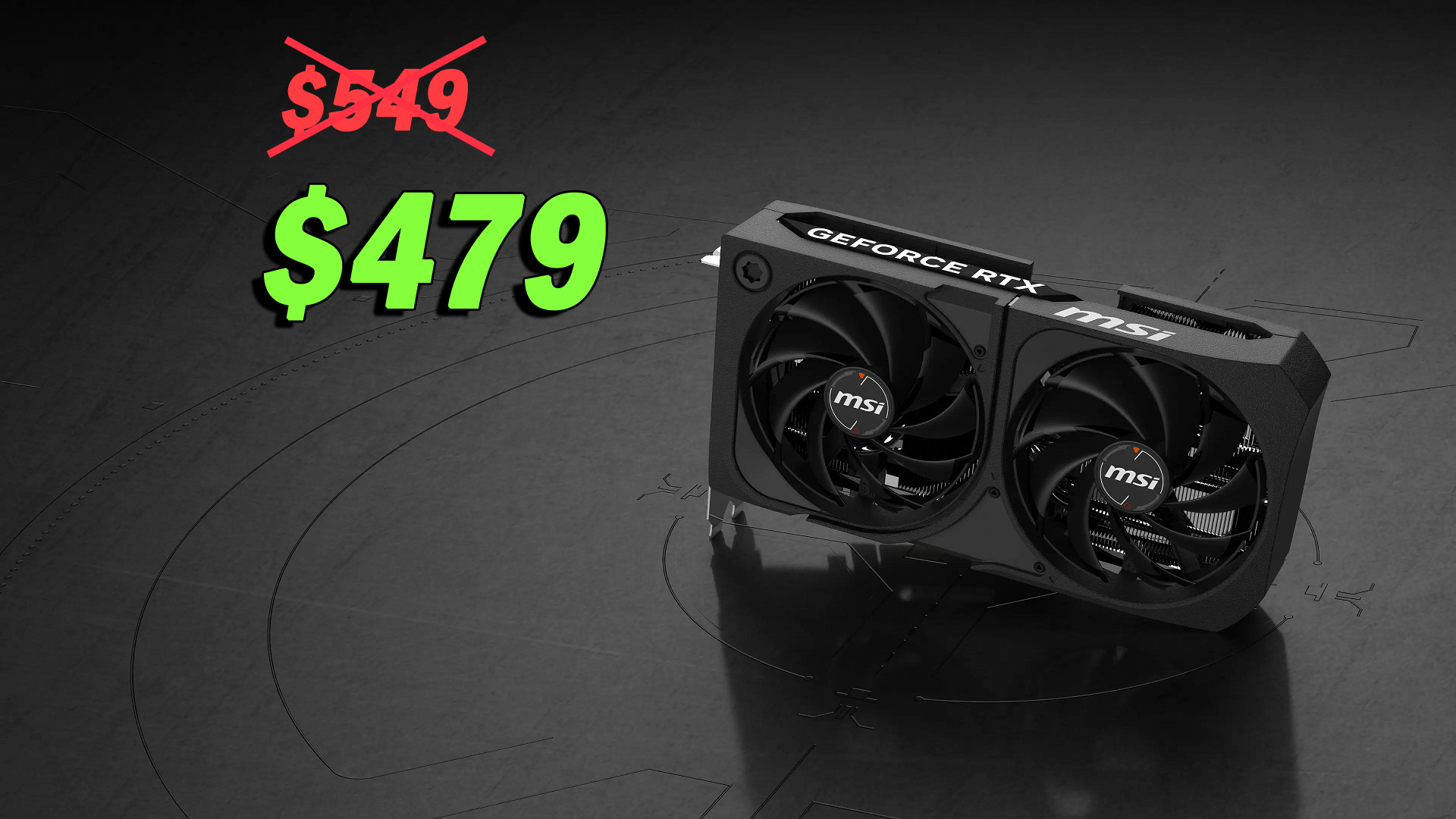
Drop a little lower in price and you hit what many would call the true gamer sweet spot: the non-Ti GeForce RTX 5070. For under $500, it delivers more than enough horsepower for 1440p high settings and buttery-smooth 1080p at very high refresh rates. It is also your cheapest clean entry point into competent ray tracing on PC without falling into the trap of past-gen leftovers. Deals such as the MSI Ventus GeForce RTX 5070 2X OC Black and the ZOTAC GeForce RTX 5070 Solid, both originally tagged at $549 and now sitting around $479 at retailers like Newegg and Micro Center, show how fast the pricing floor is dropping in this performance bracket.
This naturally puts pressure on AMD, but it also means gamers finally have real choice. For those who care most about ray tracing and DLSS, the RTX 5070 remains an obvious pick. For shoppers who prioritize raw raster performance per dollar and are less concerned about the latest ray tracing effects, the RX 9070 XT continues to look like the smarter long-term buy, particularly as it stays close to or even under its MSRP in many regions.
The most interesting movement, however, might actually be happening in the so-called budget and lower mid-range segment. Here, the 60-class cards are finally behaving like the cards ordinary people actually buy, not just placeholders below the real lineup. NVIDIA’s GeForce RTX 5060 Ti 16 GB is now positioned as the no-compromise 1440p option for those who do not want to spend 500+ dollars yet still expect a modern feature set. With 16 GB of VRAM, it gives you a comfortable buffer for future titles, big texture packs, and memory-hungry open world games.
Several partner cards have slipped into far more reasonable price brackets. The PNY GeForce RTX 5060 Ti 16 GB OC Dual Fan, once listed at $429, is now available for about $399 at Micro Center. MSI’s GeForce RTX 5060 Ti 16 GB Ventus 2X OC Black, at $439 originally, is also hovering around $399 on Newegg. For a bit of extra cooling headroom, the GIGABYTE GeForce RTX 5060 Ti Gaming OC Triple Fan has seen an especially aggressive cut from around $409 to roughly $327 at Micro Center, effectively turning it into a stealth bargain for 1440p gaming.
If your budget is tighter and you are mostly gaming at 1080p, you still have meaningful options without completely sacrificing modern features. NVIDIA’s RTX 5060 8 GB lands as one of the most reasonable entry points into the RTX ecosystem. The GIGABYTE GeForce RTX 5060 8 GB WindForce OC Dual Fan has dropped from around $309 to $279, giving you solid 1080p performance, DLSS support and basic ray tracing for less than many last-gen cards still cost just a year ago.
On the AMD side, the Radeon RX 9060 XT 8 GB is carving out a space as the budget-friendly performance spoiler. The PowerColor Radeon RX 9060 XT 8 GB Hellhound OC Triple Fan has slipped from $299 down to $279 at Micro Center, undercutting many RTX options while still providing excellent raster performance in today’s popular competitive games. For gamers who do not care about ray tracing and primarily chase maximum frames for shooters or MOBAs, this is the card that keeps AMD firmly in the conversation.
These discounts are not happening in a vacuum. Memory prices are climbing, and yet GPU retail prices are dropping, which suggests that demand in some key markets is cooling and that retailers are eager to clear shelves before the next wave of hardware hits. Some observers see this as an early warning signal for a broader economic slowdown, arguing that when premium tech gear starts falling in price despite rising component costs, it may signal that consumers are pulling back. Whether or not it truly heralds a recession, it is undeniably a moment where the numbers finally favor the buyer.
At the same time, many enthusiasts argue that this kind of adjustment is long overdue. For years, NVIDIA, AMD and Intel have pushed each new generation higher and higher up the price ladder, stretching the definition of ‘mid-range’ until it barely resembled what mainstream players could afford. Ignoring MSRPs and testing how far they could go may have worked during pandemic-era demand, but it eroded trust. Now, with more sensible prices on RTX 5060, 5060 Ti, 5070, 5070 Ti and the RX 9000 series, the market is inching back toward a balance that should have been there from the start.
Meanwhile, console gaming is struggling with its own set of problems, from cross-gen compromises to service fatigue. That only amplifies the importance of a healthy PC ecosystem where you do not have to sell a kidney to hit 1440p high settings. Some players like to joke that NVIDIA’s recent pricing moves are ‘saving PC gaming’, but the truth is more nuanced: these are corrections forced by competition and consumer resistance, not charity.
So what should you do right now? If you want the best possible 1440p experience with strong ray tracing, the RTX 5070 Ti 16 GB remains the top pick, with the RTX 5070 offering most of that experience for considerably less. If you care more about raster performance and value, the Radeon RX 9070 XT and RX 9060 XT deserve a serious look, especially where they sit close to or below MSRP. For budget-conscious builders, the RTX 5060 Ti 16 GB, the cheaper 8 GB variants, and the RTX 5060 8 GB form a capable trio for high-refresh 1080p and entry-level 1440p.
In short, the long-awaited price correction is finally here, even if it arrived later than anyone would have liked. Stock will not stay in this configuration forever, especially with component costs trending upward, so this window where GPUs are both modern and relatively affordable is worth paying attention to. For the first time in a while, building or upgrading a gaming PC in the 60 and 70-class range feels less like a financial stunt and more like the enthusiast hobby it was always supposed to be.