When The Office first aired its 2006 holiday episode “A Benihana Christmas,” the cringe humor struck audiences as outrageous but hilarious. 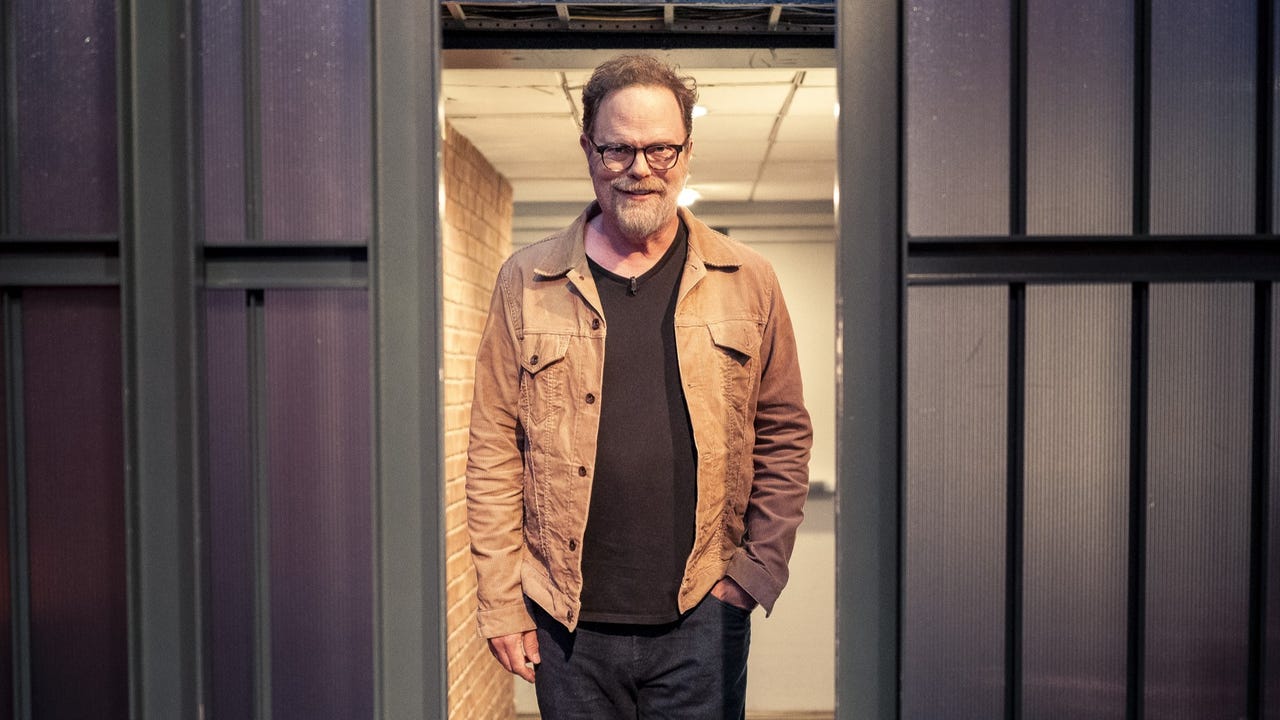
Nearly two decades later, the same storyline has become a lightning rod for discussion about how comedy ages in an era of greater cultural awareness. Rainn Wilson, who famously played Dwight Schrute, has recently reflected on the episode and admitted that what once felt edgy would have to be reimagined entirely if produced today.
In the episode, Michael Scott (Steve Carell) invites Asian American waitresses from a Benihana restaurant back to the Dunder Mifflin party. The punchline that made many wince even then: Michael marks one woman with a Sharpie to tell her apart from the other. At the time, the absurdity was meant to highlight Michael’s buffoonery and total lack of self-awareness. Yet Wilson now calls the humor “jaw-droppingly horrific,” noting that while it was written to mock Michael’s ignorance, the execution mirrors broader American insensitivity. As he explained on The Last Laugh podcast, “The show was built around characters who were clueless, sexist, racist, and insensitive – and in a way, that kind of mirrored the United States itself.”
That duality is precisely what fuels the ongoing debate. For defenders of the series, the episode works because the joke isn’t on the waitresses but squarely on Michael’s idiocy. His confusion – failing even to recognize that the women he invited weren’t the same ones who show up – skewers the obliviousness of people desperate for approval, not the women themselves. Others, including Kat Ahn, who portrayed one of the waitresses, argue that the joke leans too heavily on the old stereotype that “all Asians look alike,” reducing her and her colleague to faceless props. Ahn later said she hadn’t realized at the time how much the storyline leaned into monolithic caricatures.
Wilson’s remarks echo those of Jenna Fischer and Angela Kinsey (Pam and Angela), who have previously said on their Office Ladies podcast that such a storyline would not be written today. That doesn’t mean they believe the episode was created with malicious intent – rather, the cultural climate of 2006 allowed space for a type of cringe comedy that would immediately spark outrage in today’s hyper-connected social media environment. Back then, without Twitter storms or viral think pieces, the writers could lean into the discomfort of political incorrectness, and the episode still became a fan favorite. The series’ brilliance often came from walking the tightrope between tasteless and clever, showing us a boss who wanted so badly to be liked that he bulldozed social boundaries at every turn.
Still, context matters. Comedy often functions as a mirror, but reflections can sting, particularly for those on the receiving end of jokes rooted in racial shorthand. What once felt like satire to some felt like erasure to others. And as Wilson pointed out, American audiences may now be less willing to laugh at what feels like punching down. That shift has broader consequences: Hollywood comedies today rarely attempt the kind of biting, awkward cringe that The Office made famous, a void some lament as the death of mainstream risky humor.
Yet others argue that the show was always more about mocking white ignorance than perpetuating stereotypes. Michael Scott was never a role model – he was a deeply insecure man whose desperation for validation constantly exposed his ignorance. His growth throughout the series, sometimes clumsy but often poignant, depended on us recognizing that his blunders weren’t expressions of genuine racism or sexism, but the warped fallout of someone clueless about how his words and actions landed. As some fans put it, if the joke were told today by writers bold enough, it could still land – but only if framed clearly as satire at Michael’s expense.
Ultimately, the conversation surrounding “A Benihana Christmas” speaks to how comedy reflects cultural norms in real time. What we laugh at, and what we recoil from, shifts with the collective mood. Wilson’s honesty underscores this tension: the same show that defined American comedy in the 2000s would need sharper nuance to thrive today. Whether one sees that as progress, oversensitivity, or the loss of fearless comedy depends largely on where one sits in the audience.
5 comments
cross race effect is real, most ppl struggle telling apart faces of another race, not just whites lol
everyone acting like 2006 was ancient history…we all knew those jokes were edgy even back then
ugh ppl forget its a comedy, the joke was on michael not on the waitresses
lol headline totally twisted it, he didnt even slam it that hard, just said times changed
bro it was funny, get over it, michael was always clueless and thats why we laughed