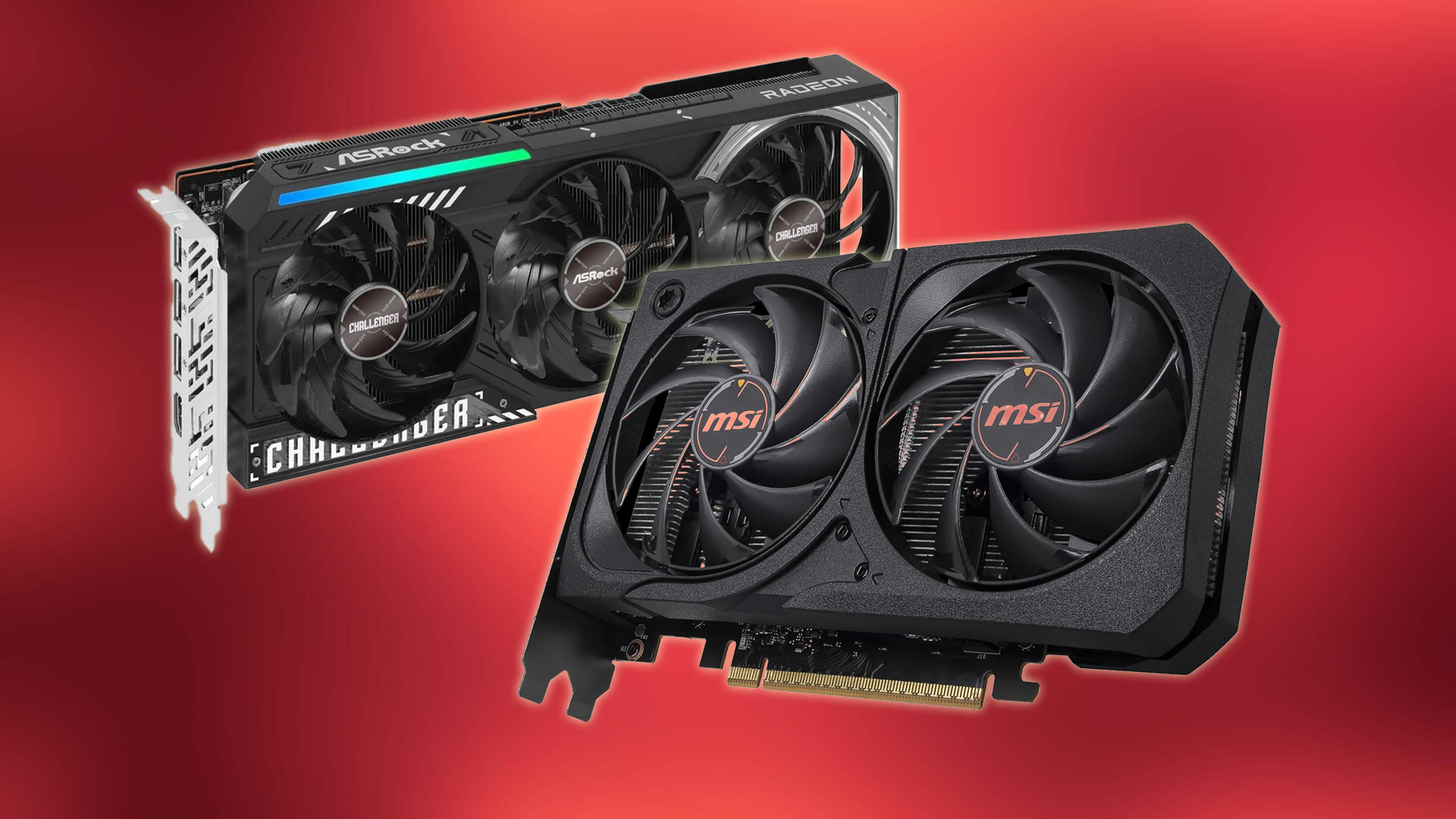
Radeon RX 9070 vs RTX 5050: When GPU Price Drops Finally Start To Make Sense
For years, midrange PC gamers have been told to just wait a little longer for sane graphics card prices. Now, at least for a couple of models, that moment is finally starting to look real. The Radeon RX 9070 has quietly slid to its lowest price yet, while Nvidia’s entry-level Blackwell card, the GeForce RTX 5050, has dipped close to the psychological 200 dollar barrier. On paper both look like tempting ways to unlock smooth 1080p and even 1440p gaming, but the value story behind these cuts is very different.
The Radeon RX 9070 is the more surprising of the two deals. The ASRock Challenger 16 GB variant recently hit a new low, and has now dropped another step, ending up roughly 40 dollars under its original MSRP and landing at around 509 dollars on major retailers. That positions it below many GeForce RTX 5070 listings and well under the bigger Radeon RX 9070 XT, which still tends to sit in the 600 to 650 dollar range. Because the XT model hogs the spotlight in benchmarks and marketing, the plain RX 9070 has been living in the shadows, which is exactly why we are seeing these aggressive cuts.
Under the shroud, RX 9070 is anything but an afterthought. Built on a trimmed NAVI 48 die with 3584 stream processors and wired to 16 GB of GDDR6 over a 256-bit bus, it has the sort of memory configuration that instantly calms anyone worried about next year’s games. At 1440p you can comfortably turn up settings, lean on high-res textures and still expect frame rates north of 60 frames per second in most modern titles, with lighter competitive games shooting well into three digits. At 1080p, it pairs perfectly with 144 Hz and 165 Hz monitors, giving you the kind of headroom that makes a midrange card feel high end in daily use.
The extra VRAM is where RX 9070 quietly future-proofs itself. While 12 GB still works today, we are already seeing some new releases nibble beyond that at ultra settings, and owners of 8 GB cards are learning the hard way how quickly setting sliders can slam into a wall. A 16 GB buffer at this price tier used to be reserved for a handful of halo products. Add in raster performance that nudges ahead of competing GeForce options in many traditional workloads, and you end up with a card that a lot of enthusiasts now see as the true successor to legendary workhorses like the GTX 1080 Ti, only with modern media engines and power efficiency.
On the other side of the ring sits the GeForce RTX 5050, the slowest and cheapest member of the Blackwell GeForce RTX 50 family. At its original 249 dollar price, it was hard to get excited about. It was technically the entry ticket to Nvidia’s latest architecture, but the performance and memory configuration made it feel more like a stopgap than a real upgrade for seasoned gamers. Only after recent discounts pushed some custom models down to around 209 dollars, such as MSI’s Gaming RTX 5050 8G Shadow 2X on Amazon, did it start to look like a plausible budget option.
The RTX 5050 offers 8 GB of GDDR6 and, importantly for Nvidia loyalists, access to the same DLSS upscaling ecosystem and AV1 encoding support as its bigger siblings. It slightly edges out cards like the Radeon RX 7600 in many benchmarks and matches the memory capacity of the GeForce RTX 5060 while costing about 90 dollars less. There is a catch though: it is powered by a smaller, slower GB207 GPU and uses a more constrained configuration, which leaves it roughly 30 percent behind the RTX 5060 in raw performance. On paper you are paying about 33 percent less for something that is around 30 percent slower, which makes it mathematically fair but not exactly thrilling.
That is where the real-world market crashes into the spec sheet. In many regions, pre-owned Radeon RX 6700 XT cards have drifted down to around the 200 dollar mark, and some gamers are spotting RX 6800 XT listings only slightly higher. Compared to those, an 8 GB cut-down Blackwell card at just over 200 dollars starts to look shaky. No amount of frame generation or shiny new stickers can hide the fact that a used 6700 XT will simply push more frames at higher resolutions in most titles. It is not surprising to see enthusiasts bluntly calling the RTX 5050 a steaming pile at this price and arguing that Nvidia should have set the target closer to 179 dollars to make sense next to the used market.
Still, context matters. Not everyone is willing to touch used hardware, and there is a segment of buyers that just wants a small, cool and quiet new GPU with a fresh warranty. For those shoppers, an RTX 5050 at 209 dollars is not the disaster some make it out to be. You get Blackwell’s media features, DLSS, and a relatively low-power card that can slot into modest power supplies while still handling modern games at 1080p with sensible settings. It is just that, unlike the RX 9070, it does not feel like you are getting away with anything special; it simply stops being a bad deal and becomes a mildly acceptable one.
Another interesting angle behind these price shifts is the state of memory and manufacturing. GDDR6 production has matured, and many modules are now manufactured on more advanced process nodes, which helps keep costs under control even as capacities rise. That is one reason we are not seeing a VRAM price explosion on 16 GB cards like the RX 9070, and it partially explains why vendors can shave tens of dollars off MSRP without instantly destroying their margins. Combine that with softer demand after the post-pandemic GPU frenzy and you have fertile ground for the kind of discounts we are seeing today.
So which way should you lean? If you are shopping new and want a card that will comfortably carry you through several years of 1440p gaming, the Radeon RX 9070 at 509 dollars is the stand-out recommendation. Its 16 GB VRAM pool, strong raster performance and competitive pricing against the RTX 5070 make it one of the rare genuinely high-value offers in the current lineup. The RTX 5050, meanwhile, only really makes sense if your budget cannot stretch beyond around 200 dollars and you absolutely want a new, warranty-backed Nvidia card with Blackwell features. If you are open to the used market, the story changes again, and cards like the RX 6700 XT or even RX 6800 XT turn into monsters of value for just a little more cash. For once, though, at least part of the GPU stack is moving in the right direction.
1 comment
Thank you for your sharing. I am worried that I lack creative ideas. It is your article that makes me full of hope. Thank you. But, I have a question, can you help me?