The Ultimate Review of the Powerbeats Fit: A Workout-Focused Earbud with Some Trade-Offs
The newly released Powerbeats Fit are the latest true wireless earbuds from the Apple-owned brand Beats by Dr. Dre, slotting into the company’s Powerbeats line as a direct successor of the 2021 model, the Beats Fit Pro. They aim squarely at users who exercise, jog, train or simply value a secure fit and solid integration with Apple’s ecosystem. But do they deliver – and what compromises have been made in pursuit of that workout niche? This full review covers design, comfort, software features, performance (audio, mic, ANC, latency), connectivity, battery life – and ultimately whether they’re the right buy.
Design & Comfort: Built for motion, with some caveats
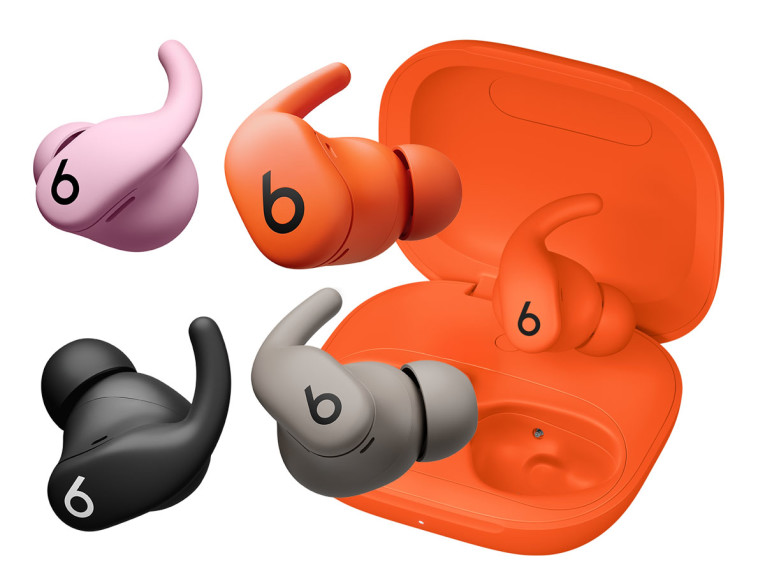
At first glance, the Powerbeats Fit resemble their predecessor, the Beats Fit Pro, with the ear-wing stabiliser and short in-ear body. But digging deeper, the changes are meaningful. Beats say the new wingtips are ~20 % more flexible than before, aiding fit and comfort across a wider variety of ears. :contentReference[oaicite:0]{index=0} The charging case is also ~17 % smaller than before, making it more pocketable. :contentReference[oaicite:1]{index=1}
The core concept is simple: instead of a full ear-hook (like the Powerbeats Pro with hooks around the ear), you get a rigid wingtip that tucks into the cymba concha (the upper bowl of your outer ear) and anchors the bud in place – even during movement. In practice: you insert the bud and twist slightly until the wingtip locks in. The recommendation to twist during insertion is helpful, especially for first-time users.
In my testing, the fit held very well during gym sessions, quick runs and aerobic movements. The wingtip design does excel at maintaining placement compared to plain in-ear buds without stabilisers. That said – because the bud body is somewhat chunky and pushes the wingtip to bear some pressure on your outer ear – after extended wear (circa 2-3 hours) I began to feel mild discomfort. It wasn’t severe, and far better than the hooks of some older sport models, but it is something to be aware of if you wear them for long periods outside workouts.
The charging case is sleek and compact, though perhaps a little too smooth: the outer texture makes it a bit slippery in hand and the small front lip gave minimal leverage when opening the lid. I personally dropped the case more than once while fumbling to open it – a small irritant but worth factoring in.
Additionally, both the buds and the case now carry an IPX4 sweat- and splash-resistance rating. :contentReference[oaicite:2]{index=2} That means they’ll survive sweaty workouts or light rain – not full waterproof immersion, but far better than nothing.
Software & Features: Apple ecosystem excels, Android gets base coverage
The Powerbeats Fit use Apple’s H1 chip, the same one found in earlier models of AirPods and Beats earbuds – but notably *not* the newer H2 chip. :contentReference[oaicite:3]{index=3} That decision has ripple effects.
On Apple devices (iPhone, iPad, Mac) you get seamless one-touch pairing, automatic switching between devices on the same Apple ID, hands-free Siri (“Hey Siri”), Find My tracking and personalised Spatial Audio with head-tracking. These are typical perks of an H1/H2 era Apple-ecosystem integration. On Android, you still get a dedicated Beats app: pairing, customising the multi-function button, toggling ANC/transparency modes, checking firmware updates, seeing battery stats and running an ear-tip fit test. But some perks are absent: multi-device switching (between Android and Windows or between Android devices) is limited, and the full Spatial Audio head-tracking experience may not be available.
One control nuance: the large ‘b’-branded button on each bud serves playback, ANC toggle and call control by default. You can remap ‘press-and-hold’ to volume, but you must choose between toggling ANC/Transparency or volume – both cannot be assigned simultaneously. I found this a slightly odd trade-off: many workouts benefit from quick volume changes *and* quick mode changes. That said, the oversized button is a plus during movement: you can easily feel and press it without fumbling.
What you *won’t* find: heart-rate monitoring, onboard fitness tracking or multi-device Bluetooth pairing across platforms. Some competing sporty earbuds now include fitness metrics; here Beats focused more on fit & sound than on health/biometric sensors.
Performance: Audio Quality, Microphone, Noise Cancellation, Latency & Connectivity
Audio Quality
While Beats does not publish full driver specs, we know each bud houses a dynamic driver and uses Class 1 Bluetooth with claimed 100 m range (subject to line-of-sight). Some measurements of predecessor models show a slightly V-shaped frequency response (boosted bass and slightly sharper treble). :contentReference[oaicite:4]{index=4} With the Powerbeats Fit, the sound signature follows that pattern: bass is energetic and engaging, mids are reasonably detailed, and treble has some edge.
One interesting feature: when ANC is off, Adaptive EQ is active – in which the internal mics monitor what you’re hearing and adjust the sound to compensate for ear-tip seal, fit and leak. When ANC or Transparency mode is enabled, the microphones focus on ambient sound processing and the Adaptive EQ is effectively disabled. In my listening sessions I preferred the ANC-off mode (with Adaptive EQ) because it sounded more balanced: fuller mids, smoother treble, still punchy bass. With ANC on the sound shifts slightly toward more bass/treble contrast (more V-shaped), and I noticed the mids sounded a bit hollowed – a familiar trade-off when ANC processing is active.
In short: if your priority is workouts with energetic bass and you don’t mind a slightly flavour-tuned signature, the Powerbeats Fit deliver. If you’re an audiophile or spend a lot of time listening to spoken-word content (podcasts, vocals) you may prefer something with a flatter, more transparent sound.
Microphone Quality
The microphones work and deliver acceptable call clarity in quiet to moderately noisy environments. However, they are not class-leading. Compared with higher-end rivals (especially earbuds using newer processing chips), background noise rejection is somewhat average, and callers may hear ambient noise. If you make frequent calls in very noisy surroundings, this is one area you’ll notice. For workout use the mic is fine; for business-call grade clarity, less so.
Active Noise Cancellation (ANC) & Transparency Mode
The ANC performance is solid though not exceptional. It handles low-to-mid frequency sounds (gym hum, treadmill whirr) competently, but higher mid/treble frequencies (voice chatter, clinking gym weights) still seep through. This is likely due to the shallower ear-tip insertion (designed for comfort and easy fit for workouts) and the wingtip design. I found that in a cardio class the ANC made a meaningful difference, but seated in a plane cabin the same buds cannot completely isolate ambient hum as well as the best noise-cancelling earbuds on the market.
Transparency mode on the Powerbeats Fit is notably good. It felt very natural – so much so that I sometimes forgot I had the buds in. Ambient sound is let in cleanly, without the unnatural “hollow” effect some transparency modes produce. If you’re running outdoors, commuting, or working in a gym and need situational awareness, this mode works extremely well.
Latency & Connectivity
The buds maintained reliable connection during my typical use: no dropouts during gym sessions, walks around the house, or phone nearby. During one test behind thick walls I did see a momentary falter, but average use is unaffected. When paired with Apple devices, the H1 chip helps deliver low latency and seamless switching; if you launch a game or video the audio was in sync with the picture.
Note: If you cross-connect between Apple & non-Apple devices frequently (e.g., phone + Windows + Android) you should be aware: the Powerbeats Fit do *not* support full multi-device Bluetooth pairing (simultaneous pair to two devices) in the generic way some other earbuds do. This is a deliberate limitation of the Beats/Apple ecosystem strategy.
Battery Life & Charging
Beats claim up to **7 hours** per earbud with ANC off, and **6 hours** with ANC on. With the charging case, the total listening time clocks in at up to **30 hours** (ANC off) or ~24 hours (ANC on) according to Beats. :contentReference[oaicite:5]{index=5} In my real-world testing I achieved around 8 hours 11 minutes with ANC off and ~6 h 45 min with ANC on – so a little ahead of specs which is always welcome.
Beats also advertise a fast-fuel feature: about **1 hour of playback after a 5-minute charge**. I verified approximately 1 hour 19 minutes under ANC off conditions during testing. Not bad for those quick gym drop-in sessions.
What’s missing: wireless (Qi) charging of the case. The case only supports USB-C wired input. For a $200 product in 2025, I consider that omission noteworthy – especially given many rivals now include wireless case charging.
Conclusion: For iPhone gym-goers they’re a strong pick; Android & careful buyers may look elsewhere
At a $199 (or equivalent) price point, the Powerbeats Fit position themselves as premium workout-focused earbuds – not quite the flagship audio powerhouse, but strong in their niche. The design delivers excellent fit and security for workouts, the integration with Apple devices is near seamless, the battery life is solid, and the transparency mode is standout.
That said, compromises exist: The H1 chip rather than H2 means you miss some newer codecs and potential audio enhancements. The lack of wireless charging is a regrettable omission. Microphone quality is only average, and if you use Android or frequently switch between multiple platform devices, you’ll sacrifice some convenience. Also, for long listening sessions (beyond 2-3 hours) the fit may begin to exert slight pressure on the ear – even if less so than bulkier workout hooks.
In the bigger picture: If you are primarily using an iPhone, doing workouts, running, gym sessions and you want true wireless buds that will stay put, handle sweat, integrate with your Apple ecosystem and sound good – these are a very good choice. If you’re an Android user, make frequent device switches, need best-in-class mic/ANC for calls or travel, or want wireless charging + extra features, you might want to explore alternative models.
Overall grade: For the target audience of fitness-minded Apple users, the Powerbeats Fit are a smart buy. For everyone else, buyer awareness of the trade-offs will be key.
2 comments
i accidentally stepped on one of my friends power beats fit brand new and there gone forever , no warranty either, not very durable
Wish they had wireless charging – $200 and no Qi is kinda lame these days imho