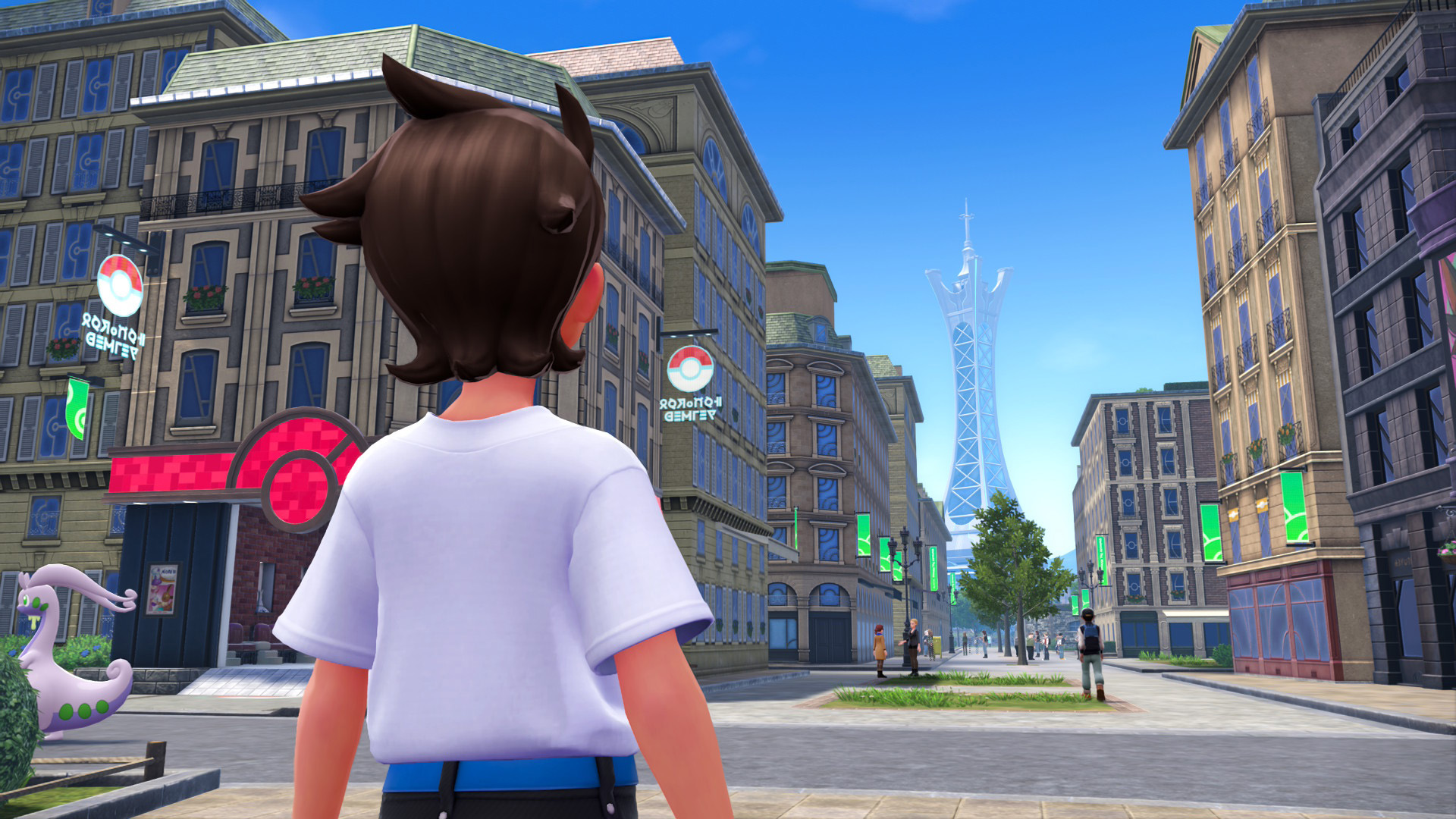
Pokémon Legends: Z-A Review – Urban Renewal in Lumiose City
The newest entry in the long-running Pokémon franchise, Pokémon Legends: Z‑A (released October 16, 2025 for the Nintendo Switch and Nintendo Switch 2), takes a bold step away from the expansive “open world” sandbox design seen in recent titles and instead focuses the action within a single, densely-populated city: Lumiose City, the stylish metropolis introduced in Pokémon X/Y. While some fans may lament the lack of wide-ranging geography, Legends: Z-A makes interesting trade-offs – reworking core mechanics, redesigning the city-hub gameplay loop, and introducing a fresh combat system. The end result is one of the most coherent and polished Pokémon experiences of the HD era, albeit with clear compromises.
Setting the Scene: Lumiose City Reimagined
In Legends: Z-A you arrive in Lumiose City as an outsider – literally a tourist turned trainer – just as the city embarks on a sweeping urban renewal plan. The goal: to transform the city into a space where humans and Pokémon live side-by-side in urban harmony. But cracks are appearing. Wild zones are springing up in once-civilised areas. Rogue Mega-Evolved Pokémon are running rampant. And to complicate things, the prestigious Z-A Royale tournament (a ranking ladder from Z to A) looms at the edge of the mystery.
You’re quickly drafted into the youthful team known as Team MZ by your new friend Taunie (or Urbain, depending on your trainer’s gender), joined by Lida, a dancing-dreamer, and Naveen, a fashion-obsessed fanboy. Soon enough you’re installed at Hotel Z and immersed in the Z-A Royale competition, all while you unravel what’s really going on in the shadow of the iconic Prism Tower, the city’s landmark and focal point of the redevelopment.
As far as Pokémon narratives go, this one is stronger than many recent entries: you actually care about the characters, the political tensions of city renewal, and the wild zones encroaching into the urban grid. The sidequests support that, too – yes you still fetch and catch, but you also investigate missing persons in the sewers, compete in influencer-style trainer showdowns, and wander through Lumiose’s surprisingly large Pokémon museum. This is one of the richer-feeling Pokémon worlds I’ve encountered in years.
The Constraint (and Opportunity) of a Single City Map
That said, the game’s map is undeniably small – it’s one city, courtyard to courtyard, street to street. You could probably sprint across it in minutes. But the key is: Game Freak makes very clever use of vertical space (rooftops, sewers, hidden alleys) and maze-like district design to trick your brain into feeling larger. There are boutique cafés, clothes shops, a museum, and wild zones popping up inside the city blocks – not just “grass patches.”
Still: if you came into the game expecting the sweeping geography of or you may feel let down. That’s not surprising. Some reviewers have likened the city-map approach to feeling “the walls closing in” on them. :contentReference[oaicite:7]{index=7} The flipside: this restriction allows for tighter story beats, more defined tourism-style storytelling, and an urban aesthetic rarely seen in Pokémon games.
Graphically, the game looks polished – especially on Switch 2, where the game runs at a consistent 60 fps with few glitches. That’s a noticeable step up compared to Scarlet/Violet. But make no mistake: the building textures remain simplistic, many interiors are shallow, and there are still pop-in and load-time issues. :contentReference[oaicite:8]{index=8} For a Pokémon game, though, the trade-off is reasonable given the stronger character models and smoother performance.
Combat Reinvented: Real-Time Meets Pokémon Strategy
One of the biggest surprises in Legends: Z-A is the combat overhaul. While previous core Pokémon titles stuck (more or less) to turn-based battles, here you get a hybrid: real-time arenas where positioning, movement, and timing matter, but the menu of attacks is still yours to pick. Reviews describe it as a “battle revolution” for the franchise. :contentReference[oaicite:9]{index=9}
Here’s how it works: you lock onto a target, guide your trainer and Pokémon into the fray, and your four mapped face-buttons control moves with cooldowns. Some attacks require dodging out of the way of wide-AOE blasts; others work best from behind. Mega-Evolved Pokémon make a strong return, but their new role blends seamlessly into this system – there’s now an energy gauge that fills during battle, letting you Mega-Evolve once it’s charged, and you can do so more freely than in past games. :contentReference[oaicite:10]{index=10}
Boss encounters against “Rogue Mega-Evolved Pokémon” crank the tension up. These fights feel more akin to action-boss battles than the usual Pokémon gym fights: patterns, mechanics, dodges, frenetic pace. Many players say they’ve never felt this level of stakes in a core Pokémon game before. :contentReference[oaicite:11]{index=11}
At the same time, the system retains enough of the rock-paper-scissors DNA to feel recognisably Pokémon. You’re weakening wild Pokémon and throwing Poké Balls when needed – the basics remain, but the dance is faster, more fluid. One nice touch: if a wild Pokémon faints you *can* still catch it in a short window – no more losing out because you over-killed it. This seemingly small change is a smart evolution of the franchise’s long-standing mechanics.
The Gameplay Loop: Day, Night and Rank-Up
Once you land in the city and finish the tutorial marathon, the game settles into a rhythm. During the day: explore Lumiose, hit side-quests, roam wild zones, catch Pokémon. At night: the Z-A Royale ignites – one zone of the city becomes a battle arena where trainers roam and you sneak up to fight, earn points, and ultimately secure a Challenger’s Ticket to face a promotion match that moves your rank up the ladder (Z to A). :contentReference[oaicite:12]{index=12}
The structure could feel repetitive in lesser hands, but here the game cleverly avoids fatigue by weaving in story missions, detective sequences, influencer-trainer challenges, and urban exploration. For example: you don’t just get told “go fight this trainer,” you might need to win a viral battle competition to even *challenge* them. Or you might need to descend into the sewers beneath a district to find a missing person before a ranking opponent will face you.
Thanks to that, it’s not just “catch ’em all, fight trainer, rank up.” It feels like you’re living in a city undergoing change, moving up the ranks while uncovering underground mysteries and supporting the redevelopment initiative. The pace is solid: the main story can be completed in around 20 hours if you focus, but completionists (catching all the Pokémon, exploring every zone, topping the ranking) can spend 40–60 + hours. As usual: you get out what you put in.
Strengths & Weaknesses
What works:
- The urban setting is a refreshing change of pace – dense, interactive, character-rich.
- Characters in Team MZ and the city’s roster are genuinely memorable – something not always true in Pokémon games.
- The real-time combat system is fun, tension-building, and a smart evolution for the franchise.
- Shiny hunting has received key improvements – e.g., if you walk away from a shiny Pokémon it *won’t* despawn and vanish. Big win for collectors. :contentReference[oaicite:13]{index=13}
- Performance on Switch 2 is solid, smooth 60 fps, fewer visual glitches than recent entries.
Where the game falters:
- The map is compact – only Lumiose City – so if you thrive on exploration of vast landscapes, you may feel constrained.
- Visuals: while improved, many buildings feel flat, textures remain simple, interiors are limited. Several outlets describe the world as “sterile” at times. :contentReference[oaicite:14]{index=14}
- The lack of voice acting is still a notable omission. In cutscenes it sometimes feels like something was turned off. :contentReference[oaicite:15]{index=15}
- The early game is tutorial-heavy, and the opening stretch may test your patience. :contentReference[oaicite:16]{index=16}
Reception: Love, Hate, and Everything In-Between
Critically, the game has been well-received. Some outlets rate it as one of the strongest Pokémon titles in years. For example, Nintendo Everything suggested it’s “a real contender for the best Pokémon game on Nintendo Switch.” :contentReference[oaicite:17]{index=17} However, the user reception has been far less uniform – on review aggregator sites the user score has dipped into the 4.3/10 range amid so-called review-bombing, driven in part by frustrations over presentation, price, and the single-map design. :contentReference[oaicite:18]{index=18}
That polarization tells you where the game stands: it is a strong, even refreshing take on the franchise – but if your expectations include ultra-high-end visuals, sprawling world, full voice-acted cinematic narrative, you might feel some elements are lacking. As one Reddit user put it: > “The new battle system is very fun and engaging… the city … is super fun. Yeah, the city isn’t a particularly great setting and it lacks a Pokémon-adventure feeling for that reason. Presentation is meh, like no voice acting. But the battle system? The best Pokémon has ever.” :contentReference[oaicite:19]{index=19}
Verdict: A Solid Foundation for the Future
In sum: Pokémon Legends: Z-A is the most cohesive, thoughtfully-constructed Pokémon RPG of the HD era so far. Yes, you could argue it gives up some of the grandeur and scope of its sandbox peers, but what it lacks in size it makes up for in polish, focus, and mechanical innovation. The real-time combat gives the series an exciting new direction; the urban setting offers a fresh aesthetic; and the gameplay loop hooks you in.
Buy it if you’re looking for a Pokémon game that changes things up – if you’re interested in exploring a dense city with vibrant trainer culture, uncovering mysteries tied into a tournament ladder, and experiencing faster, more strategic battles. Wait if you demand sprawling maps, ultra-realistic visuals, or voice-acted story beats. Either way, I’m excited to see what the team builds on next – Legends: Z-A may well prove to be the strong foundation for the next generation of Pokémon titles.
Overall: Strong recommendation with caveats. It doesn’t hit every “AAA” benchmark, but for what it sets out to do, it mostly succeeds. You’ll get thrills, urban Pokémon-adventure vibes, and a new combat paradigm – just don’t go in expecting open-world wilderness and full cinematic polish.
Reviewed on the Nintendo Switch 2 version. Review code provided by Nintendo.
1 comment
Great game. I like the new combat system, honestly surprised me