Mark Cerny and AMD’s Jack Huynh have officially hinted at the dawn of PlayStation 6, setting the gaming world abuzz. In a freshly released joint video from Sony and AMD, the two industry veterans discussed Project Amethyst – a codename representing their collaborative vision for the future of gaming hardware and AI-driven graphics technology. While most of the conversation revolved around technical innovations, one line from Cerny stood out like a flare in the night sky: “These technologies only exist in simulation right now, but the results are quite promising, and I’m really excited about bringing them to a future console, in a few years’ time.” That small phrase – “in a few years’ time” – has instantly fueled speculation that the PlayStation 6 might be closer than many expected.
Given Sony’s historical release patterns, the timeline checks out. The PlayStation 5 launched in 2020, followed by the PS5 Pro refresh in late 2024. 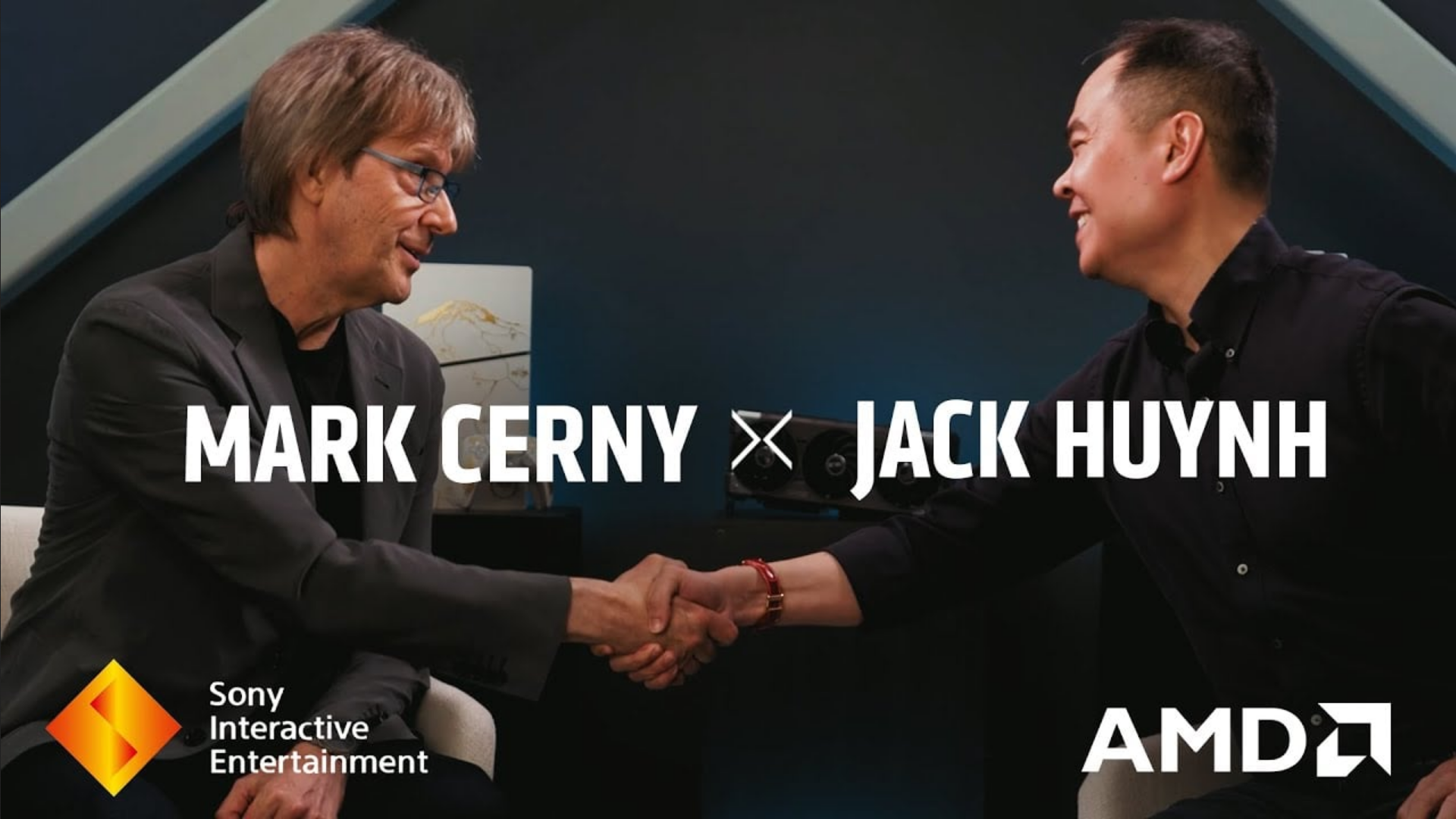
If Sony maintains its usual seven-to-eight-year generational rhythm, 2028 looks like the sweet spot for the PS6 debut. AMD’s deep involvement through Project Amethyst suggests the next-gen console could represent a fundamental leap, rather than just a performance upgrade – especially with rumored innovations like Neural Arrays, Radiance Cores, and Universal Compression aimed at enhancing AI rendering, efficiency, and photorealism.
Behind the marketing gloss, it’s also a peek at a changing philosophy in console design. Cerny’s comments indicate that Sony is focusing not only on raw teraflops (rumored between 34 and 40 for the PS6) but on smarter, AI-assisted game creation – a response to ballooning development costs and longer production cycles. As one fan noted, it’s not just about faster chips anymore; it’s about how games are made, how AI can generate or optimize assets, and how development can remain sustainable. These shifts might allow Sony’s studios to deliver massive, cinematic games without the five-year crunch cycles that now plague AAA development.
There are also clues about the PS6’s hardware philosophy. Multiple sources suggest the system will ditch a built-in disc drive entirely in favor of a detachable model – echoing the modular approach of the PS5 redesign. The move reinforces Sony’s strategy of flexibility, digital-first distribution, and cost efficiency. Meanwhile, AMD’s Jack Huynh hinted that the partnership’s goal is to achieve unprecedented performance-per-watt – crucial for AI and real-time global illumination features.
Fans are already drawing comparisons with the competition. Microsoft’s next-gen Xbox hardware reportedly targets 2027, though analysts and insiders alike believe Sony has little reason to rush. The PS5 continues to dominate in Europe and Japan, consistently outselling Nintendo’s Switch 2, which many gamers have criticized as an underwhelming half-step rather than a true generational leap. As one user quipped, “PS5 outsells Switch 2 again – so much for the ‘Switch 2 revolution.’” With PS5 sales expected to remain strong through 2026, Sony may use the extra time to refine AI game creation tools and leverage advanced chip manufacturing – potentially at the 2nm node – by 2028.
For now, Project Amethyst feels like both a technical teaser and a quiet declaration of intent. Sony and AMD are betting on a future where computing intelligence, not just graphics power, defines next-generation gaming. When PlayStation 6 does arrive, it won’t just be another console – it’ll mark the beginning of a smarter, AI-enhanced era in gaming.