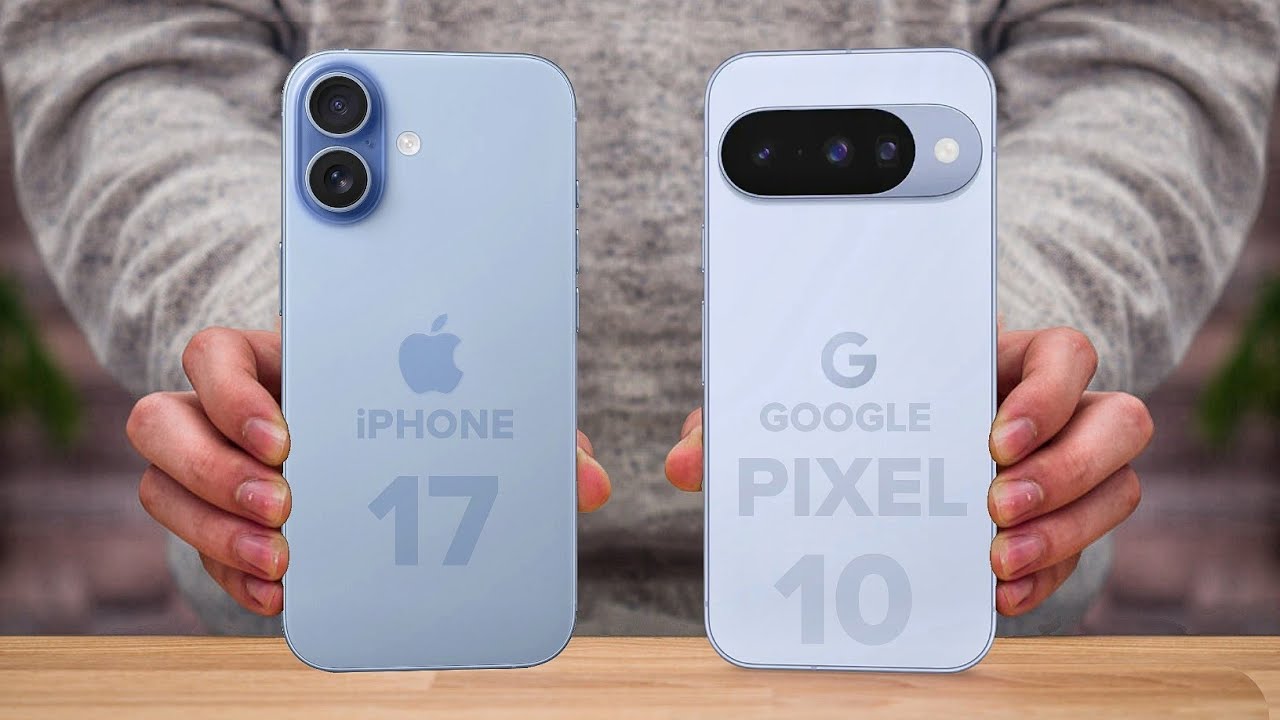
Pixel 10 vs iPhone 17: The Real Battle for Smartphone Switchers
For years, Apple has held an iron grip on smartphone loyalty. If you’re in the iPhone camp, chances are you stay there, drawn back by the ecosystem, the seamless sync between devices, and the familiar experience. Google, however, hasn’t given up on trying to lure those users away, and with the Pixel 10, it might finally have a fighting chance. Now that the iPhone 17 has officially launched, the head-to-head battle feels more balanced than ever before.
Apple’s latest entry is arguably the most compelling base iPhone in years. The company finally gave users long-requested features like ProMotion (its buttery-smooth 120Hz display tech), a brighter screen, longer-lasting battery with noticeably faster charging, and doubled base storage at no extra cost. At $799, the iPhone 17 isn’t just the safe, predictable upgrade – it’s a reinvention of the base model that no longer feels like a stripped-down lure to push you toward the Pro lineup.
But the Pixel 10 doesn’t go down quietly. Google’s flagship has doubled down on its strengths: artificial intelligence, unique camera choices, and compatibility with accessories that once kept iPhone users tethered. And while both phones now stand closer than ever in terms of value, their appeal still boils down to where you place your priorities.
Design and Everyday Experience
The iPhone 17 remains instantly recognizable. Apple tweaked the frame and slightly slimmed the bezels, but its main design language hasn’t shifted much. What has changed is the feel of the device: smoother animations thanks to ProMotion, a brighter OLED panel that pops in outdoor sunlight, and that extra base storage that saves users from upgrading by default. In short, the iPhone 17 feels premium, even though it’s the non-Pro edition.
The Pixel 10, meanwhile, refines Google’s design approach with subtle changes. It’s lighter, sleeker, and hides the Tensor G5 chip under the hood – silicon built for Google’s AI-first philosophy. Everyday performance is boosted by 12GB of RAM, making it one of the most efficient multitaskers among Android flagships. Smooth scrolling, intelligent app prediction, and smarter system-level AI all give the Pixel 10 an everyday polish that rivals iOS in ways earlier Pixels couldn’t quite manage.
Camera Showdown: Telephoto vs Selfie Power
This is where the philosophies of Apple and Google diverge most clearly. The Pixel 10 brings a 5x telephoto lens to the table, a feature conspicuously absent on the base iPhone 17. Google sacrificed a bit of sensor size in its main and ultrawide cameras to squeeze in the telephoto, but the result is creative flexibility that Apple still keeps locked behind its Pro paywall. Portraits shot with the Pixel telephoto carry a level of compression and natural depth that simply looks more professional. And in landscape photography, that ability to crop distractions by zooming in is invaluable.
Apple, instead, chose to overhaul the front-facing camera. The iPhone 17 replaces the old 12MP selfie shooter with an 18MP square multi-aspect sensor. It’s a big jump, not just in raw megapixels, but in usability. Group selfies are wider, FaceTime calls are sharper, and video creators now get stabilization borrowed from the rear Action Mode. For influencers, vloggers, or anyone glued to front-camera apps, Apple’s upgrade is arguably more impactful than even its new 48MP ultrawide rear camera.
In short: Google’s Pixel 10 gives you a more versatile photography kit with that telephoto, while Apple upgrades the camera you use every day without thinking. It’s versatility vs. accessibility, and your pick depends on what kind of shooter you are.
AI: Google’s Crown vs Apple’s Stumbles
Artificial intelligence is where Google flexes its biggest muscles. Features like Best Take (perfectly swapping faces in group shots), Magic Editor (object manipulation), Add Me (seamless compositing into photos), Audio Eraser, and Recorder with summaries turn the Pixel 10 into more than a phone – it’s an everyday productivity and creativity engine. The live Voice Translate during calls, which can mimic your own voice in another language in real time, feels almost science fiction-like in execution.
Apple, meanwhile, has begun rolling out its Apple Intelligence suite. On paper, it sounds impressive: smarter Messages, Live Translation, and eventually Siri 2.0. In reality, it feels unfinished. Performance lags, accuracy can stumble, and the comparison to Google’s AI execution leaves Apple looking behind the curve. For users who prioritize cutting-edge AI in their daily tools, the Pixel 10 stands tall.
Charging and Battery Life
Battery life is another area of close competition. Apple claims the iPhone 17 can last up to 30 hours of video playback, a leap from the iPhone 16’s 22 hours. Faster wired charging is now possible with a new 40W adapter, promising 50 percent in about 20 minutes. Wireless charging, with MagSafe and Qi2, caps at 25W.
The Pixel 10 packs a 4970mAh battery and scores impressively in browsing and video tests. It falls short for gaming endurance, but for most users, its 21 hours of browsing and 10 hours of video playback are solid. Wired charging maxes at 30W, delivering a half-charge in 30 minutes and a full top-up in about an hour and a half. Wireless charging lags behind Apple at 15W, but the big win for Google is Qi2 compatibility. The Pixel 10 not only works with its own Snap accessories but also directly supports MagSafe gear – meaning your iPhone chargers and mounts now work seamlessly with Google’s phone. That knocks down one more barrier for hesitant switchers.
Performance and Storage
Apple’s A-series chips remain performance beasts, and the iPhone 17 is no exception. Everyday apps, gaming, and long-term OS support all remain Apple’s unmatched selling points. But Google’s Tensor G5 isn’t about raw power; it’s about integration. It’s designed to make AI run locally, instantly, and efficiently – and that’s where the Pixel holds unique value.
Storage, however, tilts toward Apple. With the iPhone 17 now starting at 256GB for $799, Apple gives buyers space security. The Pixel 10’s 128GB base feels dated at this point, especially given rising app sizes and high-res video recording. Yes, you can opt for the 256GB Pixel, but at a higher price, which undermines Google’s affordability pitch.
That said, storage is virtual. You can expand with cloud options, but you can’t retrofit a telephoto camera into your phone. Google still argues – convincingly – that photographic versatility is worth more than extra gigabytes.
Why Google Still Has a Shot
The iPhone 17 is Apple’s strongest base model in years. It fixes long-standing criticisms, making it harder for competitors to pry users away. Yet the Pixel 10 continues to stand its ground with unique differentiators: a 5x telephoto, real-time AI features that work seamlessly, MagSafe/Qi2 compatibility, and a browsing-and-video battery life that keeps up with the best.
For users locked into the Apple ecosystem, these upgrades might not be enough to tempt them. But for anyone curious about leaving iOS, Google has stripped away some of the biggest excuses. You can bring your MagSafe accessories, you can enjoy smarter AI tools, and you can experiment with photography in ways the iPhone 17 simply won’t allow at its price point.
The verdict? Apple closed some gaps, but Google opened new doors. The Pixel 10 doesn’t crush the iPhone 17, but it keeps the conversation alive – and for switchers, that’s exactly the opportunity Google needs.
4 comments
gaming sucks on pixel battery lol, apple still king there
apple fans will never leave ios no matter what features google adds
switching to pixel just cuz it works with magsafe, no joke
lol no matter what ppl say, google phones still feel beta to me 😂