Google’s Pixel 10 Pro XL has just claimed a decisive win over Apple’s iPhone 17 Pro in what’s becoming one of the most hotly debated photography rivalries of the year. After a detailed side-by-side comparison filled with real-world photos, zoom tests, and low-light shots, readers overwhelmingly crowned the Pixel as the superior camera phone. 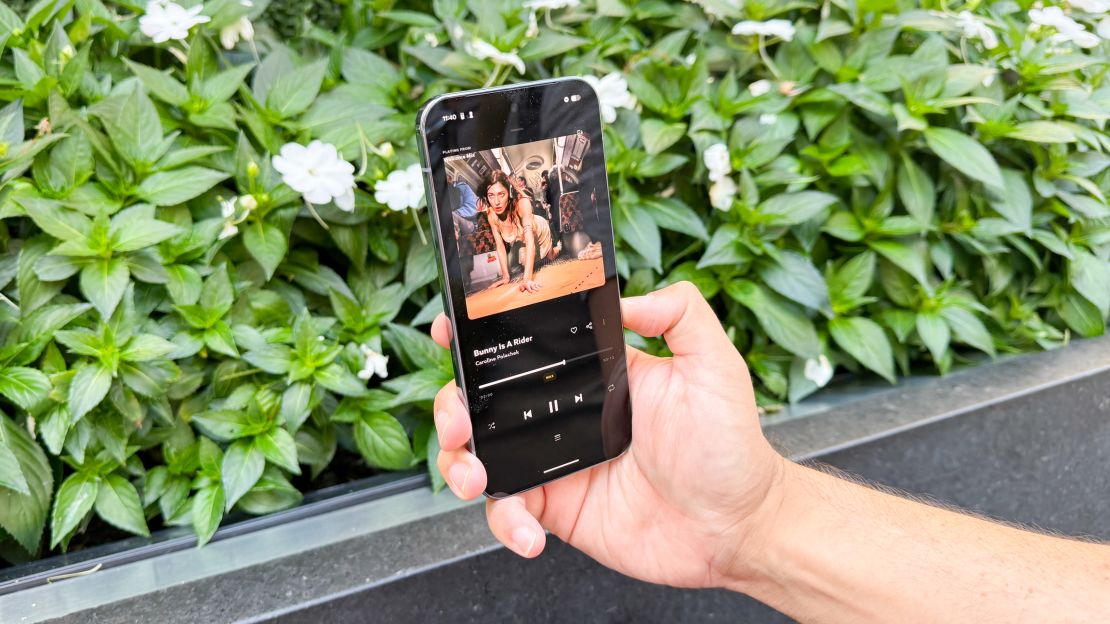
Out of more than 1,500 votes, an astonishing 72% favored Google’s approach to image processing over Apple’s.
The numbers alone tell the story, but they also highlight a broader shift in mobile photography philosophy. Google, once mocked for sticking with the same small sensors year after year, is now leading the conversation not with hardware alone but with the power of software and AI-driven imaging. Meanwhile, Apple – long seen as the benchmark for mobile camera consistency – is suddenly on the defensive.
Pixel’s winning formula: vibrant realism and effortless shooting
Those who voted for the Pixel 10 Pro XL consistently pointed to one thing: its images just look better straight out of the camera. Google’s signature HDR+ processing and Real Tone technology work together to capture scenes that pop with dynamic range yet stay faithful to reality. Whether it’s subtle skin tones or harsh lighting, the Pixel rarely stumbles.
Real Tone, first introduced on the Pixel 6, remains one of Google’s biggest innovations. It ensures that every skin tone is represented accurately and beautifully – something that’s often overlooked in smartphone photography. Instead of over-smoothing or artificially warming the image, the Pixel delivers honest color reproduction. In a world saturated with filters and AI beautification, this approach feels refreshingly natural.
Then there’s HDR+, Google’s long-time secret weapon. It intelligently merges multiple exposures to preserve detail in both the brightest and darkest areas of a photo. The result is that unmistakable ‘Pixel look’ – vivid, contrasty, and striking without crossing into cartoonish territory. For most users, it’s the kind of processing that makes photography effortless: point, shoot, and trust the result.
Apple’s impressive hardware, underwhelming software
To be clear, the iPhone 17 Pro isn’t falling behind in hardware. Apple packed its flagship with serious upgrades: a 48 MP telephoto lens with 4x optical zoom, an 8x near-optical crop mode, and an improved 18 MP front-facing camera. Combined with the Photonic Engine and new Bright Photographic Style, Apple clearly intended to retake the lead.
Yet in practice, many of the side-by-side comparisons revealed an ongoing inconsistency in Apple’s image processing. Photos often appeared flatter, with less punch and occasionally awkward color casts – a subtle green or yellow tint that threw off white balance. Even with all that hardware muscle, the iPhone’s final shots lacked the dimensionality and confidence seen in Pixel photos.
This disconnect seems to stem from Apple’s cautious approach to computational photography. While Google embraces bold, AI-driven processing to shape every shot, Apple tends to lean on its sensors and lenses first – with less aggressive software tuning. That restraint, while once praised for realism, now feels like hesitation in an age where computational processing defines camera excellence.
Years of software mastery pay off for Google
Google’s camera strategy has always been about software first, hardware second – and the Pixel 10 Pro XL is proof that the gamble worked. Its Tensor G5 chip is not just about performance; it’s the brain behind smarter zoom stabilization, real-time exposure tuning, and context-aware HDR. Together, these systems allow the phone to process complex lighting and motion scenarios almost instinctively.
The result is not merely technical superiority – it’s emotional resonance. Photos from the Pixel tend to feel more alive, with contrast and tone that match how the human eye remembers a moment. Shadows retain depth, highlights glow naturally, and skin tones carry nuance instead of plastic smoothness. Google’s pipeline, refined through years of iteration, continues to outshine the competition.
Apple, meanwhile, appears to be in the middle of a transition. Its hardware leaps ahead each year, but its software hasn’t evolved at the same pace. The Photonic Engine was a step forward, but it still lacks the flexibility and scene intelligence that Google’s AI stack delivers. Many users described iPhone images as ‘technically perfect but emotionally flat’ – a damning verdict in a market where people want their photos to feel as much as look good.
A defining moment in mobile photography
The outcome of this poll underscores a pivotal moment. The Pixel 10 Pro XL doesn’t just represent Google’s best camera phone yet – it symbolizes a shift in user expectations. Computational photography is no longer a novelty; it’s the new standard. While Apple will almost certainly refine its software through updates, for now, Google’s advantage is both clear and deserved.
In the end, the Pixel doesn’t just take photos – it interprets them. And that interpretation, grounded in color accuracy and emotional depth, is what made 72% of readers declare Google the winner. Whether Apple can close that gap in the iPhone 18 generation remains to be seen. For now, this round goes decisively to the Pixel 10 Pro XL.
2 comments
pixel cameras getting too good, feels unfair 😂
still prefer iphone video tho, just sayin