The OnePlus 15 arrives with all the usual flagship fanfare: a new Snapdragon 8 Elite Gen 5 platform, a larger battery, quicker charging, and a smoother high refresh rate display. On paper, it looks like the natural evolution of the OnePlus 13. 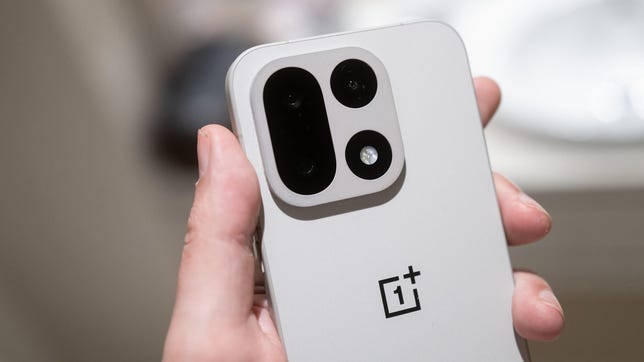
Yet for many smartphone enthusiasts, the most interesting part of this generational jump is actually the most controversial one: the rear camera system.
Instead of doubling down on premium sensors, OnePlus has made a counterintuitive hardware move. The OnePlus 15 steps back to more modest camera components compared to the OnePlus 13, at least if you judge purely by sensor size and numbers on a spec sheet. In an era where brands loudly advertise ever larger sensors and higher megapixel counts, that feels like a risky play. But OnePlus is trying to balance the equation with something less visible but just as important: a completely new image processing pipeline called DetailMax Engine.
This comparison takes a deep look at how that tradeoff actually plays out. Rather than obsessing over every line of the spec sheet, we focus on the practical results from the three rear cameras: main, telephoto, and ultra wide. The question is simple but crucial for anyone considering an upgrade: does the OnePlus 15 and its software driven strategy really outperform the hardware heavy OnePlus 13, or did OnePlus sacrifice too much in the camera department to chase a new philosophy?
From Hasselblad tuning to DetailMax Engine: a new era for OnePlus cameras
For several generations, OnePlus leaned heavily on its partnership with Hasselblad, the legendary Swedish camera maker whose name appeared right on the camera module of OnePlus flagships. The idea was clear: OnePlus brought the hardware and computational photography chops, Hasselblad helped tune color and imaging behavior to feel more refined and more photographic. The OnePlus 13 was still clearly part of that era, with its familiar Hasselblad inspired color science.
That chapter is now officially closed. OnePlus has ended its collaboration with Hasselblad, and the camera brand has moved on to work exclusively with Oppo, another company within the same corporate family. For OnePlus 15 buyers, that means no Hasselblad logo and no marketing narrative about Scandinavian color tuning. Instead, the star feature is the DetailMax Engine, a new proprietary processing pipeline that aims to deliver images with less artificial crispness and more organic detail.
DetailMax Engine is not just a fancy name for sharpening. It combines multiple frames at different resolutions and exposures, then fuses them to reconstruct a final image with richer micro contrast and more nuanced dynamic range. For the main and telephoto cameras, the phone can output 26 megapixel photos by combining several 12 megapixel frames, which contribute dynamic range and noise characteristics, with a 50 megapixel frame that provides fine detail. All of that is backed by the raw performance of the Snapdragon 8 Elite Gen 5, which is powerful enough to juggle large frame stacks without freezing the viewfinder.
On paper, this should allow the OnePlus 15 to punch above the weight of its camera hardware. But the big question is how far software can stretch physics. Can an advanced pipeline truly compensate for a smaller sensor, or does the older OnePlus 13 still hold a clear edge for imaging enthusiasts who care about pure capture quality and RAW flexibility?
Main camera hardware: bigger is still better, at least on paper
The main camera is usually the one people use most, so it is the best starting point for any serious comparison. The OnePlus 13 uses a 50 megapixel Sony LYT 808 sensor, a 1/1.4 inch type chip with 1.12 micrometer pixels and a bright f 1.6 lens. This is the same sensor that already did duty in the OnePlus 12, so in terms of hardware, the OnePlus 13 did not dramatically move the needle last generation, but it still offered a very capable foundation.
The OnePlus 15, by contrast, shifts to the 50 megapixel Sony IMX906 also known as LYT 700. This sensor is slightly smaller at a 1/1.56 inch type with 1.0 micrometer pixels and an f 1.8 aperture. It is essentially hardware that OnePlus has already used in devices like the OnePlus 13R and 13s rather than a brand new flagship class sensor. On a spec sheet, the OnePlus 13 clearly wins: larger sensor area, larger individual pixels, and a brighter lens, all of which directly influence how much light the camera system can capture in any given scene.
Those numbers matter because a bigger sensor typically gathers more light, providing cleaner shadows, less noise, and more latitude for aggressive processing without the image falling apart. At the same time, OnePlus is betting that a smarter pipeline can make up at least some of that gap, especially in common shooting scenarios like daylight photography. The result is a fascinating clash between brute force hardware and nuanced software.
Daylight main camera at default resolution: different philosophies collide
Out of the box, both phones default to a roughly 12.5 megapixel output from their main cameras. They achieve this through pixel binning, where data from groups of pixels on the sensor is combined into one pixel in the final image. This improves noise performance and dynamic range while keeping file sizes sensible.
When you compare the two phones at this standard resolution, it becomes clear that they treat the same scene in notably different ways. The OnePlus 13 prefers a bold, punchy look. Contrast is high, edges are well defined, and subjects often pop off the screen. The tonal transitions from highlight to shadow are steep, giving foliage, architecture, and textured surfaces a lively, almost three dimensional character. The impressive part is that, despite this punchy rendering, the OnePlus 13 still maintains solid global dynamic range and rarely blows out important highlight details.
The OnePlus 15, guided by the DetailMax philosophy, takes the opposite path. Its tonal transitions are far smoother, with midtones that roll gently into shadows. The same cluster of leaves that looks vivid and sculpted on the OnePlus 13 can appear flatter and more subdued on the OnePlus 15. Edge enhancement is minimal, so objects do not separate from one another as aggressively. Sharpening is dialed down to the point where, at first glance, some frames may appear almost soft, especially toward the edges of the frame where lenses naturally struggle more.
Color is another area where the break with Hasselblad is immediately visible. The OnePlus 13, tuned in collaboration with Hasselblad, tried to lean toward natural colors, although in practice it occasionally slipped into a slightly magenta biased white balance that made skies and neutrals look off. The OnePlus 15 instead chases a warmer, more crowd pleasing palette. Skies are a richer and cleaner blue, trees and grass have a more saturated, almost cinematic tone, and skin tones can look a little warmer than reality but rarely unnatural. Importantly, the subtle magenta cast that haunted the OnePlus 13 is largely gone.
The newer phone also cleans up some optical problems that were left unresolved on the OnePlus 13. Chromatic aberration, especially around the frame edges, is more controlled. The OnePlus 13 would occasionally misbehave around fine linear structures like power lines or transmission towers, leaving those regions strangely under processed or smeared. The OnePlus 15 is much more consistent in those difficult areas, handling complex line work without obvious breakdowns.
However, none of this can override the raw light gathering advantage of the OnePlus 13. In shadow regions, the older phone simply looks cleaner. The larger sensor and wider aperture give it more signal to work with, which means less noise overall. The OnePlus 15, even with its gentler processing and stronger noise reduction, usually shows visible grain and texture in darker parts of the frame. When you look closely, it is clear that the OnePlus 13 is working with richer base data.
Another factor is sharpening and detail reconstruction. Smartphone optics are rarely perfect, so some level of sharpening is actually necessary to extract perceived detail. The OnePlus 13 captures inherently more detail thanks to its superior sensor and then applies just enough sharpening to make textures pop without turning them into unnatural halos. The OnePlus 15, dealing with slightly softer optics and more aggressive noise handling, often ends up with a faint veil of fuzziness across the frame. Its images have a more natural vibe on first glance, but they often lack that satisfying micro detail that power users enjoy zooming into.
If you shoot RAW, the gap widens further. With all processing stripped away, the OnePlus 13 delivers frames that are both cleaner and richer in fine detail. The OnePlus 15 RAW files, by contrast, plainly reveal the limitations of the smaller sensor. DetailMax can compensate when you shoot JPEG or HEIF, but it cannot magically create photons in the RAW pipeline.
Main camera 26 megapixel mode: more pixels, mixed results
One of the headline promises of the DetailMax Engine is that it can output 26 megapixel images from both the main and telephoto cameras. This is not the same as simply toggling to a 50 megapixel mode. Instead, the phone fuses multiple 12 megapixel frames with a higher resolution capture to create an image that should, in theory, offer better detail without exploding file size or sacrificing dynamic range.
In practice, the 26 megapixel files are intriguing but inconsistent. On a purely technical level, the OnePlus 15 does render more detail here than at 12.5 megapixels, because it is sampling the scene with more output pixels. However, the processing tone becomes even more relaxed. Contrast is lower, edges are softer, and in some scenes the whole photo can look slightly hazy, as if a thin layer of mist had settled over the lens. It is possible that OnePlus deliberately toned down processing to avoid artifacts when handling so many pixels, or simply to keep capture times manageable.
You can feel that the phone is working harder in this mode. Shutter response slows down a bit, and there is a noticeable delay while the image is being processed, even with the powerful Snapdragon 8 Elite Gen 5 doing the heavy lifting. That delay hints at how complex the multi frame fusion is under the hood.
The bigger issue is reliability. The 26 megapixel option is only available when a whole list of conditions is met. If the light dips below a certain threshold, if you enable Motion Photo, Retouch, filters, or certain extra modes, or if the camera simply decides that conditions are not ideal, it silently falls back to 12.5 megapixel output without clearly telling you. For a feature that is positioned as a highlight of the new camera system, that lack of transparency is frustrating.
When it works, 26 megapixel output from the OnePlus 15 offers slightly more cropping room and a small but sometimes useful bump in fine detail. But it does not suddenly transform the main camera into a class leading monster, nor does it surpass what the OnePlus 13 can do with its better hardware. And just to be absolutely clear, this mode is different from the 50 megapixel toggle that both phones offer, which merely upscales a lower resolution base image to a larger size. That 50 megapixel mode is still basically a marketing checkbox rather than a mode serious photographers would want to rely on.
Telephoto hardware: different choices, similar ambitions
Moving to the telephoto cameras, the situation becomes a little more nuanced. The OnePlus 15 uses a 50 megapixel Samsung ISOCELL JN5 sensor behind a 3.5x optical zoom lens with an 80 millimeter equivalent focal length and an f 2.8 aperture. The sensor size is around 1/2.76 inch with 0.64 micrometer pixels.
The OnePlus 13, meanwhile, relies on a 50 megapixel Sony LYT 600 sensor for its telephoto unit. It is slightly larger at roughly 1/1.953 inch with 0.8 micrometer pixels and paired with a marginally faster f 2.6 lens. The effective focal length is 73 millimeters, giving you a 3x optical zoom factor instead of 3.5x. So once again, the OnePlus 13 appears to have the superior sensor advantage on paper, though the gap is not as dramatic as with the main cameras.
Telephoto in daylight: software makes the race tighter
At the standard 12.5 megapixel output, the telephoto comparison in good light is surprisingly close. In fact, there are many scenes where the OnePlus 15 actually produces more pleasing photos. The OnePlus 13 leans heavily into contrast and sharpening, which can give distant details a crunchy texture and introduce a slightly over processed look, especially when you zoom in. For some people this is exciting and punchy; for others it can feel harsh and a bit artificial.
The OnePlus 15, by contrast, benefits from the more restrained DetailMax tuning. Telephoto shots look smooth but still reasonably detailed, colors are rich without being radioactive, and the overall atmosphere of the image can feel a bit more natural than the OnePlus 13 output. Because the telephoto sensors are both relatively modest by flagship standards, the processing pipeline has more influence on perceived image quality, and the OnePlus 15 manages to close most of the hardware gap in daylight.
Examining RAW files from the telephoto cameras reveals that the OnePlus 13 still has an edge in noise levels. Shadows are cleaner and fine textures hold together better when you push them in post. But for users who primarily shoot in the default photo mode and never touch RAW, the OnePlus 15 can actually be the more attractive telephoto shooter in bright light simply because it feels less aggressive and more refined.
Telephoto in low light and the 26 megapixel twist
Once the sun goes down, the laws of physics return to center stage. The larger sensor and slightly brighter lens of the OnePlus 13 telephoto camera generally deliver better low light results. Its images can still look processed, but there is more honest detail in them, and noise is better controlled. The OnePlus 15 tries to keep pace with clever noise reduction and multi frame stacking, but shadows often turn muddy, fine detail gets smudged, and the tonal richness of scenes is reduced.
When you enable the 26 megapixel mode on the telephoto camera of the OnePlus 15, the story becomes even more complicated. In theory, this mode should offer a noticeable detail advantage by using the same multi frame fusion concept as on the main camera. In ideal daylight conditions, it does. Some 26 megapixel telephoto shots from the OnePlus 15 look impressively detailed and can outclass the OnePlus 13, especially when viewed on a large display where the extra resolution pays off.
The problem is that this mode is extremely temperamental. The camera demands near perfect lighting, stable framing, and minimal processing extras to stay in 26 megapixel mode. In any sort of mixed or low light situation, it simply drops back to 12.5 megapixel output. Even when it does remain at 26 megapixels, the processing pipeline sometimes glitches. In certain images you can spot areas that remain oddly soft, as if the upscaling or multi frame fusion failed in specific regions. For example, a leaf on the ground or a patch of texture in the background might look blurry and under resolved while the rest of the frame looks relatively sharp.
This behavior strongly suggests that the pipeline occasionally fails to upscale or align certain parts of the frame properly, leaving them closer to the underlying low resolution layer. It does not ruin every photo, but when it happens it is impossible to miss, and it undermines confidence in the mode as a reliable tool.
Minimum focus tricks and telephoto usability
Neither the OnePlus 13 nor the OnePlus 15 telephoto camera is a macro champion. Their minimum focusing distances are fairly typical for mobile telephoto lenses, which means you cannot get extremely close to your subject while still staying in optical zoom. That being said, the OnePlus 15 can focus a little closer than the OnePlus 13, and combined with the tighter 3.5x field of view, it allows for slightly more dramatic close up framing on things like flowers, food, or architectural details.
However, OnePlus does something a bit sneaky on the OnePlus 15 when you switch to the Master mode and start manually adjusting focus. In this mode, you can apparently focus much closer than the telephoto lens is physically able to, and at first it might look like the phone is pulling off some clever depth of field wizardry. Look closely, though, and you realize what is actually happening: the phone quietly shifts away from the telephoto camera and starts using a digitally zoomed crop from the main camera while still pretending to be in telephoto mode.
This trick is not unheard of in smartphone photography, and sometimes it is a practical way to get a usable shot when the telephoto cannot lock focus. The problem is that the quality difference between a native 3.5x telephoto image and a digitally zoomed main camera crop is obvious when you inspect the files. Fine detail collapses, noise characteristics change, and the overall look is inconsistent. Because this behavior only appears on the OnePlus 15 and not on the OnePlus 13, and because it is not clearly communicated in the interface, it feels more deceitful than helpful.
Ultra wide camera: competent but rarely inspiring
The final piece of the rear camera puzzle is the ultra wide unit. On the OnePlus 15, this role is handled by a 50 megapixel Omnivision OV50D sensor with an f 2.0 aperture. It is a 1/2.88 inch type chip with tiny 0.612 micrometer pixels. The OnePlus 13, meanwhile, uses the same Samsung ISOCELL JN5 that serves as the telephoto sensor on the OnePlus 15.
Both phones output 12.5 megapixel ultra wide images, and unlike the main and telephoto cameras on the OnePlus 15, the ultra wide cannot use the 26 megapixel DetailMax mode. What you see at 12.5 megapixels is the peak resolution you get from this lens.
In daylight, both ultra wide cameras are serviceable but clearly a step down from their respective main cameras. The OnePlus 15 once again leans toward more vibrant colors, often making skies and foliage look pleasingly saturated. The OnePlus 13 counters with slightly better detail and lower noise, especially in complex textures near the edges of the frame where ultra wide lenses tend to struggle most.
Distortion is well controlled on both, and neither ultra wide goes for an aggressively exaggerated fisheye look. Still, when you zoom into the corners, chromatic fringing and softness are more noticeable on the OnePlus 15, reinforcing the sense that its ultra wide hardware is more about rounding out the spec sheet than chasing excellence.
In low light, the difference widens. The OnePlus 13 ultra wide produces noticeably cleaner images, with more accurate color and better preserved detail in darker regions. The OnePlus 15 tries to compensate with aggressive noise reduction and boosting exposure, but the result is often smeared textures and a lack of micro detail. In scenes where you really care about ultra wide performance after dark, the OnePlus 13 is simply the more trustworthy partner.
What about selfies and video?
This comparison focuses on the rear cameras, but it is worth briefly touching on front camera and video behavior since they complete the everyday imaging experience. Both phones produce broadly similar selfie images with comparable levels of detail and pleasing skin tones. You are unlikely to notice a dramatic advantage on either side unless you pixel peep.
In video, the OnePlus 15 has the upper hand when it comes to features. It supports more advanced recording modes, improved stabilization options, and generally feels more future proof if you value video creation. Color rendering and dynamic range are also slightly more refined in moving images, and the extra processing headroom of the Snapdragon 8 Elite Gen 5 helps keep frames stable and artifact free even during complex movements.
If video is a key priority, the OnePlus 15 offers enough upgrades that you might decide to overlook some of the still photo tradeoffs. If you mostly shoot photos and rarely record long clips, the story becomes more complicated.
Hardware versus software: what this comparison really shows
Putting all of these observations together, the OnePlus 15 versus OnePlus 13 camera comparison tells a larger story about where smartphone photography is headed. The OnePlus 15 demonstrates that with a sufficiently sophisticated processing pipeline, you can get surprisingly good results out of mid tier hardware. In many real world scenes, the phone produces attractive, warm, and natural looking photos that a lot of users will be perfectly happy to share without any editing.
At the same time, the OnePlus 13 reminds us why enthusiasts still care so much about raw sensor quality. Its main and telephoto cameras are simply more capable at the sensor level. They gather more light, preserve more subtle detail, and provide cleaner files for both JPEG output and RAW editing. When you look beyond social media sized previews and start examining images at full resolution, the OnePlus 13 consistently looks more robust.
Crucially, you can often process OnePlus 13 images to mimic the gentler, more neutral look of the OnePlus 15 if you want to. You can lower contrast, warm up the palette, and dial back sharpening with a couple of sliders. But the reverse is not true. No amount of editing will magically create the extra photons and dynamic range that come from a larger sensor. You simply cannot turn the OnePlus 15 into a OnePlus 13 level hardware shooter through software alone.
Who should pick which phone?
If you care primarily about how photos look straight out of the camera on a phone screen, the OnePlus 15 makes a strong case for itself. Its colors are more immediately engaging than the somewhat clinical Hasselblad tuned output of the OnePlus 13, especially now that the magenta cast has been banished. Shadows are softer, midtones feel more forgiving, and for everyday social sharing the softer DetailMax aesthetic will appeal to many users. Add on top the improved video options and general performance upgrades, and the OnePlus 15 feels like the more modern all rounder.
If you are the kind of user who shoots RAW, crops aggressively, prints photos, or simply likes to zoom into the corners of every image, the OnePlus 13 remains the more compelling camera phone. It is the one that treats photography as more than a social media pipeline. Its main sensor, in particular, still feels like genuine flagship class hardware, and it pairs very well with the processing pipeline it has, even if that pipeline is now a generation old.
The telephoto story is more balanced. At 3x and 3.5x zoom in bright light, the OnePlus 15 stands toe to toe with the OnePlus 13 and sometimes surpasses it in terms of general look and color. Only when lighting conditions worsen does the older phone reassert its superiority. The ultra wide, however, remains a clear win for the OnePlus 13, especially after dark.
The bigger picture for the OnePlus brand
Beyond the specifics of dynamic range charts and pixel peeping, this comparison highlights a strategic shift for OnePlus as a brand. The OnePlus 15 does not feel like a phone built to win camera comparisons on raw specs. Instead, it feels like a phone designed to deliver enjoyable results for a broad audience while keeping costs and component choices in line with a larger corporate strategy that increasingly prioritizes Oppo at the top of the camera hierarchy.
For longtime fans who remember the days when OnePlus aggressively chased best in class hardware at aggressive prices, this transformation may be disappointing. The OnePlus 13, with its more ambitious sensors, arguably represents the last moment when the company truly tried to compete head to head with the most serious camera phones on the market based purely on hardware muscle.
If the current trajectory continues, OnePlus flagships may increasingly lean on software tricks like DetailMax rather than groundbreaking sensors to differentiate themselves. That is not necessarily a disaster for casual users, since computational photography has improved to the point where many people genuinely prefer a gently processed, flattering photo over a brutally honest one. But it does change what the brand stands for in the enthusiast space.
Final verdict: one step forward, one step back
In the end, the OnePlus 15 and OnePlus 13 are both capable camera phones, but they excel in different ways. The OnePlus 15 moves the brand forward in terms of processing sophistication, color refinement, and video capabilities. Its DetailMax Engine delivers a fresh visual identity that many users will simply enjoy more in day to day shooting, and it cleverly squeezes respectable results out of more modest sensors.
The OnePlus 13, though, still feels like the more serious tool for demanding photographers. Its main camera delivers cleaner, sharper, and more flexible files, especially for those who shoot RAW or push their edits hard. Its telephoto and ultra wide modules hold up better under pressure when light levels drop, and its hardware foundation remains robust even in the face of newer software.
In an ideal world, OnePlus would have combined the best of both approaches: the mature DetailMax processing of the OnePlus 15 with the stronger camera hardware of the OnePlus 13 or better. Instead, we are left with two partial visions. The older phone showcases the enduring value of premium sensors. The newer one demonstrates how far smart software can stretch everyday results, but also highlights the limits of that strategy when you start to chase perfection rather than convenience.
For camera enthusiasts, the OnePlus 13 may well go down as the last truly flagship grade camera hardware package from OnePlus, at least for a while. For everyone else, the OnePlus 15 will probably feel like the more balanced daily driver, as long as you accept that its strengths lie in processing finesse and user friendly results rather than in raw optical might.
1 comment
I like the warmer colors on 15 tbh, 13 always felt a bit too cold and clinical on my IG shots