On paper the OnePlus 15 looks like a tiny revolution in your pocket. It packs one of the biggest batteries in a mainstream flagship right now, and on top of that it refuels almost twice as fast as Apple’s top model, the iPhone 17 Pro Max. OnePlus proudly advertises a near full charge in well under an hour, while Apple still plays it safe with more modest charging speeds. 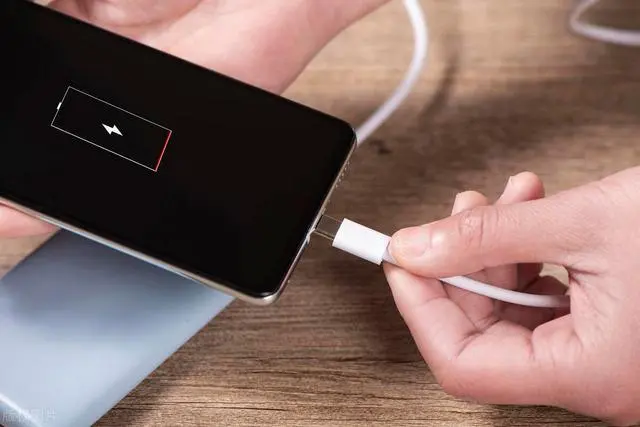
The spec sheet clash is dramatic, but the real question for everyday users is much simpler: does this crazy fast charging actually matter, and will it secretly ruin your battery in a year or two?
For years, people have been split into two camps. One side is frustrated that big players like Apple and Samsung still cap charging at around 25 to 45 watts and refuse to join the race to 80, 100, or even 150 watt chargers. The other side is deeply suspicious of fast charging, convinced that anything above roughly 30 watts is basically strapping a mini blast furnace to your battery. Somewhere between these extremes sits the truth, and the OnePlus 15 versus iPhone 17 Pro Max comparison is the perfect lens to discuss it.
How a lithium ion battery actually charges
To understand why the OnePlus 15 can gulp power so quickly, we need to look at how lithium ion batteries work in the first place. Modern phone batteries are fairly simple in principle. Inside you have two main electrodes, an anode and a cathode, with an electrolyte in between. During charging, lithium ions move from one side to the other, and during use they flow back through the phone’s circuitry, supplying energy. That dance of ions is all that stands between you and a dead screen.
Charging power, usually expressed in watts, is just the rate at which that ion migration happens. More power means the phone pushes more current and sometimes higher voltage through the battery so the ions move faster. This process is never perfectly efficient, so part of the electrical energy becomes heat. The harder you push, the hotter things get. That is why the OnePlus 15 warms up when you plug in its bundled fast charger, and why Apple keeps its charging speeds conservative on the iPhone 17 Pro Max: managing heat and longevity is a delicate balancing act.
On top of that, the charge process is not linear. Phones use a multi phase profile. The first part is usually a constant current phase, where you get those impressive marketing numbers like 0 to 50 percent in fifteen minutes. After the battery reaches a certain voltage, the phone shifts into a constant voltage phase, gradually reducing current to avoid overstressing the cells near full capacity. This is why the last 20 percent often feels much slower, even on the fastest chargers.
Why phones like the OnePlus 15 can charge so fast
The trick behind modern fast charging is not black magic, it is engineering. Phones such as the OnePlus 15 typically use a dual cell or multi cell battery design. Instead of one big pack, the battery is split into two smaller cells that charge in parallel. So when you see, for example, 80 watt or 100 watt charging on the box, that power is actually divided between the cells, reducing stress on each one.
Another important part of the system lives in the charger brick rather than inside the phone. Most of the heavy AC to DC conversion and heat generating electronics are moved into the adapter. The phone receives already regulated DC power and then fine tunes how it is fed into the battery. Dedicated charging controllers, temperature sensors, and software algorithms constantly monitor what is going on and can throttle speeds the moment things get too warm or the battery approaches full capacity.
This is why the OnePlus 15 can comfortably advertise blazing charging speeds while staying within safe thermal limits. And it is also why the iPhone 17 Pro Max can be more conservative and still be perfectly fine: both approaches use the same basic safeguards; they just sit at different points on the speed versus longevity spectrum.
Fast charging and time saved: theory versus real life
If you only look at numbers, the OnePlus 15 seems like an obvious winner. Imagine a phone that can go from almost empty to full in roughly forty minutes versus one that needs around an hour or more. Over months and years, that looks like a huge time difference. If you plug in your phone every day, that could add up to dozens or even hundreds of hours of charging time avoided on paper.
Reality is messier. A lot of people still treat charging as a background habit rather than an event. Some keep the classic routine of charging overnight, plugging in the phone when they go to sleep and unplugging it in the morning. For them, whether the phone finishes at 2 am or 4 am does not change anything, and fast charging is used only occasionally.
Others have shifted to a more modern pattern that fast charging has made possible. They tend to top up in short bursts: 15 minutes while making coffee, another 10 minutes during lunch, a quick plug in while driving. For these people, the ability of the OnePlus 15 to jump from 20 to 70 percent in the time it takes to get ready for a meeting is a genuine game changer. Leaving the house with a near full battery after a rushed morning simply feels different from limping out with 23 percent because the phone charges more slowly like the iPhone 17 Pro Max.
So does fast charging save time? Yes, but mainly at specific high pressure moments: when you forget to charge, when you travel, when your day becomes chaotic. Across an entire year, you might not actively notice the hours saved, but you absolutely feel the reduced anxiety of knowing that a dead phone can be rescued in minutes rather than hours.
Does fast charging kill your battery?
This is the fear that refuses to die. People imagine the battery inside a OnePlus 15 slowly sizzling each time the charger is plugged in, with every fast session shaving months off its lifespan. The science is more nuanced. Lithium ion cells degrade primarily due to three factors: time, temperature, and high voltage exposure. The more cycles you push through a battery and the longer it spends very hot or very close to 100 percent charge, the faster its capacity fades.
Fast charging does increase stress on the cells during the most intensive part of the cycle, especially at low state of charge when the phone is pumping in lots of current. But the important detail is that this high stress phase is short and carefully controlled. Modern phones constantly monitor temperature and will reduce charging speed if things get too hot. They also slow down the charging dramatically as the battery approaches full. This is why you often get to 80 percent very quickly and then crawl from there to 100 percent.
Plenty of long term lab tests have shown that, with real world fast charging implementations, the difference in battery health between always using fast charging and always using slower standard charging is surprisingly small after a couple of years. When manufacturers design a system like the one in the OnePlus 15, they explicitly target at least several hundred full cycles before capacity drops to around 80 percent. That usually translates into roughly three years of daily use, by which time many people are thinking about a new phone anyway.
In other words, fast charging does not magically exempt your battery from physics, but it also does not instantly destroy it. The bigger enemies of longevity are leaving the phone at 100 percent for days, constantly letting it drain to zero, and baking it on a hot car dashboard all summer.
How careful users stretch battery life even with fast charging
Some people are perfectly happy to trust the phone and use the bundled fast charger every single day without thinking about it. Others prefer to baby their batteries a little, and fast charging actually works well for them too. A common strategy is to limit how high the phone charges in daily use. Many devices, including Android flagships and iPhones, now include an option to cap charging at around 80 or 85 percent or to delay the final top up until just before you typically wake up.
One cautious approach looks like this: leave the fast charging toggle off by default, set a maximum charge of roughly 80 to 85 percent, and enjoy a solid 1.5 to 2 days of battery life before dropping down to around 25 percent. When a true emergency hits, switch fast charging back on, push the battery higher for that day, and then turn things down again afterwards. A phone like the OnePlus 15 makes this strategy painless because a 10 or 15 minute plug in can still deliver hours of screen time when you need it most.
Battery nerds go even further. They try to keep their phone between roughly 30 and 80 percent most of the time, avoiding both deep discharges and long periods at full charge. From a chemistry point of view, this state of charge window is very gentle on lithium ion cells. Fast charging does not really change this rule; whether you are using a modest adapter like on the iPhone 17 Pro Max or a powerful brick like the one included with the OnePlus 15, staying within that middle range is what keeps your battery happier for longer.
OnePlus 15 vs iPhone 17 Pro Max: which approach fits your life?
The OnePlus 15 and iPhone 17 Pro Max represent two philosophies rather than right and wrong. OnePlus leans into speed and convenience: big battery, very high charging power, and software designed to squeeze every minute of usable time out of quick top ups. Apple prioritizes consistency and long term stability, relying on a combination of efficient chips, careful battery tuning, and more modest charging speeds supplemented by smart software features such as optimized battery charging.
If you are constantly moving, travel a lot, or simply forget to charge your phone on a regular basis, a device like the OnePlus 15 genuinely changes how you use your phone. You no longer have to plan around long charging windows. Plug in while you shower, and you are ready for the day. Stop for a coffee, and a short top up carries you through an afternoon of navigation, photos, and social media.
If your routine is calm and predictable, the iPhone 17 Pro Max approach works just as well. You plug it in at night, maybe take advantage of Apple’s optimized battery features, and never think about charge speeds again. You do not gain the thrill of watching the percentage rocket upward, but you also do not really miss it. For this group, battery capacity and power efficiency matter more than shaving twenty minutes off the time it takes to reach full.
So, does fast charging really matter?
Looking beyond the marketing numbers, fast charging on phones like the OnePlus 15 is less about bragging rights and more about flexibility. It does not turn your life upside down, it does not magically double your screen time, and it does not instantly destroy your battery. What it does is give you a safety net. Missed an overnight charge? No problem. Long day ahead with back to back meetings? A quick burst on the charger while you get ready covers you. Your flight was delayed and the airport outlets are crowded? Fifteen minutes is enough to get you from panic to comfort.
Slow and steady charging on a phone such as the iPhone 17 Pro Max is still perfectly valid, especially when paired with large batteries and efficient hardware. For many people it remains the default, supported by familiar habits built up over years. Some users will continue to disable fast charging, cap their charge at 80 or 85 percent, and treat the battery like a delicate instrument. Others will hammer turbo charge every day and still see acceptable battery health after several years.
The good news is that modern smartphones are designed with all of these behaviors in mind. Whether you pick the blistering fast OnePlus 15 or the more conservative iPhone 17 Pro Max, you are unlikely to destroy your battery just by using the charger that came in the box. Fast charging is no longer the reckless stunt it once seemed; it is simply one more tool to match your phone to your life.
In the end, your choice comes down to lifestyle and personality. If you want the comfort of knowing that a dead phone can be rescued in minutes, the OnePlus 15 and its peers are incredibly compelling. If your schedule is predictable and your phone usually wakes up at 100 percent every morning anyway, you do not need to feel like you are missing out with a slower charging device. Both paths are valid, and as long as you avoid the real battery killers like extreme heat and constant 0 to 100 percent swings, your phone will likely outlast your desire to keep it.
3 comments
fast charging is like a fire extinguisher: 95% of the time you don’t need it, but when you do, you REALLY do. missed my flight once because my old phone needed an hour on the wall… never again
got an iPhone 17 Pro Max and i do miss the ‘10 mins for half a tank’ feeling from my old Android. but with my super boring routine, it honestly doesn’t change much day to day
best combo for me: charge from ~30% to ~80% during breakfast on the fast charger, that’s it. never hit 0, almost never see 100, phone feels fresh even after a couple years