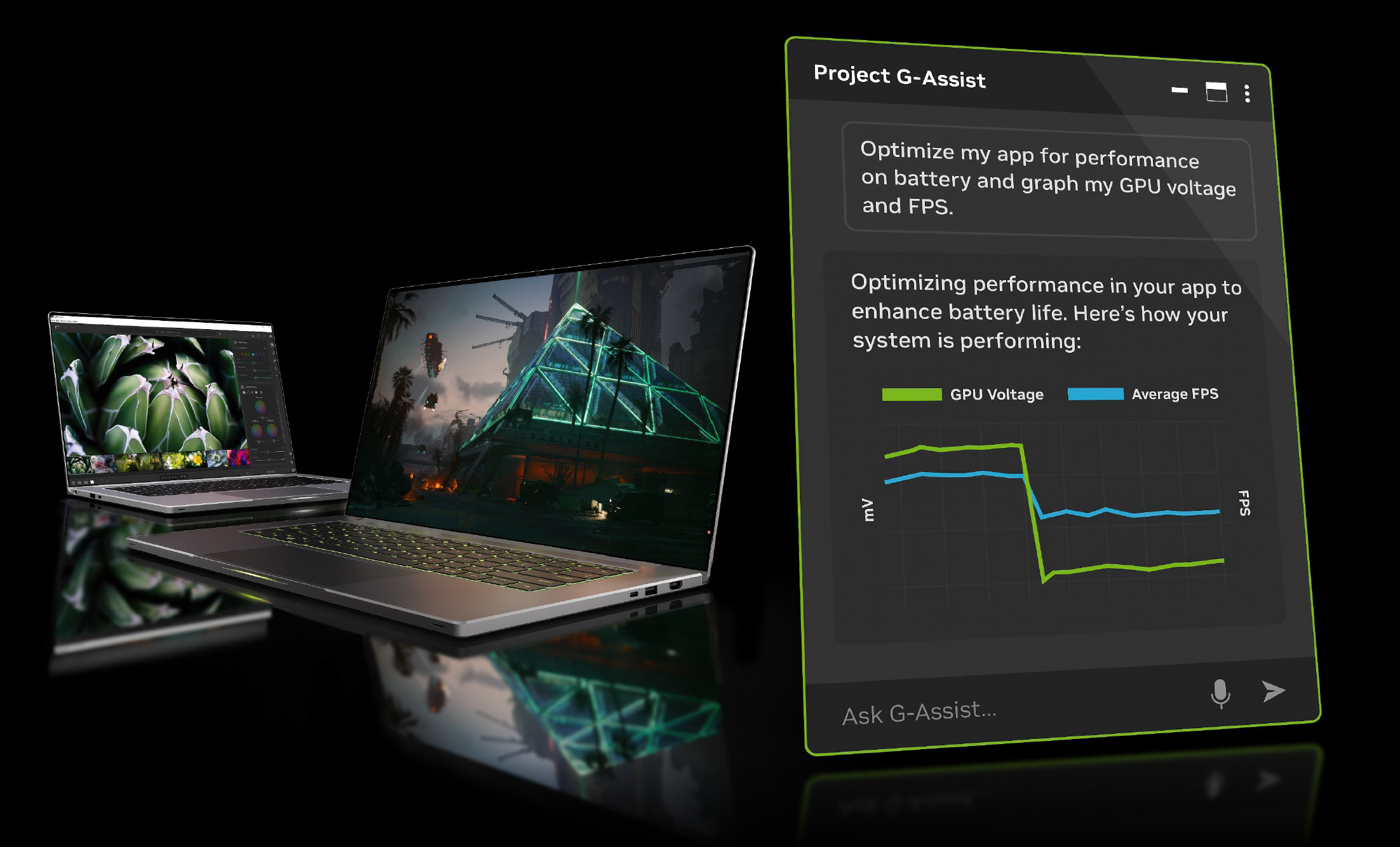
NVIDIA has rolled out a major upgrade to Project G-Assist and its NVIDIA App, delivering sweeping improvements for RTX gamers and creators.
The standout change comes from Project G-Assist, NVIDIA’s AI-powered utility that now runs much leaner – memory usage has been cut by 40%. This makes the assistant more responsive while still handling tasks with higher accuracy. It now works across all RTX GPUs with 6 GB or more VRAM, a big shift from the previous 12 GB requirement. RTX laptops also get fresh functionality with new commands to tune Max-Q, Battery Boost, and power management.
Another major addition is global DLSS overrides. Rather than toggling settings title by title, players can now enable DLSS Super Resolution or Frame Generation across hundreds of games at once. This opens the door for smoother performance in titles that don’t natively support DLSS. Meanwhile, plugin integration has expanded through Mod.io, giving users instant access to a growing library of tools directly inside G-Assist.
On the NVIDIA App side, the updates are just as significant. Smooth Motion, previously hidden in beta drivers, is now officially available for RTX 40-series GPUs. While not a replacement for native DLSS, Smooth Motion helps bring frame-generation benefits to games that otherwise lack support. The App also imports a stack of legacy control panel settings – anisotropic filtering, anti-aliasing, ambient occlusion, and more – offering more flexibility for tweaking both modern and classic games. Enthusiasts who missed older NVIDIA Surround and 3D options will find them returning here as well.
For beta testers, the enhanced NVIDIA App launched on August 19, with general availability a week later. Taken together, these updates position NVIDIA’s ecosystem as more versatile, giving gamers powerful tools that blend AI-driven optimization with quality-of-life features long requested by the community.
1 comment
more gimmicks from Ngreedia… latency incoming