AI is quietly rewriting the rulebook for how data centers are built. Power budgets are brutal, model sizes are exploding, and every large cloud provider is desperate to squeeze more useful intelligence out of every watt. 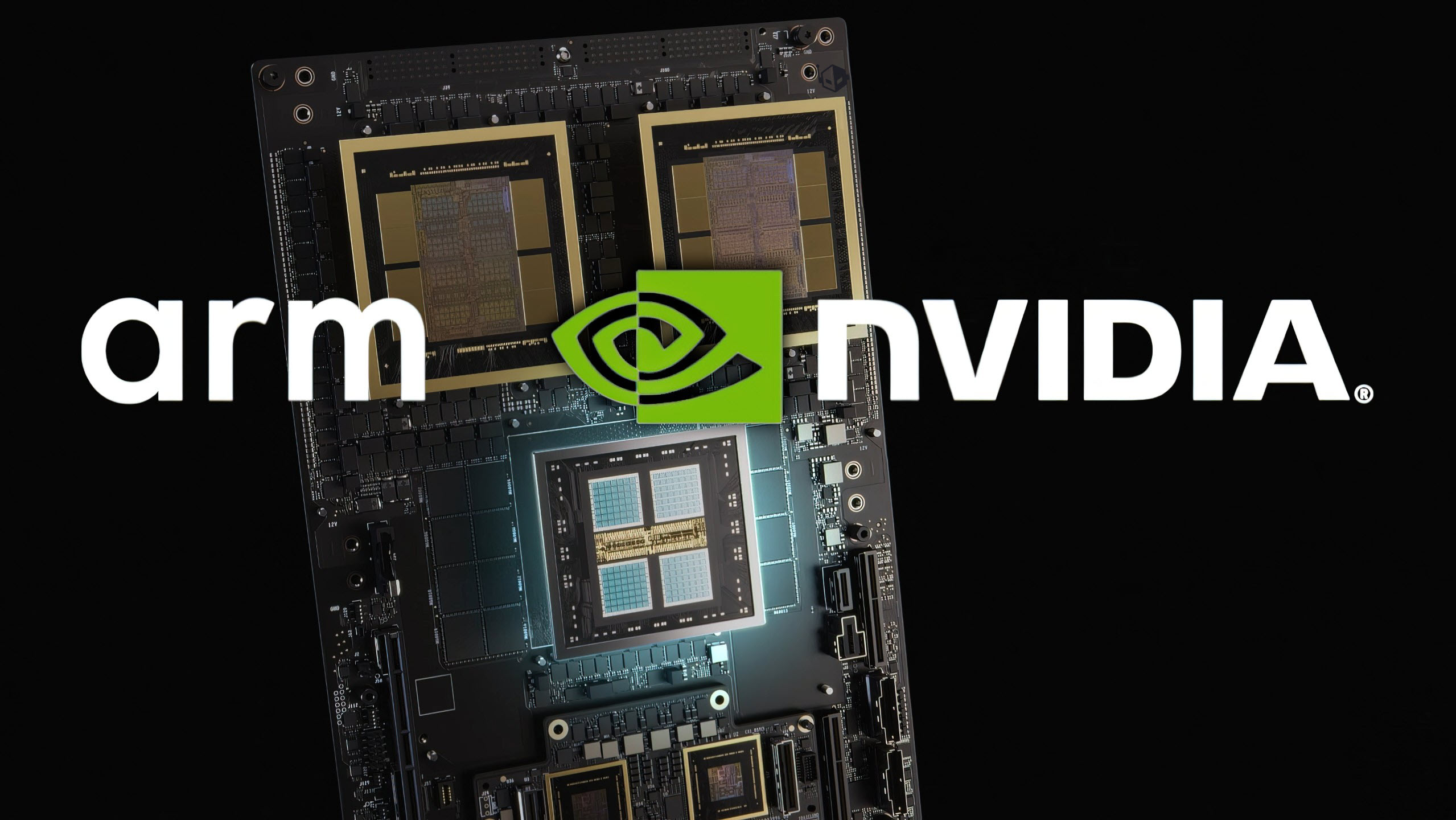
Into this pressure cooker step Arm Neoverse and NVIDIA NVLink Fusion, now officially coming together in a deeper partnership that aims to turn racks of CPUs, GPUs, and custom accelerators into a single, coherent AI machine.
Arm’s Neoverse platform has already become the reference point for energy-efficient compute in the cloud. It powers billions of cores and is on track to capture a massive slice of hyperscaler infrastructure, with giants like AWS, Google, Microsoft, Oracle, and Meta all betting heavily on Arm-based servers. The attraction is simple: Arm brings performance that scales, but more importantly, it brings the performance-per-watt profile that modern AI needs.
From Grace Hopper to NVLink Fusion for Everyone
Two years ago, NVIDIA and Arm showed what tight CPU–GPU co-design could look like with the Grace Hopper platform. NVLink stitched CPU and GPU together with a coherent, high-bandwidth link, shaving away the latency and bandwidth penalties of traditional PCIe-based designs. That experiment clearly worked: the same idea has now evolved into NVLink Fusion, and Arm is opening the door for the broader Neoverse ecosystem to plug into it.
NVLink Fusion is best understood as a rack-scale interconnect fabric. Instead of thinking of a CPU here and a cluster of GPUs over there, separated by bottlenecks, NVLink Fusion aims to make them behave like parts of a single, shared system. It ties together Arm-based CPUs, NVIDIA GPUs, and other accelerators into a coherent, high-bandwidth architecture that can be scaled from a single node to an entire rack – and potentially beyond.
This is where things get interesting for Arm licensees. Whether a company is building its own Arm CPU or integrating Arm IP into custom silicon, NVLink Fusion is now on the menu. Partners can hook their Arm-based SoCs into the broader NVLink ecosystem, tapping into NVIDIA GPUs or other accelerators with the same coherent, high-speed connectivity NVIDIA reserves for its own Grace and Blackwell platforms.
AMBA CHI C2C: The Glue Between CPUs and Accelerators
Underneath the marketing names lies a very concrete engineering story. NVLink Fusion is designed to interface with Arm’s AMBA CHI C2C (Coherent Hub Interface Chip-to-Chip), a protocol created specifically to provide a coherent, high-bandwidth path between CPUs and external accelerators. In practical terms, CHI C2C defines how data is shared, cached, and synchronized so that multiple chips can behave like they live on the same memory map instead of fighting over it.
By aligning NVLink Fusion with the latest edition of AMBA CHI C2C, Arm is turning Neoverse-based SoCs into first-class citizens on this fabric. Data can move seamlessly between Arm CPUs and partners’ accelerators without constant translation overhead or duplicated memory buffers. For system designers, that means fewer custom hacks, faster integration, and dramatically shorter time-to-market for complex AI servers.
The payoff is straightforward: higher effective bandwidth, lower latency, and far better utilization of expensive accelerators. If GPUs and custom AI chips are constantly starved for data, all their theoretical TOPS mean very little. NVLink Fusion plus CHI C2C is designed to keep those accelerators fed and busy.
Energy Efficiency and “Intelligence per Watt”
Both companies hammer on the same phrase: intelligence per watt. That’s not just marketing fluff; it captures the new reality of AI infrastructure. The days of endlessly throwing more power-hungry silicon at the problem are over. Regulators, energy prices, and sustainability goals are forcing data center operators to do more with less.
Arm’s Neoverse cores already excel in efficiency, and tying them closely to accelerators via NVLink Fusion helps avoid wasteful data movement. Coherent interconnect means fewer copies, fewer trips to main memory, and more work done per joule. At rack scale, even small efficiency gains can translate into massive savings, especially when you multiply them across hyperscaler fleets.
This is why the partnership matters: Arm and NVIDIA are effectively defining a blueprint for next-generation AI racks – modular, power-aware, and accelerator-heavy, with Neoverse as the control plane and NVLink Fusion as the nervous system.
Power, Control, and the Shadow of the Failed Acquisition
Of course, not everyone is cheering. Among engineers and enthusiasts, there’s a visible undercurrent of unease. Some observers point out that Arm’s current leadership has deep NVIDIA roots and argue that, even though the proposed acquisition fell apart, NVIDIA still exerts outsized influence over Arm’s direction. Others see Arm’s tougher stance on licensing in recent years and wonder if closer technical alignment with NVIDIA will tilt the ecosystem more heavily toward one dominant vendor.
For critics, this partnership feels a bit like the old tale of the frog and the scorpion: no matter how friendly the ride looks at the start, the scorpion’s nature eventually asserts itself. They worry that today’s open standard and broad ecosystem narrative could quietly morph into tomorrow’s lock-in, where the easiest, most performant path for Arm-based silicon just happens to run through NVIDIA’s stack.
There’s also a more cynical take: in parts of the community, the feeling is that it doesn’t really matter what Arm does; some people will call it selling out anyway. When a company becomes this central to modern infrastructure, every move is interpreted as either brilliant strategy or catastrophic betrayal, often in the same comment thread.
A Pragmatic Bet for the AI Era
Strip away the noise, and what remains is a pragmatic alignment. AI workloads are growing too fast for any one company or architecture to handle alone. By standardizing how Arm-based CPUs talk to accelerators at rack scale, Arm and NVIDIA are giving hyperscalers and chipmakers a clear path to build differentiated systems that still plug into a familiar ecosystem.
Partners can combine Neoverse-based CPUs with NVIDIA GPUs, their own in-house accelerators, or a mix of both, without reinventing the interconnect wheel each time. That flexibility is vital for an era where everyone from cloud giants to specialized AI startups is experimenting with custom silicon.
In the short term, expect Grace Blackwell-class systems to grab headlines, as their performance and efficiency numbers set the tone for what NVLink Fusion-enabled platforms can deliver. In the longer run, the more interesting story will be how many third-party Neoverse SoCs and accelerators join that fabric – and whether Arm can balance NVIDIA’s gravitational pull with genuine ecosystem choice.
One thing is clear: the architecture of AI data centers is being redrawn in real time, and the combination of Arm Neoverse and NVIDIA NVLink Fusion is poised to be one of the thickest lines on that new blueprint, whether you love the partnership or distrust it.
1 comment
doesn’t matter that the deal was blocked, nvidia basically lives inside arm now, even the ceo used to be green team, no surprise licensing got harsher tbh