China’s race for artificial intelligence supremacy is intensifying, yet one thing remains clear: NVIDIA’s grip on the global GPU market is still unmatched. Despite Beijing’s push for domestic alternatives and Washington’s restrictions, broker research indicates that Chinese companies continue to rely heavily on NVIDIA hardware, underscoring just how difficult it is to replace the company’s ecosystem.
At the heart of this tug-of-war lies the production process itself. 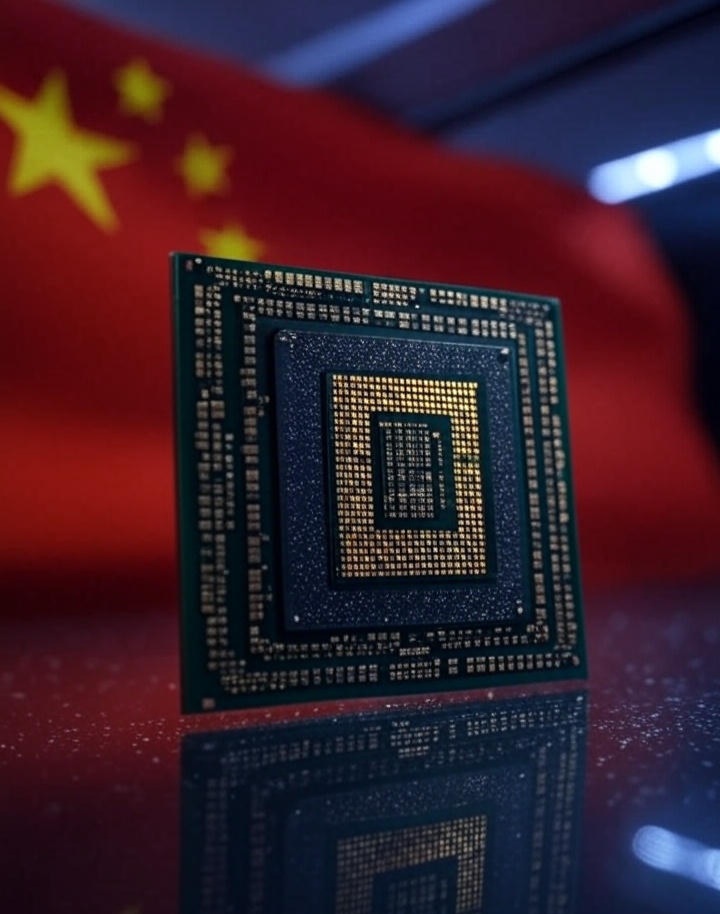
Semiconductor Manufacturing International Corporation (SMIC) has been attempting to scale up its 7nm node technology, but questions remain over yield, efficiency, and volume. While Huawei’s Ascend 910C GPUs are touted as homegrown, much of their architecture is still tied to chips sourced through third-party routes from Taiwan’s TSMC. That dependence illustrates both the ingenuity and the constraints Chinese companies face as they try to outmaneuver US sanctions.
The cloud service sector further complicates matters. To bypass hardware restrictions, major Chinese cloud providers have devised clever methods to secure NVIDIA GPUs via global intermediaries. The US government is watching closely; the proposed Remote Access Security Act could tighten these loopholes by limiting cross-border GPU use through the cloud. This legislation highlights the growing realization in Washington that hardware control is not enough – software and access must also be policed.
NVIDIA, however, is not standing still. The firm’s China-tailored B40 AI GPU is specifically designed to comply with US export rules while still delivering competitive performance. Even the older H20 GPU, which Washington permitted to ship with limitations, is now viewed skeptically in Beijing, where policy circles are pressing for greater technological independence. Yet the demand for NVIDIA chips remains unrelenting. Brokers note that companies often prioritize NVIDIA hardware not just for raw power but because of CUDA, the firm’s software ecosystem that makes development, training, and deployment smoother and more reliable than on local platforms.
Domestic rivals are making strides. Alibaba has announced plans for its own AI GPU, while Cambricon’s Siyuan 590 has sparked investor frenzy. Still, when stacked against NVIDIA’s NVLink interconnect and broader cluster efficiency, these chips often fall short. The CUDA advantage is not easily replicated, and this is precisely where NVIDIA continues to dominate. It is telling that DeepSeek’s recently launched DeepGEMM model was written in CUDA and trained on NVIDIA GPUs, even as local vendors attempt to adapt the model for alternative FP8-based calculations.
Technical trade-offs add more complexity. Huawei’s CloudMatrix 384 can aggregate hundreds of Ascend chips, yet it lacks native FP8 support, a feature critical for reducing memory demands in large-scale model training. Huawei’s workaround – a translation tool – has proven clunky and less efficient. Such gaps underscore why even when Chinese firms showcase hardware muscle, they often struggle to match NVIDIA’s seamless integration of hardware and software.
NVIDIA’s strategy of tailoring products for the Chinese market has another ace up its sleeve: the RTX Pro 6000D, built on the B40 chip. These systems avoid licensing hurdles because they do not rely on high-bandwidth memory and are optimized for inference rather than foundation model training. Analysts believe these chips could become bestsellers in China, precisely because they hit the sweet spot between compliance and capability.
At the same time, Beijing’s ambition for self-sufficiency in AI compute means capital expenditures are soaring. Billions are being poured into local fabs, cloud infrastructure, and domestic GPU startups. Yet the paradox persists: while nationalist policies push for independence, the reality is that NVIDIA’s ecosystem still powers much of the innovation happening in China today. In a sense, the more the country tries to decouple, the more it underscores NVIDIA’s dominance.
For now, investors and policymakers alike should recognize that this is not a story of simple substitution. Domestic alternatives are rising, but the gulf in ecosystem maturity, developer trust, and cluster-level performance means NVIDIA remains the benchmark. Even in an era of technological nationalism and export restrictions, the company’s GPUs are still the hottest commodity in the Chinese AI market.
3 comments
I’d invest in Alibaba’s GPU plans but CUDA lock-in is brutal
Nvidia just too powerful, even the govs bow down
Jensen literally playing chess while everyone else playing checkers lol