The GPU industry has entered a strange but fascinating new chapter, and at the center of it sits the NVIDIA GeForce RTX 5090 – now spotted in an extreme, custom-built form boasting a staggering 128 GB of VRAM. This isn’t an official NVIDIA release but rather the product of Chinese modification workshops that have carved out a lucrative niche by repurposing gaming GPUs into AI-focused monsters. 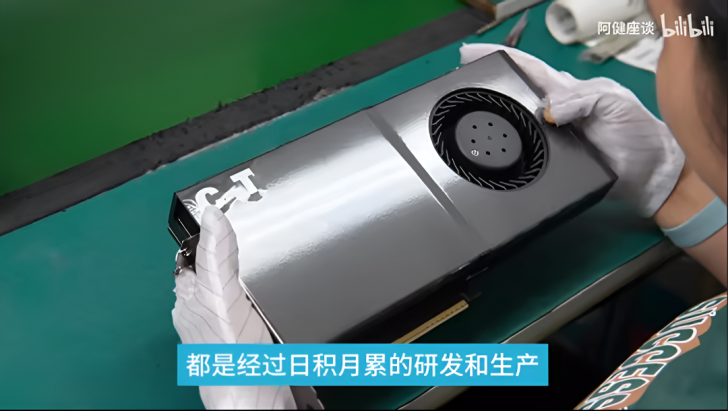
The result is a Frankenstein-like card carrying a price tag of around $13,200 per unit, over six times more expensive than the standard consumer version.
These workshops became prominent during the global AI boom, when demand for professional-grade accelerators quickly outstripped supply. Rather than wait for official data center solutions, modders began salvaging components from high-end GeForce cards like the RTX 4090, and later the RTX 5090. By transplanting GPUs onto custom PCBs and enabling dual-sided memory layouts, they effectively multiplied memory capacity far beyond the stock design. While the official RTX 5090 ships with 32 GB of GDDR7 memory, these heavily modified boards quadruple that amount, unlocking a staggering 128 GB frame buffer.
It’s not a matter of simply soldering on more chips. Compatibility requires custom firmware and BIOS tweaks, while the PCB design itself must support far denser module arrangements. Observers note that these cards often rely on exotic cooling solutions, including blower-style shrouds, to fit more comfortably into cramped server racks. For AI startups and researchers in regions where NVIDIA’s professional GPUs are either unavailable or cost-prohibitive, these mods represent an alternative – albeit one that carries risk due to the lack of official support.
The technical side raises intriguing questions. GDDR7 memory currently tops out at 24 Gb densities, which means building a dual-sided PCB should max out at around 96 GB. Yet the screenshot making the rounds shows a working driver (550.144.03) and a full 128 GB being recognized by the system. Either modders have sourced experimental 32 Gb modules not publicly available, or the design uses a less conventional approach to memory addressing. For now, details remain speculative, but the existence of a functioning board with such specifications cannot be dismissed outright.
When it comes to pricing, the math is equally striking. The standard RTX 5090 retails officially for $1,999 but typically sells for $2,500–$3,000 in practice. The 128 GB variant comes in at $13,200 – roughly a 6.6x markup. To put this into perspective, NVIDIA’s own RTX PRO 6000 Blackwell, which offers 96 GB of VRAM, is priced around $10,000. That makes the 5090 custom card about a third more expensive, but also a third larger in memory. While clearly not meant for gamers, such a device could offer significant value for AI researchers training large models, especially where access to professional accelerators is limited by tariffs, sanctions, or simple scarcity.
It’s worth stressing that NVIDIA itself does not sanction these mods. Unlike the official PRO line, which is tested and validated for stability in enterprise workloads, these modified 5090s are essentially gray-market creations. Still, their popularity continues to grow, particularly across Asian markets hungry for VRAM-heavy solutions. The mere fact that underground workshops are able to extend consumer GPUs so far beyond their original specification speaks volumes about both the ingenuity of engineers and the insatiable demand for AI hardware in 2025.
And that demand has ripple effects across the rest of the industry. Enthusiasts worry that cards with smaller modules – such as upcoming 3 GB-based SKUs – could be scalped and cannibalized to feed AI conversions. Others point to AMD’s struggles with RDNA 4 as a contributing factor, leaving NVIDIA with little competition in high-end GPU performance. This dynamic has made GeForce cards the go-to base for AI modifications, whether NVIDIA intended it or not.
For gamers, this news might feel distant – after all, no title today could dream of consuming 128 GB of VRAM. But the rise of these custom builds highlights just how blurred the line between consumer and professional hardware has become. In many ways, the RTX 5090 128 GB stands less as a gaming GPU and more as an unofficial AI accelerator, born from necessity, ingenuity, and the relentless market hunger for more memory.
1 comment
they’ll prob strip 5070Ti units just to slap into 5090s, classic nvidiots moment 💩