The upcoming Nintendo Switch 2 is shaping up to be a serious evolution in handheld gaming, and a new comparison against the ROG Xbox Ally X shows just how far Nintendo’s next-generation hardware has come. While both devices target gamers on the go, the Switch 2 seems to find the perfect balance between graphical fidelity and performance efficiency – largely thanks to NVIDIA’s DLSS (Deep Learning Super Sampling) technology, which continues to impress with its ability to upscale visuals while keeping gameplay smooth and stable.
A recent detailed analysis by the YouTube channel ElAnalistaDeBits put the two handhelds to the test across a variety of demanding and lighter titles, including Cyberpunk 2077, Hogwarts Legacy, Hitman World of Assassination, Star Wars Outlaws, and the indie darling Hollow Knight: Silksong. 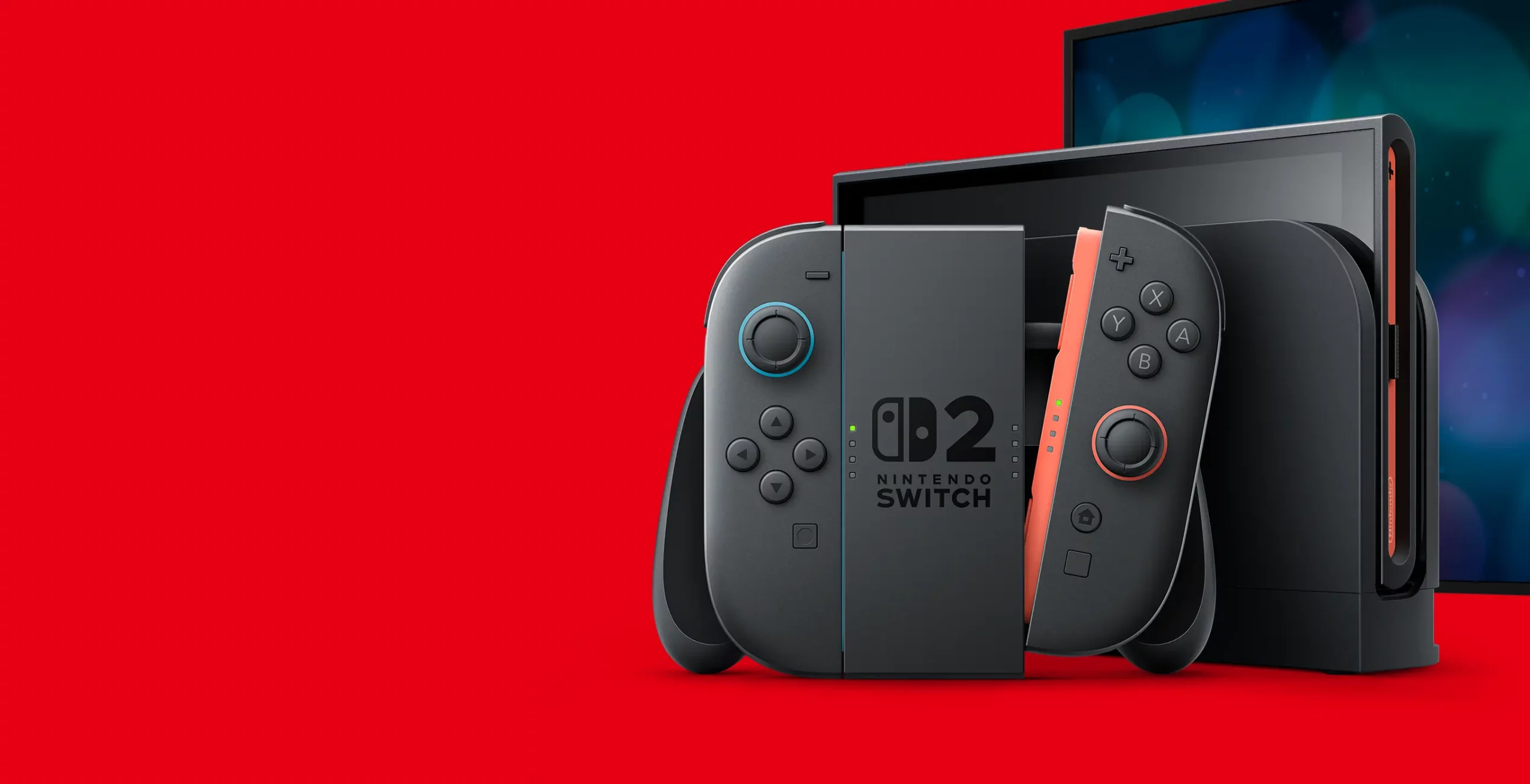
Each game was examined for performance metrics, resolution handling, and image stability – giving us the clearest picture yet of how the Switch 2 stacks up against ASUS’s powerful handheld contender.
What stood out most was the way the Switch 2 handled upscaling. With DLSS enabled, Nintendo’s console achieved remarkably clean and detailed visuals, outperforming the AMD FSR implementation found on the ROG Xbox Ally X in both clarity and stability. In graphically rich environments like Cyberpunk 2077’s neon-lit streets or the vast wizarding world of Hogwarts Legacy, the Switch 2 managed to preserve fine details and reduce aliasing, giving an overall more polished appearance. Even in Star Wars Outlaws, where both devices ran at roughly 635p resolution, DLSS gave the Switch 2 the upper hand by better resolving distant textures and environmental detail.
From a settings standpoint, the Switch 2 runs most titles at the equivalent of PC medium settings, a surprising feat considering its compact hardware and focus on battery efficiency. Despite being less powerful than the ROG Xbox Ally X on paper, Nintendo’s system manages a stable and consistent experience, emphasizing visual balance over raw frame rates. The Ally X, meanwhile, demonstrates its muscle with slightly higher frame rates – though often only marginally. For instance, in Hogwarts Legacy, the difference is minor: while the Switch 2 maintains a steady 30 FPS cap, the Ally X pushes between 40 and 45 FPS in Turbo Mode and barely above 30 FPS in Performance Mode.
In Star Wars Outlaws, the contrast becomes even more telling. The Ally X requires FSR Performance Mode combined with Frame Generation to hover around 30 FPS, whereas the Switch 2 manages similar consistency using DLSS with better visual output. It highlights how Nintendo’s smart use of NVIDIA’s AI-assisted technology lets it punch above its weight, delivering modern visuals without overwhelming its cooling or power systems.
Ultimately, both the Nintendo Switch 2 and the ROG Xbox Ally X prove that handheld gaming is entering a golden age, where performance and portability no longer need to be at odds. The Switch 2 may not win the pure power contest, but it wins hearts with clever engineering and graphical polish – showing once again that Nintendo’s innovation goes beyond specs. As more developers optimize for DLSS, this next-gen hybrid console could redefine what portable gaming looks like in 2025 and beyond.
1 comment
Can’t believe Nintendo caught up like this lol. DLSS magic fr 🔥