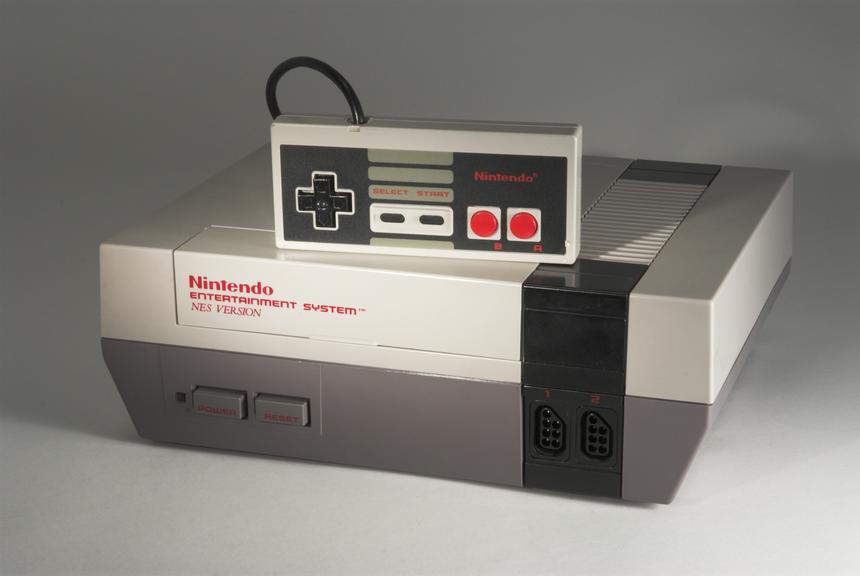
NES at 40: How Nintendo’s 8-Bit Revolution Saved Gaming and Reshaped an Industry
Forty years ago, the video game industry was gasping for air. Following the catastrophic crash of 1983, confidence in video games had evaporated. Shelves were lined with unsold cartridges, companies folded overnight, and what had once been a booming new medium seemed destined to fade into history. Then came the Nintendo Entertainment System – the NES – a small, grey box that would not only revive the gaming world but permanently redefine it. To mark this milestone, the Video Game History Foundation’s founder, Frank Cifaldi, reflected on how Nintendo’s legendary console didn’t just save the medium – it quietly set the rules that still govern it today.
When Nintendo launched the Famicom in Japan in 1983, it was entering a skeptical market. Yet the combination of approachable design, accessible pricing, and fun, family-friendly games made it a runaway success. Two years later, when the rebranded NES reached the United States, it faced an even steeper climb. Retailers still remembered warehouses full of unwanted Atari stock. Consumers viewed gaming as a passing fad. But through calculated moves and an obsession with quality, Nintendo managed to change history. The system’s 1985 test launch in New York wasn’t just another product drop – it was a resurrection.
The Ingredients of a Miracle: Quality and Timing
“Nintendo made a great product, and they were in the right place at the right time,” Cifaldi explained. Following the collapse of Atari and the implosion of the home console market, there was a void – both in trust and in innovation. Nintendo filled it with polish, charm, and reliability. Its lineup of games wasn’t just competent; it was unforgettable. Titles like Super Mario Bros., Duck Hunt, and Excitebike didn’t merely entertain – they redefined what a home game could be. Suddenly, a generation that had been burned by buggy, uninspired software rediscovered the joy of gaming.
Mario, Nintendo’s unlikely mascot – a plumber born from pixels – became an instant icon. By the late 1980s, “Nintendo” had become synonymous with “video game.” Parents didn’t ask if their kids wanted to play video games; they asked if they wanted to play Nintendo. The company’s careful mix of brilliant design, child-safe marketing, and timeless gameplay sparked what Cifaldi calls “Nintendomania.” It wasn’t just a console; it was a cultural phenomenon.
The Magic of the NES: More Than Just Games
The NES had an intangible quality that went beyond its library. It was a gateway to imagination. “If you weren’t there,” said Cifaldi, “it’s hard to understand just how dominant Nintendo was.” Between 1985 and 1990, the company’s influence seeped into every corner of youth culture – TV shows, cereal boxes, lunchboxes, even the Saturday morning cartoon lineup. The Legend of Zelda, Metroid, and Super Mario Bros. arrived within a few short years of one another, creating an interconnected world of adventure that felt alive in a way nothing else did. For many kids, the NES wasn’t a toy – it was a portal.
That dominance didn’t come purely from marketing. Nintendo’s iron grip on quality ensured that the NES wasn’t just another piece of disposable hardware. Games loaded reliably. Cartridges felt sturdy. Controllers were ergonomic before the word became mainstream. Every piece of the system – from the click of the power button to the vibrant 8-bit worlds it conjured – communicated trust. Nintendo had learned from Atari’s mistakes, and they would not repeat them.
Saving Gaming from Itself: The 1985 CES Unveiling
When Nintendo brought the system to the U.S., it faced an uphill battle with retailers who had lost faith in video games entirely. To make the NES appealing, the company disguised it as something more – an “entertainment system” rather than a “game console.” Cifaldi recently unearthed the last surviving press kit from the system’s unveiling at the 1985 Consumer Electronics Show (CES). It reveals how Nintendo’s American division cleverly pitched the console as a high-tech gadget for the family living room, complete with a toy robot named R.O.B. to make it look futuristic. “The AVS – the Advanced Video System prototype – represents such an interesting ‘what if,’” Cifaldi noted. “If they’d leaned too hard into the educational or high-tech angle, it might have failed.”
By blending playfulness with precision, Nintendo captured the hearts of skeptical audiences. Their careful rebranding of gaming as wholesome family entertainment was nothing short of genius. The gamble paid off. In 1986, the NES began rolling out nationwide. By 1988, it controlled nearly 90% of the home console market. Video games weren’t just back – they were reborn.
Disaster Averted: The Role of Quality Control
Still, success was far from guaranteed. “Nintendo’s philosophy after the crash,” Cifaldi explained, “was that Atari failed in two ways: they allowed low-quality, unofficial games to flood the market, and even their official titles were often subpar.” To avoid repeating those mistakes, Nintendo implemented an unprecedented licensing system. Every NES cartridge contained a lockout chip that prevented unlicensed software from running. It was the first major step toward modern platform control – and it changed the industry forever.
That chip did more than protect Nintendo’s reputation. It created a walled garden that defined the economics of console gaming for decades. Only approved developers could publish games for the NES, and they had to meet Nintendo’s strict quality standards – and pay their cut. While some saw it as anti-competitive, it ensured consistency. Consumers could trust that anything stamped with the Nintendo Seal of Quality would deliver a complete, working experience. In the context of the early 1980s chaos, this control wasn’t tyranny – it was survival.
Atari’s Missed Chance and the Roads Not Taken
Few remember how close history came to taking a different turn. Before the NES launch, Atari nearly acquired the rights to distribute Nintendo’s console in America. Had that deal gone through, the landscape of gaming might look entirely different. “We don’t know exactly why it collapsed,” Cifaldi admitted, “but it’s one of the most tantalizing ‘what-ifs’ in video game history.” Perhaps the crash would have deepened; perhaps gaming would have evolved into a different form altogether. What’s certain is that Nintendo’s independence allowed it to shape the market on its own terms – and those terms became the industry standard.
The Legacy That Shaped Generations
The NES didn’t just launch franchises; it established principles that still guide console makers. The system’s standardized controller layout – with its D-pad and two-button design – became the template for nearly every controller that followed. Its third-party licensing model paved the way for today’s ecosystem of exclusive releases and royalties. And its focus on approachable yet challenging gameplay gave rise to an entire design philosophy that still inspires indie developers today.
Yet Cifaldi points out that the same policies that saved the industry also limited creative freedom. “Video game consoles could have been like computers, where anyone can write and self-publish,” he explained. “But the NES took technical, legal, and even manipulative steps to ensure this didn’t happen.” The result was a double-edged sword: a system that nurtured quality and stability at the cost of openness. “For better or worse,” he said, “we’ve never looked back.”
Preserving the Past: The Work of the Video Game History Foundation
Four decades later, the NES is no longer just a piece of hardware – it’s a cultural artifact. That’s why organizations like the Video Game History Foundation (VGHF) have become essential. Cifaldi’s team dedicates itself to preserving the materials, prototypes, and marketing that tell gaming’s early story. “Our biggest challenge,” he said, “is human mortality. People who worked on this stuff are aging, and their collections are disappearing. And real estate costs mean that boxes of old materials often end up in the trash when people move.”
The Foundation’s mission goes beyond nostalgia. It’s about protecting the DNA of digital culture. The NES era laid the groundwork for the multibillion-dollar gaming industry we know today, and losing that history would mean losing the record of how modern gaming came to be. Cifaldi’s plea is simple: if you have artifacts, don’t throw them away. “We’re here,” he said, “and we want to help make sure those memories don’t vanish.”
Preservation vs. Profit
When asked whether modern companies are doing enough to preserve gaming history, Cifaldi drew a clear line: “Preservation and commercial availability are two different things.” Re-releases and mini consoles like the NES Classic Edition are great for fans, but they aren’t preservation. “For-profit companies will never give access to materials that could threaten their bottom line,” he said. That’s why the work of archivists and independent historians remains critical. Their goal isn’t to sell nostalgia – it’s to safeguard it.
In that sense, the legacy of the NES continues – not just in remakes and reboots, but in the fight to preserve gaming’s origins before time erases them.
The Games That Defined a Generation
Every gamer has their own NES memories, but some titles stand above the rest. The Super Mario Bros. trilogy didn’t just dominate sales; it defined a genre. Even today, Super Mario Maker allows players to remix those classic levels in creative new ways. But Nintendo’s library wasn’t alone in shaping the system’s mythos. Third-party hits like Teenage Mutant Ninja Turtles and Top Gun sold millions, fueled by pop culture synergy that extended gaming’s reach beyond enthusiasts. The NES became the first console to merge entertainment industries – film, television, and gaming – into one cultural ecosystem.
Dear NES: A Legacy That Endures
For Cifaldi, the NES represents more than history. It’s the moment video games grew up. “Before the NES, video games were a fad,” he reflected. “After the NES, they were an industry.” The gray box with red lettering did more than entertain – it taught an entire generation what interactive media could be. Its spirit lives on in every console that followed, in every indie developer who grew up pressing A and B, and in every player who still feels the thrill of hearing that 8-bit chime.
So happy 40th, NES. You didn’t just save gaming – you shaped it.
3 comments
Still got my NES hooked up to the TV. Super Mario never gets old!
Interesting take on how Nintendo basically monopolized the market. Makes sense tbh
Love how it talks about preservation too. We forget these things were history