For years now, Naruto fans have been told the same story: a live-action movie is coming, the project is real, and Hollywood is finally ready to tackle Masashi Kishimoto's legendary ninja saga. A director has been announced, a script draft has been completed, and the creator himself has given his blessing. And yet, despite all of those milestones, the streets of the Hidden Leaf are still quiet. 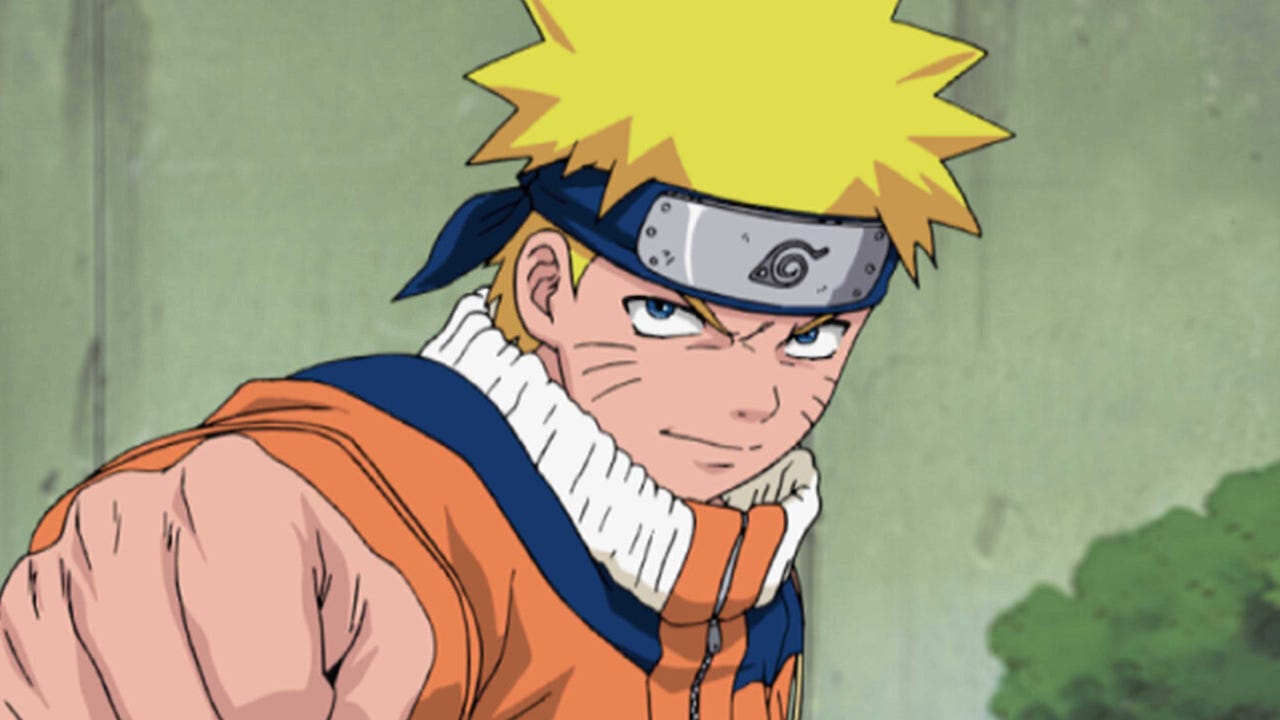
The latest comments from screenwriter Tasha Huo make it clear that the film exists in that frustrating space between "very real" and "not actually happening yet," with everyone involved waiting for the one thing they cannot force – time.
In a recent conversation with ScreenRant, Huo was disarmingly honest: she has no new updates to share about the status of the live-action Naruto movie and openly wishes she did. Her work, at least on paper, is done for now. She turned in her latest draft of the script in 2024, refining the story and characters while the rest of the production machine slowed to a crawl. Like the audience she is writing for, Huo is now watching from the sidelines, saying she also can't wait to see how this version of Naruto Uzumaki, his friends, and his village eventually make the jump from page and screen to live-action.
The reason for the stall is not a dramatic falling-out or some secret creative meltdown; it is much more mundane and very Hollywood. When The Greatest Showman director Michael Gracey parted ways with the project, the studio turned to Destin Daniel Cretton, the filmmaker behind Marvel's Shang-Chi and the Legend of the Ten Rings. On paper, that was a dream announcement. Cretton showed in Shang-Chi that he can choreograph kinetic martial arts sequences while anchoring them in a surprisingly emotional family story. That particular blend – spectacular action wrapped around messy, vulnerable characters – is exactly what a Naruto adaptation needs to avoid feeling like just another noisy CGI spectacle.
The problem is that Cretton is also one of Marvel's busiest creative voices. He is attached to a Shang-Chi sequel, he cocreated and executive produced the upcoming Disney+ series Wonder Man, and right now he is in the middle of shooting Spider-Man: Brand New Day, slated for a July 2026 release. When your director is juggling that many massive superhero projects, slipping a big anime adaptation into the schedule is like trying to squeeze an S-rank mission into an already overloaded ninja assignment list. It is not that Naruto has been abandoned – it is that the movie is waiting in line behind a wall of capes and webs.
Despite the delays, Huo has been consistently upbeat about Cretton as the person who will eventually bring her script to life. The showrunner of Tomb Raider: The Legend of Lara Croft has praised his ability to tell intimate, character-driven stories in the middle of huge genre sandboxes. Crucially, the vision they seem to share is not to cram the entire shinobi world into one film. Instead, the live-action Naruto is being conceived as a more focused story, centered on Naruto's early days in the Hidden Leaf Village: a lonely, loudmouthed kid craving acknowledgment, the formation of Team 7, and the first fragile bonds with Sasuke, Sakura, and Kakashi. Rather than trying to show every clan and every jutsu at once, the film aims to zoom in on the relationships that made fans care in the first place.
That choice speaks directly to one of the fandom's biggest concerns. Even casual observers know that Naruto is not a neat, self-contained story that ends after a single adventure. It is a sprawling saga of multiple series, time skips, war arcs, and generational drama. Fans online keep asking the same question: how do you fit any of that into a single movie without butchering it? People speculate that the only realistic approach is to pick a compact early arc – something like the Land of Waves mission and the tragic confrontation with Zabuza and Haku – and let that be the emotional backbone. Push all the way to the Chunin Exams in one film and you risk turning half the story into a rushed highlight reel where quiet character moments are sacrificed for big tournament set pieces.
This anxiety connects to a deeper skepticism: anime and manga lovers have been burned before. Ask any long-time fan to name one live-action anime adaptation that is genuinely better than the original, and you'll probably get a long pause, a nervous laugh, or a rant. From awkward casting to scripts that gutted the themes of the source material, there is a long list of films that felt like they were chasing a brand rather than honoring a story. Many Naruto fans understandably feel that the series doesn't need a live-action version at all, and that the odds of Hollywood improving on what already exists are slim at best.
That is precisely why Masashi Kishimoto's stance on the project carries so much weight. When Cretton's involvement was announced, Kishimoto wasn't just politely supportive; he went out of his way to say that, after watching one of Cretton's blockbuster action movies, he immediately felt the director could be the perfect fit for Naruto. What impressed him wasn't just the spectacle, but the way Cretton builds solid dramas about people, even in the middle of huge, effects-heavy worlds. After diving into more of the director's work and meeting him in person, Kishimoto described him as open-minded and collaborative – someone who actually wants the creator's input instead of treating it as a formality.
That collaborative spirit might be the film's secret weapon. Naruto is not just another anime; it is one of the medium's so-called Big Three, standing alongside One Piece and Bleach as a gateway series for an entire generation. Since its manga debut in 1999, it has exploded into a massive franchise: long-running anime series including Naruto and Naruto Shippuden, the sequel saga Boruto, a long list of movies, light novels, the Ultimate Ninja Storm video games, and more merch than you can fit into a Hokage's office. Adapting something with that kind of history is not just about getting the costumes right; it is about convincing a huge, emotionally invested audience that the people in charge actually understand why this story mattered to them in the first place.
Huo has repeatedly stressed that her script comes from a place of genuine affection for Naruto as a character, not from a cynical desire to strip-mine a recognizable IP. She has pointed to Cretton's tendency to avoid being distracted by world-building fireworks and instead zero in on nuanced relationships. In practice, that could translate to fight scenes that feel like brutal, messy ninjutsu duels shaped by emotion and strategy, rather than weightless CGI brawls, and to quieter moments that linger on Naruto's isolation, the villagers' fear of the Nine-Tails sealed inside him, and the complicated mentorship dynamics with Kakashi and the Third Hokage. If the movie can nail those small, human details, it has a real chance to stand on its own even for people who have never watched an episode of the anime.
For now, though, the project sits at the mercy of production calendars and corporate priorities. Hollywood is in the middle of rethinking how it handles big franchises, superhero universes, and streaming experiments. Anime adaptations are part of that same puzzle: potentially huge global hits, but also risky and easy to get wrong. On the optimistic side of the ledger, the Naruto movie has a completed script, a director with a proven track record in balletic action and heartfelt drama, and a creator who is not only giving his blessing but actively engaging in the process. On the pessimistic side, it has a director whose schedule is dominated by Marvel, a shifting studio landscape, and a fanbase that will scrutinize every costume, every casting choice, and every change to the story.
That tension is reflected in how fans talk about the movie online. Some are cautiously excited, saying they would rather wait several more years if it means getting a film that actually feels like Naruto, instead of a glossy shell. Others are far more skeptical, arguing that no live-action anime has ever truly surpassed the original and wondering if this project should exist at all. There is a real fear that squeezing even a carefully chosen arc into a two-hour runtime will compromise what made it special – those slow-burn relationships, quiet moments of grief and kindness, and the sense of a world that keeps expanding around the characters.
Yet even the harshest critics often admit that, on paper, this is about as promising a setup as they could reasonably hope for: a passionate writer with genre experience, a director who knows how to balance fists and feelings, and a legendary creator who is deeply involved and publicly optimistic. Until the stars, contracts, and shooting schedules finally align, the live-action Naruto movie will remain in a kind of cinematic limbo – more shadow clone than physical presence. In the meantime, fans will keep doing what they always do: debating which arc should come first, arguing over ideal casting for Kakashi or Itachi, and nervously refreshing feeds for any scrap of real news. If and when the film finally leaves development purgatory, it will carry not only Naruto Uzumaki's dream of becoming Hokage, but the hopes and doubts of an entire generation that grew up running with their arms stretched behind them, believing that one loud, stubborn outcast from the Hidden Leaf could change the world.