For many PC enthusiasts running AMDs AM5 platform, a BIOS update has started to feel less like a routine maintenance task and more like a small gamble. The latest example comes from MSI, which has begun rolling out new firmware built on AMDs AGESA 1.2.8.0 code for a handful of fresh 800 series motherboards. On paper it looks like a simple compatibility update. 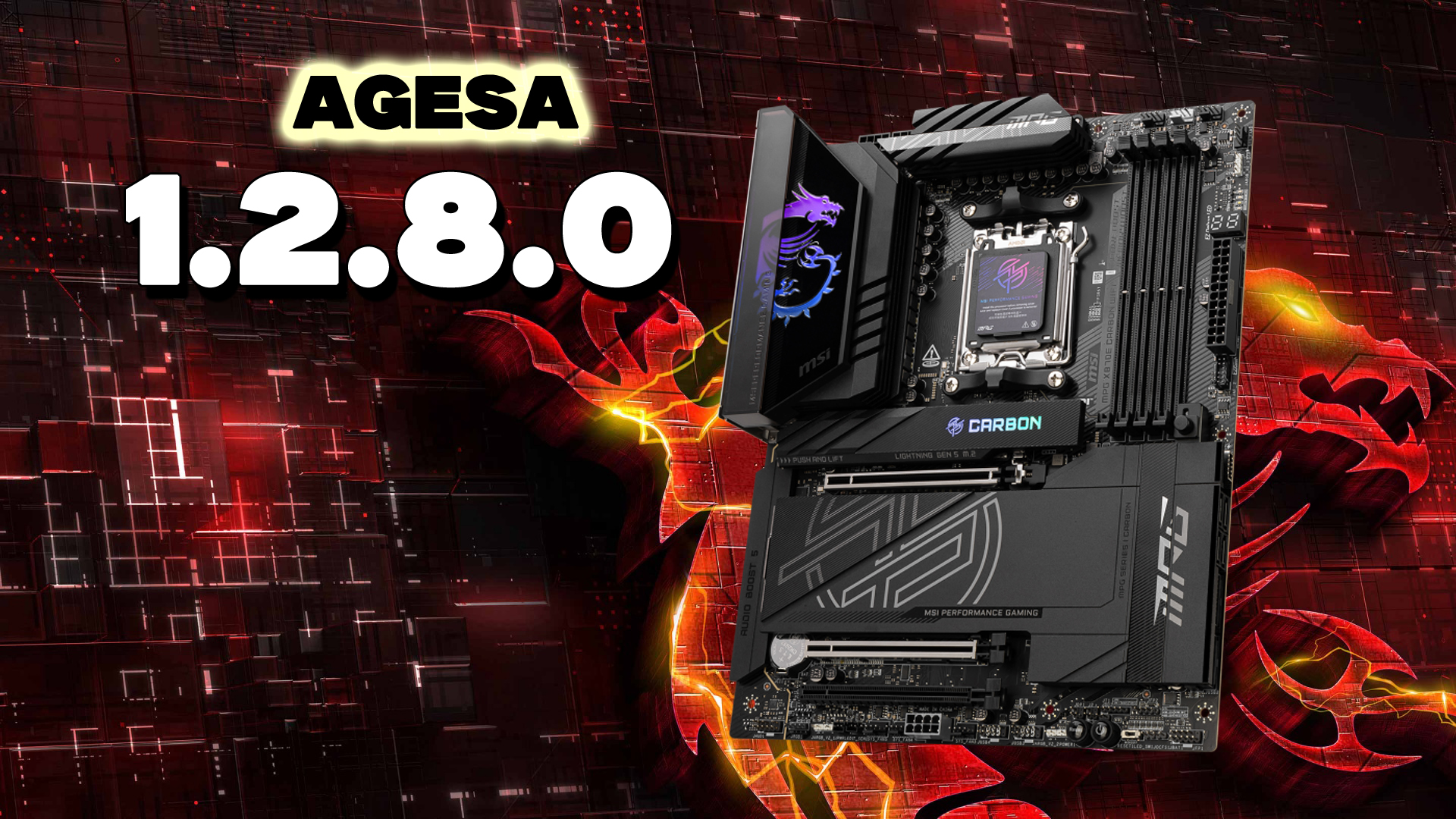
In practice, some early adopters are reporting systems that refuse to show even a BIOS screen after flashing it.
AGESA, short for AMD Generic Encapsulated Software Architecture, is the low level firmware block that board makers drop into their UEFI BIOS in order to bring up processors, manage memory training and coordinate power management. Every time AMD pushes a new AGESA branch, partners such as MSI, ASUS and ASRock race to integrate it so they can claim support for the next wave of CPUs and APUs, as well as more ambitious DDR5 memory profiles.
In recent weeks the focus has been on AGESA 1.2.7.0, a branch designed to prepare AM5 boards for upcoming Krackan Point and Strix Point APUs. MSI and ASUS were among the first to ship that code on retail boards, allowing owners to get early readiness for those chips. Now MSI has already moved one step further on some models, publishing BIOS files that use AGESA 1.2.8.0 instead of 1.2.7.0, effectively turning a few consumer boards into the front line of firmware development.
According to a widely referenced community AGESA tracking sheet, only three MSI 800 series motherboards currently have public BIOS builds based on AGESA 1.2.8.0. These are the MPG X870E Edge Ti WiFi, the MPG X870E Carbon WiFi and the MAG B850M Mortar. On the support pages for these boards the new BIOS appears with very short notes that mostly promise improved memory compatibility and better stability. There is no beta tag, no bright warning banner and no suggestion that users should approach this update with extra caution.
That bland description clashes sharply with what at least one early adopter has experienced. A user on the Chinese Chiphell forums reports that after flashing the AGESA 1.2.8.0 based BIOS on an MPG X870E Carbon WiFi, the system no longer reaches the UEFI interface at all. Instead it falls into a loop of failed boots and crashes, never handing control to the operating system. In other words, the firmware that is supposed to widen hardware support appears to break the most basic function of the board, which is simply to start and let you into BIOS setup.
The report reads almost like a dark joke. Community members are half laughing and half panicking as screenshots of frozen splash screens and endless reboot cycles circulate, with some users posting meme style reactions rather than classical bug reports. Behind the humour is a very real fear that a brand new, expensive X870E board can be transformed into an awkwardly shaped paperweight in the time it takes to click an update button.
It is worth remembering why things can go so wrong. Modern AM5 boards pack PCIe 5.0 connectivity, complex power stages and very fast DDR5 memory controllers. AGESA sits in the middle of all of that, coordinating how the processor initialises, how memory training is handled and how different voltage and frequency states are applied. A tweak that helps one class of memory kit or one upcoming APU stepping can easily upset a previously stable combination of parts. When vendors are also rushing to advertise next generation support, testing can lag behind the marketing.
Complicating the picture further, AGESA 1.2.7.0 has hardly been trouble free. On ASUS hardware, the original BIOS release labelled 1804 that carried 1.2.7.0 caused enough issues that it has quietly disappeared from some download pages. In its place many boards now offer an 1805 BIOS that still uses the same AGESA branch but incorporates additional vendor side fixes. The fact that ASUS felt compelled to pull and replace a fresh release so quickly suggests that the 1.2.7.x line has more than one rough edge.
The AGESA tracking sheet also lists an intermediate 1.2.7.1 build for selected ASRock X870 and X870E boards, marked explicitly as beta. At the same time, ASRock appears to have skipped a public 1.2.7.0 release on some models, leaping straight from older firmware such as 1.2.0.3 to 1.2.8.0. Taken together, these moves paint the picture of vendors feeling their way through a moving target, experimenting with combinations of AGESA branches and internal patches while disclosing only minimal detail in their changelogs.
For owners of MSI MPG X870E Edge Ti WiFi, MPG X870E Carbon WiFi and MAG B850M Mortar boards, the safest course right now is to resist the urge to update purely out of curiosity. If your system boots cleanly, your memory runs at its advertised profile and nothing is crashing, treat your current BIOS as a known good baseline. Capture screenshots of your important settings and, if possible, export a profile to a USB stick so you can restore it later if needed.
There are only a few sensible reasons to consider flashing AGESA 1.2.8.0 on day one. You might be troubleshooting a very specific memory compatibility problem that MSI explicitly lists as fixed in the new revision, or you might be an enthusiast who genuinely needs early support for upcoming Krackan Point or Strix Point APUs for testing or review work. Even then, you should make sure you understand how the boards USB BIOS flashback feature works, or confirm that you have access to another machine that can help you reflash in case the system fails to reach POST after the update.
For everyone else, patience is the better strategy. Give MSI and AMD time to investigate user reports, iterate on the firmware and publish a follow up BIOS that clearly addresses the current boot issues. Watch the community forums and feedback threads rather than racing to click the download button the moment a new file appears. On a young platform like AM5, with aggressive memory speeds and a new wave of APUs waiting in the wings, the very first builds of any new AGESA branch are effectively live testing on paying customers.
In the long run AGESA 1.2.8.0 will probably become just another routine stepping stone in the update history of these boards, remembered only by a few early adopters who lost an evening fighting with a suddenly silent X870E. Right now, however, it looks more like a warning label than a must have upgrade. Until MSI and the wider AMD ecosystem have ironed out the current problems, owners of 800 series AM5 motherboards are better off sticking with a stable, older BIOS rather than volunteering as test pilots for the latest microcode experiment.