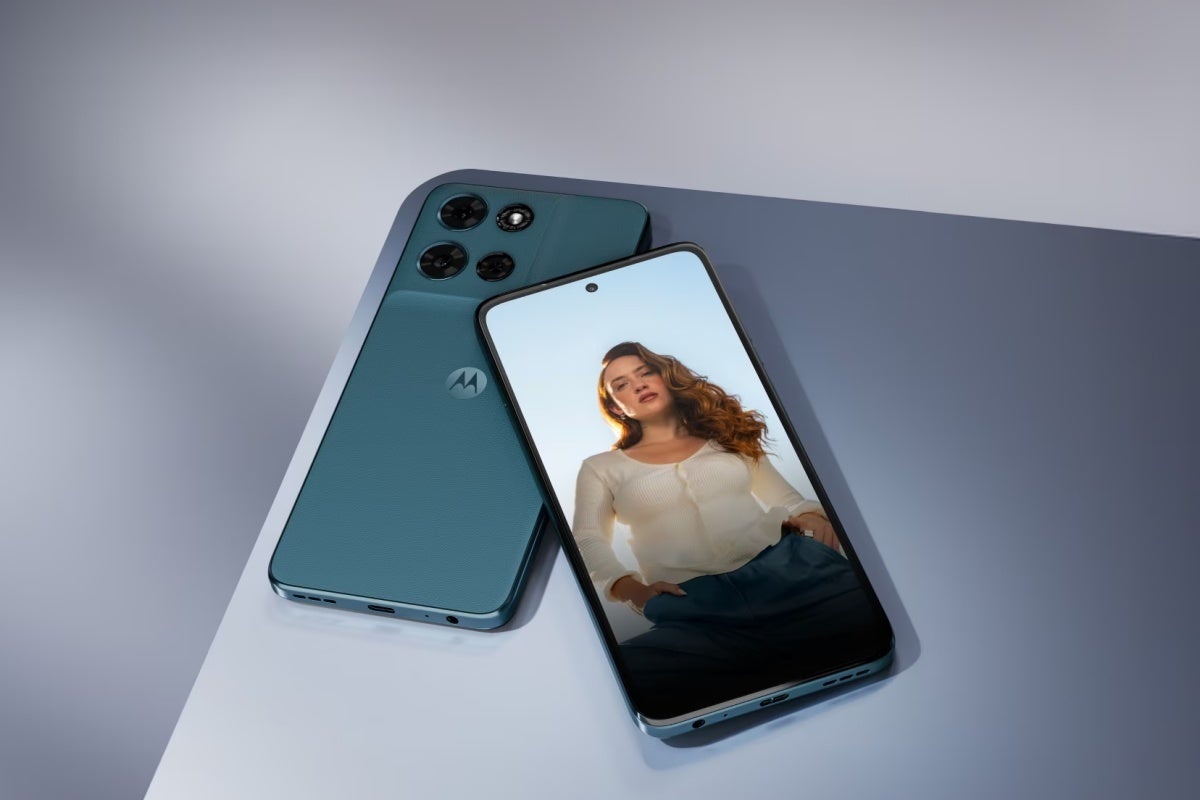
Motorola’s Midrange Paradox: Why US Buyers Keep Getting Less While Everyone Else Gets the Power
Motorola is on a tear globally, yet the story for US shoppers remains strangely familiar: more announcements, more hype, and somehow, fewer compelling choices at the cash register. In the last week alone, the company unveiled four new Moto G phones – the Moto G67 Power, Moto G (2026), Moto G Play (2026), and Moto G57 Power. For anyone who values sane pricing and solid everyday performance, that lineup should feel like a Black Friday buffet. Instead, US customers are once again staring at a thinner plate while Europe and India tuck into hearty, high-value servings.
The Week of Four Motos – and Two Americas
Let’s start with the broad strokes. The new releases span the familiar G family spectrum: budget-friendly basics, a couple of models with the evocative “Power” badge, and the usual promise of dependable battery life. On paper, this looks like a people-pleasing portfolio. In practice, the experience diverges sharply by region.
Internationally, the “Power” phones earn their name. The Moto G57 Power, priced around €279 in Europe, packs a 7,000mAh battery, military-grade durability, and 8GB RAM/256GB storage without upsell games. In India, the Moto G67 Power lands at roughly the equivalent of $180 and still delivers the same gargantuan 7,000mAh cell inside a surprisingly refined, robust chassis. These are the kinds of specs that change how people use their phones – two-day endurance, stress-free GPS use, and fewer late-night battery panics.
Now shift to the US. The Moto G (2026) carries over the sub-Full HD display resolution of its predecessor, bumps the battery slightly to 5,200mAh, and slots in at an unchanged $199.99. The Moto G Play (2026) drops to $169.99 but trims features even further: a single rear camera, just 64GB of storage, and 4GB of RAM. If your budget caps out at two Benjamins, these aren’t catastrophic buys – yet they feel artificially constrained, especially when stacked against what Motorola is selling elsewhere for similar or even lower money.
What’s Holding the US Models Back?
It’s hard not to ask the obvious question: why do US-bound Moto G phones so often look like detuned versions of their global twins? No single factor explains it, but several familiar forces likely converge:
- Carrier economics: US midrange phones are routinely optimized for promotions, not purity. Subsidies and retail spiffs can favor lower bill-of-materials, even if that means a cheaper display or less RAM.
- Certification and network tailoring: Supporting a patchwork of US bands and carrier features can raise costs, and vendors sometimes claw that back by trimming specs elsewhere.
- Inventory simplicity: One SKU that “works everywhere” on US carriers can be cheaper to distribute – even if it’s not the enthusiast’s dream build.
- Margin stacking: Retailers, carriers, and marketing layers all take a cut. Something gives, and too often it’s the camera array, storage tier, or display resolution.
None of these explanations make the result any less frustrating. When Europe gets 8GB/256GB by default and the US is still fighting through 4GB/64GB at a similar price, buyers notice – and so does the competition.
The Competitive Pressure Motorola Should Welcome
At $199.99, the Moto G (2026) faces pressure from Samsung’s value line, including the Galaxy A16 5G and the likely Galaxy A17 5G. If Motorola matched the global G57/G67 ethos – bigger batteries, higher base storage, and modern displays – the calculus for budget buyers would change overnight. Instead, the US models feel like they’re optimized to clear shelves, not win hearts.
Look at the optics: abroad, Motorola hawks marathon batteries and rugged shells. In the US, the talking points skew toward “good enough for the price.” That gap is brand-shaping. A consumer who buys a 7,000mAh G-series phone in Europe will evangelize the experience; a US buyer who hits storage limits in month three will quietly drift back to Samsung at upgrade time.
Power That Actually Feels Powerful
There’s a reason the Moto G57 Power and Moto G67 Power resonate. A 7,000mAh pack isn’t just a spec-sheet flex; it redefines routine. You can leave the power bank at home. You can tether on the go without glancing at the percentage. You can map long drives with confidence and still have juice for video calls at night. Pair that with 8GB RAM and 256GB storage, and a midrange device starts to feel premium where it matters – consistency, not synthetic benchmarks.
A Rare Bright Spot: Motorola’s Foldables
This divergence is what makes the company’s foldable strategy so refreshing. The Razr (2025), Razr Plus (2025), and Razr Ultra (2025) sold in the US stand shoulder-to-shoulder with their international Razr 60 series counterparts. That parity is paying off against Samsung’s Galaxy Z Fold 7 and Z Flip 7. When Motorola levels the playing field, customers respond. The lesson should be obvious: consistency breeds credibility.
Will the Next US “Power” Live Up to Its Name?
Stateside fans are now looking to the Moto G Power (2026) and Moto G Stylus (2026) to right the ship. History offers mixed signals. The Moto G Power (2025) shipped with a 5,000mAh cell – fine, but conservative. After watching three G-series phones cross the 7,000mAh threshold abroad within weeks, it would be tone-deaf to keep the US “Power” below 6,500mAh. Battery leadership is Motorola’s easiest win; surrendering it at home would be a self-inflicted wound.
What Motorola Should Change – Now
- Stop downgrading displays: Retire sub-FHD panels above $150. A crisp screen sells the phone every time.
- Standardize storage/RAM sensibly: Make 6GB/128GB the floor for $200-class devices; 8GB/256GB for anything wearing the “Power” badge.
- Lead on battery again: Anchor US “Power” models at 6,500mAh+. Own the category.
- Stabilize cameras: Two useful rear lenses (wide + ultra-wide) beat three mediocre sensors. Don’t chase sensor count.
- Commit to updates: Publish transparent OS/security timelines and hit them. Value phones deserve predictable support.
Advice for US Buyers Right Now
If you need a sub-$200 phone today, the Moto G (2026) is serviceable, and the Moto G Play (2026) is strictly for light users who live in messaging apps and streaming at modest settings. If you care about longevity – storage headroom, heavy app use, weekend battery endurance – you may be better off waiting to see where the Moto G Power (2026) lands or considering rivals like Samsung’s A-series if carrier deals even the price.
Importing the Moto G67 Power can be tempting, but check US band compatibility, warranty limitations, and potential software update differences before you gamble. A bargain that can’t hold a signal isn’t a bargain.
The Bottom Line
Motorola is proving, in real time, that it can build midrange phones people love – just not consistently for the US. Abroad, the new G57 and G67 Power models are confident, buyer-friendly packages with batteries that change habits and specs that respect users’ needs. At home, the company still leans on compromises that feel designed for spreadsheets, not people. The solution isn’t a mystery: bring the same ambition that’s winning in Europe and India to US shelves. Do that, and Motorola won’t just defend share – it will force competitors like Samsung to raise their midrange game, finally shaking a segment that has been stagnant and, frankly, boring for too long.