Meta seems ready to push its wearable strategy into new territory with the leak of its upcoming Meta Ray-Ban Display glasses, a product that blurs the line between smart eyewear and futuristic AI-driven assistants. 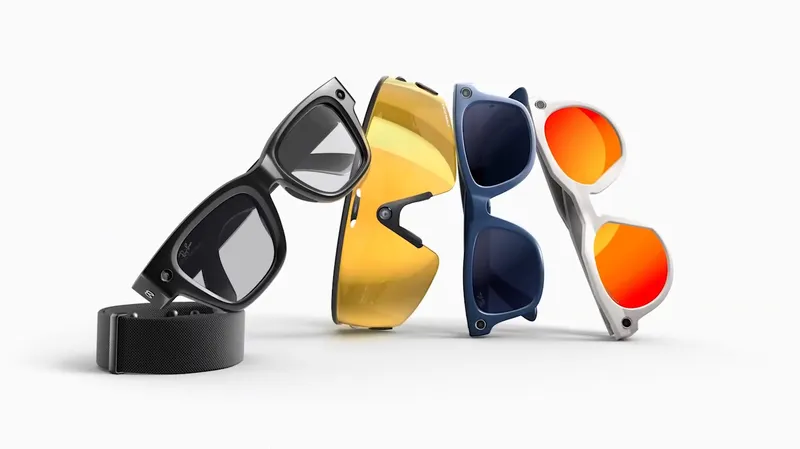
A since-removed YouTube video revealed the device paired with Meta’s experimental sEMG wristband, raising eyebrows just hours before the company’s Connect 2025 conference.
Unlike Meta’s earlier Ray-Ban Stories or the more recent camera-equipped glasses, this new model introduces a heads-up display (HUD) visible exclusively to the wearer’s right eye. It’s important to note: this isn’t augmented reality in the traditional sense. Instead of overlaying digital elements into the physical world, the HUD provides a constant, floating interface for tasks like messaging, navigation, and seamless access to Meta AI. Think of it as a miniature personal dashboard always within sight.
The design comes with trade-offs. While still sleek, the frames are bulkier and heavier, weighing 70 grams compared to the 50g of previous Meta Ray-Ban editions. That added weight is likely the price of integrating a display system, and it may divide opinion among users who prize comfort. Price will be another sticking point: reports suggest an $800 retail tag, putting it in a premium category far above the earlier $299–$329 smart glasses.
Branding clarity is key here. By naming the product “Ray-Ban Display,” Meta seems determined to separate it from other fashion-forward models, including the Oakley Meta HSTN and the yet-to-be-released Oakley Meta Sphaera. The leaked video even staged a comparison lineup, highlighting the Display glasses alongside these sibling devices and, of course, the sEMG wristband.
This wristband itself deserves attention. Building on the company’s earlier “Neural band” experiments, it uses Surface Electromyography (sEMG) sensors to interpret the tiny electrical signals your forearm muscles generate when moving fingers. In practice, this allows subtle hand gestures to control the glasses’ interface without fumbling for buttons or relying solely on voice. If polished enough, this could become a breakthrough input method that feels natural and futuristic at once.
The timing of the leak is telling. With Meta Connect 2025 opening today, it’s difficult to imagine this video surfacing by accident. Industry watchers widely expect the company to officially unveil the Ray-Ban Display within the next few days, if not during the keynote itself. Whether the glasses can win over skeptics wary of data privacy and the looming memory of abandoned projects like the Orion AR glasses remains to be seen.
Still, Meta’s ambitions are clear: it wants to own the next generation of personal computing devices worn on your face and your wrist. The Ray-Ban Display may not be true AR, but it marks a bold step toward mainstreaming AI-powered wearables – and testing whether people are ready to live with a digital interface in constant view.
4 comments
as if fb doesnt spy enough, now they want a screen glued to ur eye lol
800 bucks?? no way im paying that just to see msgs in my face 😂
tbh the wristband idea is kinda cool ngl, like sci-fi vibes
honestly i’d try it, better than yelling at siri in public 🤷