Meta just took another bold step toward making social media truly borderless. Instagram and Facebook Reels can now speak your language – literally. 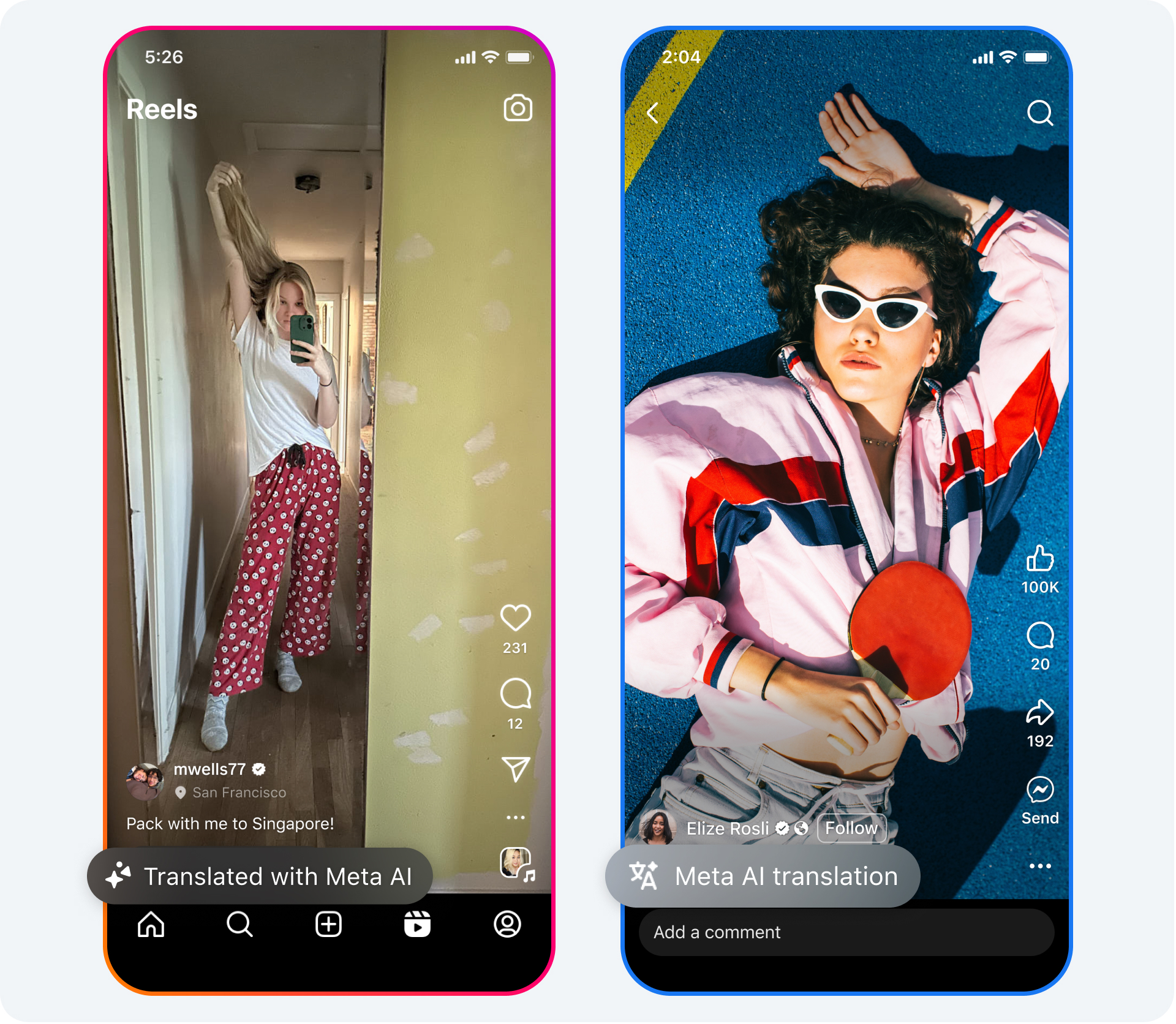
Through its advanced Meta AI, the company behind Facebook, Instagram, Threads, and WhatsApp is enabling automatic voice translations for short videos in four major global tongues: English, Spanish, Hindi, and Portuguese. The result is an eerily natural experience where your favorite influencer suddenly sounds fluent in a language they may have never spoken before.
It all began quietly back in August when Meta first introduced bidirectional translations between English and Spanish. The idea was straightforward but powerful: let creators break out of language silos without needing to record multiple versions of the same Reel. Thanks to Meta’s AI magic, this translation system doesn’t just provide subtitles – it reproduces the creator’s actual voice, tone, and personality in the translated language. Now, with Hindi and Portuguese joining the lineup, Meta is connecting some of the world’s largest online audiences.
At its core, this feature aims to help creators expand globally without extra cost or effort. It’s free for Facebook creators with at least 1,000 followers and available to all public Instagram accounts in supported regions. The rollout isn’t uniform – some AI-powered tools only appear in specific territories – but the US remains a primary testbed for Meta’s most cutting-edge features. That means American users often get to play with new tools first before they spread worldwide.
So, how exactly does it work? Meta AI uses deep learning models for voice cloning that recreate a person’s unique timbre and rhythm. The translated audio doesn’t sound robotic – it sounds human, almost indistinguishably similar to the original creator’s voice. Even more impressively, a synchronized lip-sync feature adjusts mouth movements to align naturally with the translated speech. Watching a Reel where a Brazilian creator effortlessly ‘speaks’ Hindi or an Indian influencer appears to chat fluently in Spanish feels like something out of science fiction – but it’s real and happening right now.
Every translated Reel carries a label reading “Translated with Meta AI” to maintain transparency. If users prefer authenticity, they can simply disable the translation under the audio settings. Meta understands not everyone loves algorithmic enhancement, so turning it off is only a tap away.
Meta’s leadership says the feature was heavily influenced by creator feedback. For many influencers and small content producers, language has always been the invisible wall limiting growth. With AI translation, a single video can now travel across continents, reaching viewers in markets that were once inaccessible. That’s not just convenient – it’s transformative. English, Spanish, Hindi, and Portuguese collectively represent billions of potential viewers, and Meta’s approach means that creators can tap into all of them without hiring translators or dubbing teams.
Beyond convenience, this innovation also signals a shift in how we interact with content. For years, automatic subtitles and machine translations have helped users roughly understand foreign posts. But those were static and emotionless. By contrast, Meta’s voice-matched translations bring empathy and authenticity back into the conversation. It’s not merely about words – it’s about feeling connected to the person behind them.
Critics might argue that AI voices can sometimes blur cultural nuances or make subtle mistakes in idioms. Still, the trade-off seems worthwhile when compared to the alternative – missing out entirely on diverse voices and perspectives. Whether you’re discovering a Spanish comedian’s skits, a Brazilian musician’s snippets, or an Indian travel blogger’s diary, language no longer needs to be a barrier. Instead, it becomes a bridge.
In an era when online spaces often feel fragmented by geography and language, Meta’s multilingual Reels may represent a genuine step toward global digital unity. It’s a small taste of a future where social networks sound as connected as they look.
1 comment
ngl it’s kinda spooky hearing the same voice in another language 😅