M5 MacBook Pro Survives Being Run Over by a Car: What This Wild Story Really Proves
Every brand loves to talk about premium materials and military grade durability, but very few machines ever face a real world torture test outside of a marketing lab. Apple’s M5 MacBook Pro just did. According to one owner, the laptop was forgotten on the roof of a car, flew off somewhere on the road, was likely run over, and still walked away with nothing more than cosmetic scars. It sounds like fan fiction, yet the details of the incident line up with both Apple’s design choices and some very simple physics.
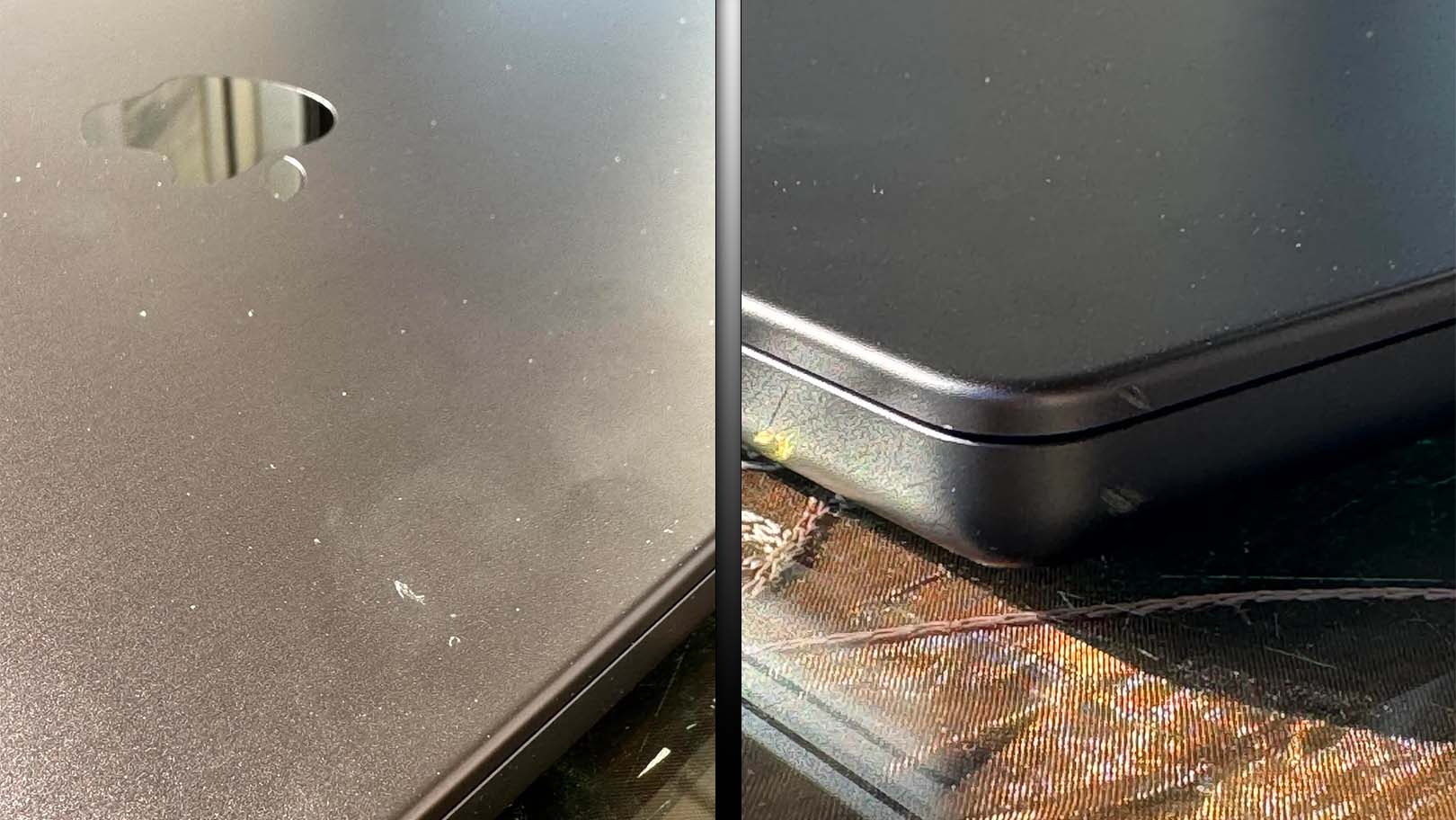
The story comes from a new M5 MacBook Pro owner who openly admits he used to think MacBooks were fragile fashion items. Two weeks after buying the machine, he tossed it into a cheap sleeve, put it on the roof of his car, and then drove off without a second thought. Only later did the panic hit: the laptop was missing. After thirty minutes of searching along the route, he finally spotted the sleeve lying on the roadside, stamped with visible tyre marks.
In that moment he expected the worst: a shattered display, twisted frame, and a pile of very expensive scrap metal. Instead, he unzipped the sleeve and found the M5 MacBook Pro still in one piece, booting normally, with only a handful of scratches and small dings along the edges. For a device this thin and dense, that outcome is surprising enough to make even long time Apple critics stop and look twice.
Forgotten on the roof, saved by aluminum and luck
The M5 MacBook Pro follows Apple’s long running unibody aluminum design philosophy. The chassis is milled out of a solid block of metal, rather than being built from several flexy plastic panels. That approach makes the structure more rigid, especially around critical areas like the keyboard deck and hinge line. When a heavy object such as a car tyre presses down on the laptop, the load is spread through that stiff shell instead of immediately crumpling one weak corner.
The cheap protective sleeve did contribute a bit of cushioning and friction, but the key here is how the force was distributed. A modern car tyre has a broad contact patch, and if the laptop is lying flat, the mass of the car is spread over a relatively large area. That means the pressure at any one point may stay below the threshold that would crack the display glass or bend the internal frame. In other words, physics teamed up with Apple’s structural design to keep the damage superficial.
It is worth noting that this outcome is not guaranteed for every laptop in the same situation. Thin devices with plastic shells, loose hinges, or weak screen backings are much more likely to deform, misalign their ports, or suffer instantaneous panel failure when hit with similar force. Many mid range Windows machines, for example, can pick up cracks just from getting squeezed in a stuffed backpack, let alone carrying tyre prints.
Durability is great, but what about repairability?
Not everyone cheering this story is doing it uncritically. In the comment trenches, there are users pointing out that they would still prefer a laptop where the SSD can be replaced cheaply if it dies. That is a fair concern: Apple’s current MacBook Pro line, including the M5 models, uses soldered storage and memory. From a repairability and right to repair perspective, that design is a real compromise. If the SSD fails, you are looking at a logic board replacement, not a simple fifty dollar drive swap.
Repair advocates such as Louis Rossmann have built entire channels around criticising exactly this tension in Apple’s line up: incredibly solid outer shells wrapped around highly integrated internals that are harder and more expensive to fix. The M5 MacBook Pro surviving a car running over it does not erase those issues; it simply highlights that Apple has focused a lot of engineering effort into making the exterior as tough as possible. You get a machine that can shrug off a freak accident, but if something subtle and electronic fails later, you may be locked into Apple’s ecosystem of authorised repairs.
That contrast is what makes this case so interesting. On one side, you have people joking that certain Intel powered laptops show their superiority by heating your thighs or roasting themselves under load. On the other, you have a MacBook that can literally live through a roadside hit and keep working. Durability is not only about surviving drops and impacts; it is also about how easily the machine can be serviced over time. This incident underlines how far Apple goes on the first part, while leaving the second part as an ongoing debate.
From car accidents to stopping bullets
This is not the first time a MacBook has been at the centre of an extreme survival story. One of the most widely reported cases involved a MacBook stopping a bullet and saving a man’s life during an airport shooting in Fort Lauderdale. The laptop was destroyed, but it absorbed enough energy to keep the round from reaching the owner’s body. While that scenario is very different from being run over, the common thread is the rigid, layered construction of the chassis and display assembly.
These examples are obviously edge cases. No one should treat a MacBook Pro like a ruggedised field laptop or a piece of body armour. Yet they do illustrate that the design is more than just a pretty silver shell. The combination of dense materials, stiff structure, and controlled flex gives Apple’s machines a resilience that you rarely see in cheaper, thinner, plastic heavy notebooks.
How tough is the M5 MacBook Pro really?
The takeaway from this roadside disaster is not that the M5 MacBook Pro is indestructible, but that its real world durability is legitimately impressive. A brand new, premium laptop fell from a moving car, seems to have been run over, and still boots as if nothing happened. That is far beyond the everyday bumps, drops from a desk, or knocks in a backpack that most buyers worry about.
If you travel daily, work on the go, or live with pets and kids, this level of structural toughness matters. It means that a single moment of carelessness is less likely to turn into a four figure mistake. At the same time, the concerns about soldered components and limited upgrade paths remain valid. For some users, the trade off is worth it: they get a quiet, cool, powerful M5 MacBook Pro that is surprisingly hard to physically kill. For others, a more repairable machine with replaceable SSD and RAM will still be the smarter long term choice.
In the end, this wild story is best viewed as a reminder of two things. First, good engineering can turn a slim metal slab into something that survives abuse you would normally associate with rugged gear. Second, no amount of durability should stop you from backing up your data and treating your laptop with at least a little respect. The M5 MacBook Pro may handle a car better than you expect, but that does not mean you should make running it over part of your regular test routine.
1 comment
Your article helped me a lot, is there any more related content? Thanks!