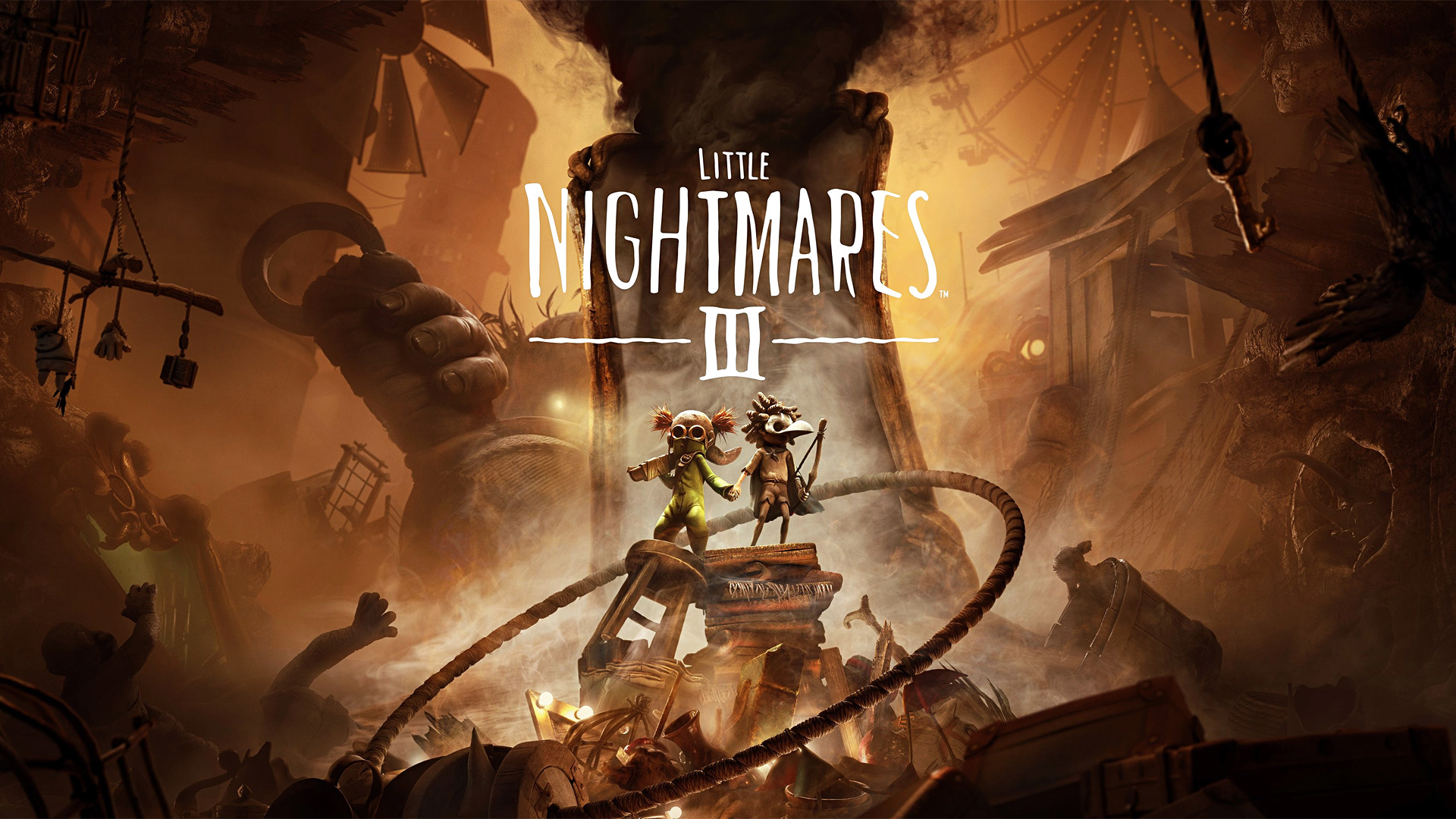
Little Nightmares III Review – A Familiar Dream With Faded Fear
The Little Nightmares franchise has always thrived on its unsettling blend of childhood innocence and creeping horror. Over the years, it has carved out a distinctive niche in the gaming world, selling more than 20 million copies and establishing itself as one of Bandai Namco’s most quietly successful IPs. With Tarsier Studios stepping away after the second installment, many wondered if any other developer could capture the same fragile magic that made Little Nightmares resonate with players. Enter Supermassive Games – the studio best known for cinematic horror experiences like Until Dawn and The Quarry. Their challenge? To continue the dream without letting it fade into monotony.
Little Nightmares III arrives as both a continuation and a soft reboot, attempting to preserve the atmosphere of the earlier titles while bringing its own flair. Unfortunately, while it succeeds in mechanical faithfulness, it struggles to rekindle the same raw sense of unease that once made players squirm in their seats.
New Faces in a Broken World
This time around, Supermassive introduces two new protagonists – Low and Alone – who navigate a twisted landscape of oversized horrors and impossible spaces. While the first two games thrived on wordless storytelling and surreal imagery that hinted at deeper meaning, Little Nightmares III seems more straightforward, and in doing so, it loses some of that cryptic charm. The mystery that once fueled endless online theories feels diluted, replaced by a more tangible narrative that explains too much and implies too little.
Still, Low and Alone make for sympathetic figures, each burdened with their own symbolic tools. Low carries a bow – an elegant weapon of precision and distance – while Alone wields a wrench, heavy and practical. These tools aren’t just for puzzles; they represent their personalities and survival styles. It’s an inspired touch that adds subtle texture, even if the game doesn’t always capitalize on it.
Playing in the Shadows
Gameplay-wise, Supermassive has stayed remarkably loyal to Tarsier’s formula. Little Nightmares III is still a side-scrolling platformer with 2.5D environments, carefully curated camera angles, and minimal combat. Players can jump, grab ledges, crawl through vents, and sneak past monsters that loom like living sculptures. But despite the familiar setup, the controls remain stiff and deliberate – an artistic choice that occasionally sabotages the fun. The fixed perspectives often make judging distances difficult, leading to frustrating falls and repetitive deaths. In a game where precision and tension should intertwine, the result is often irritation instead of fear.
That said, the improved combat deserves some credit. Little Nightmares II was notorious for its sluggish, punishing melee mechanics. Here, the dedicated weapons for each character – Low’s ranged bow and Alone’s wrench – introduce variety and cut down on tedium. Fights remain secondary to exploration, but at least they no longer feel like punishment.
Co-Op: The Dream Shared
The biggest addition to the series is online co-op, allowing two players to experience the story together for the first time. It’s a natural evolution that feels overdue, considering the companion-driven dynamic introduced in Little Nightmares II. When playing with another person, coordination becomes key: puzzles require teamwork, timing, and trust. The experience can be genuinely delightful when both players communicate, creating moments of shared panic and triumph reminiscent of games like It Takes Two or Brothers: A Tale of Two Sons.
However, the absence of local couch co-op is baffling. For a game so rooted in intimacy and shared tension, forcing players online – and only with friends, since random matchmaking is not supported – limits accessibility and spontaneity. Supermassive’s inclusion of a “Friend Pass,” allowing a partner without a copy of the game to join, is a nice gesture, but it doesn’t fully compensate for the missing local option.
When playing solo, the magic dims. The AI-controlled partner is competent to a fault, solving their side of puzzles with robotic precision, which drains the sense of accomplishment. Other times, the AI fumbles, getting stuck or lagging behind, testing your patience. It’s an inconsistent experience that makes the solo mode feel like an afterthought compared to the intended co-op focus.
Repetition and Routine
Beyond co-op, Little Nightmares III feels caught in a creative loop. Its set pieces and gameplay beats often mimic the previous games almost exactly – sneaking through air ducts, dragging boxes to reach high ledges, avoiding grotesque creatures who patrol narrow corridors. There’s a predictable rhythm to its scares and puzzles. While comfortingly familiar for fans, it borders on self-imitation.
The game’s final chapter briefly breaks this pattern with imaginative design and new mechanics that hint at what could have been. For a fleeting moment, the dream feels alive again – unpredictable, daring, and surreal. But just as quickly, it’s over. The entire experience clocks in at around four hours, short even by indie standards, and too slight to justify its full price tag.
Atmosphere Without Awe
Supermassive has long been a master of cinematic visuals, and Little Nightmares III certainly looks good. Yet, it doesn’t look right. Tarsier’s art direction in the first two games balanced grimy realism with puppet-like surrealism, creating worlds that felt both tactile and nightmarish. Here, the environments are technically impressive but strangely sterile. The lighting lacks that damp, suffocating gloom that defined the earlier titles. Even the monsters – once unforgettable in their design – now veer closer to stock horror tropes. The uncanny, almost handmade quality is gone, replaced by something safer and more polished.
Sound design, however, remains a triumph. Every creak, squelch, and distant wail feels lovingly crafted to trigger unease. The audio world is as textured as ever, with ambient whispers and offbeat nursery melodies building the tension better than many of the visuals manage.
Performance and Polish
On PS5, Little Nightmares III runs decently but not flawlessly. Frame drops and occasional input delays disrupt the flow, especially during chase sequences that demand precise timing. Load times are brisk, though, and the UI is clean and responsive. It’s clear Supermassive aimed for fidelity, but some optimization issues hold the game back from technical excellence.
The Verdict: A Beautiful, Forgettable Nightmare
In the end, Little Nightmares III is a faithful echo rather than a bold new voice. Supermassive Games demonstrates respect for the franchise’s DNA but fails to expand upon it in meaningful ways. The co-op system adds life but not longevity; the story adds clarity but not mystery. For longtime fans, it’s a comfortable return – one that stirs memories but rarely emotions. For newcomers, it’s an accessible entry point, but perhaps not an inspiring one.
Despite its faults, there are moments of brilliance: a haunting melody here, a disturbing silhouette there, the thrill of synchronized escape with a friend. But when the credits roll, the dream fades quickly, leaving behind only fragments of what could have been.
Final Rating: 6/10 – Familiar, fleeting, and faintly hollow, Little Nightmares III is a continuation that never quite escapes the shadow of its own legacy.
- Pros: Familiar gameplay that still delivers occasional thrills; online co-op adds charm; excellent sound design; solid performance overall.
- Cons: Recycled ideas; inconsistent AI; lack of local co-op; shorter runtime; less imaginative monster design.
For fans, this may be worth the price of nostalgia. For everyone else, it’s a short dream best experienced once – and soon forgotten.
4 comments
supermassive should stick to until dawn style games, this wasnt it
coop was fun af but too short tbh
why no couch co-op??? like come on its 2025 bro
still better than LN2 combat tho