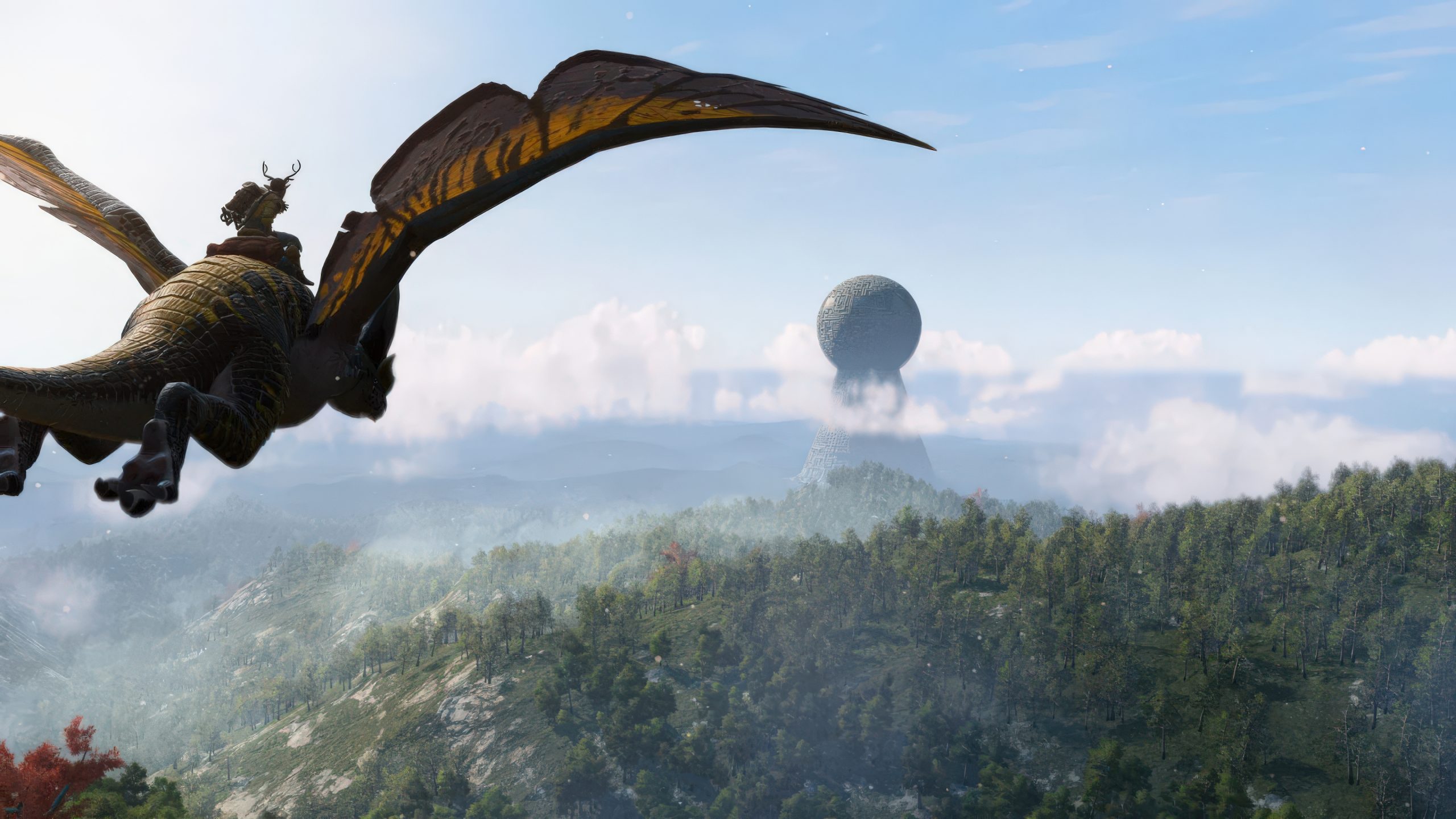
Light No Fire: Tiny Team, Huge Ambition For An Earth-Sized Fantasy Survival World
When Hello Games walked onto The Game Awards 2023 stage with the first trailer for Light No Fire, it felt like a moment. The studio that once tried to give players a whole galaxy with No Man’s Sky suddenly promised something stranger and, in some ways, even bolder: a single, truly Earth-sized fantasy planet where everyone plays together. Almost two years later, that trailer is still doing the rounds, but the reality behind it is much quieter. The project is being built by what founder Sean Murray recently described as a tiny team working away in the background, and that choice says a lot about where Hello Games is as a studio and what kind of game Light No Fire is likely to become.
On paper, the pitch reads like a direct counterpoint to No Man’s Sky. Instead of an almost abstract sci-fi universe, Light No Fire leans hard into high fantasy: dragons wheeling above mountain ranges, skeletal warriors in ruined temples, strange anthropomorphic peoples wandering through forests and deserts. Instead of a near-infinite collection of small worlds, the focus is on one vast, continuous globe that aims to feel closer to a stylised Earth in sheer scale and variety. Where No Man’s Sky invited you to skim across the surface of thousands of planets, Light No Fire wants you to settle in, to learn one world deeply and call it home.
The catch, and the magic, is that everyone is meant to share that home. Hello Games has talked about the idea of a single, seamless, procedural planet with no loading screens and no instancing, a space where traversal is truly continuous. Ride from a sun-baked savanna into a glacial mountain range, sail from one continent to another, dig into caverns or build a village on a cliff edge – it all coexists in one simulation, and anything you build or discover exists for everybody else. It is less like joining a server and more like stepping into an ongoing, shared history that players are writing together.
To make that fantasy plausible, the planet has to feel like a planet. Early footage and screenshots already tease wild changes in geography: craggy, near-vertical peaks that look genuinely intimidating to climb; deep oceans that call for serious sea journeys; dense forests, badlands, swamps, even what appear to be magical or corrupted regions. The promise is that you will not just hike up some decorative ridgeline but tackle dangerous ascents that need planning, gear and teamwork. Likewise, oceans are not just pretty backdrops – they are highways and hazards, with ships, storms, creatures and, presumably, things worth crossing the world to find.
If that sounds technologically intense, it is. The good news for Hello Games is that they are not starting from scratch. Over nearly a decade of updates, No Man’s Sky has quietly become a laboratory for exactly the sort of tech Light No Fire needs: richer atmospheres and skies, more convincing oceans and waves, increasingly complex fauna, and far more robust building systems. Many fans already joke that some recent No Man’s Sky features feel like dry runs for the next project. You can see the lineage in details like improved water behaviour, more expressive creatures and denser settlements, all of which would slot neatly into a fantasy world the size of a planet.
What Light No Fire aims to add on top of that foundation is a deeper sense of roleplaying. Hello Games has hinted that the familiar survival sandbox loop seen in No Man’s Sky – gathering resources, crafting gear, managing risk versus reward – will be intertwined with mechanics more associated with classic RPGs. The studio has spoken about unique enemies and valuable resources hidden across the world, but the tone of the reveal suggests more than just rare loot. Players expect progression paths that feel meaningful, build diversity that supports different playstyles, and narrative threads that can tie all this exploration and combat into personal stories.
Crucially, Light No Fire is being pitched as a fully shared multiplayer world where people carve out a life together. Settlements and player-made structures are persistent and can be stumbled upon by total strangers. Place names, discovered landmarks and player achievements are meant to feed into a global, shared state. For some players, that is the dream: a cozy yet epic co-op experience where you and friends build a hamlet in dragon territory and watch other travellers pass through years later. For others, the heavy emphasis on shared space triggers anxiety. There is a vocal slice of the audience that sees the word multiplayer and immediately worries about griefers, forced co-op or a loss of that solitary wanderer vibe that made No Man’s Sky so meditative. Hello Games has a track record of quietly supporting solo-friendly play even in shared worlds, so the expectation is that you will still be able to disappear into the wilderness and treat the planet as your own private pilgrimage if you prefer.
All of these ambitions collide with one immovable fact: Hello Games is still a small studio. The team is believed to be around fifty people, and No Man’s Sky remains a living, breathing project with frequent, substantial updates. In a recent recap of this year’s No Man’s Sky patches, Sean Murray mentioned almost in passing that a tiny team continues to work at pace on Light No Fire behind the scenes. He also said he is really pleased with how it is going and believes it will be something special. Fans immediately read between the lines. If only a fraction of a fifty-person studio is dedicated to a game this ambitious, the road ahead is likely measured in years, not months.
This creates an interesting tension. At some point, Hello Games will have to decide whether to scale up, hire more developers, or slowly move people off No Man’s Sky and onto Light No Fire. Players are already wondering when, or if, the stream of major No Man’s Sky updates will taper off. There is also a more optimistic reading: if Light No Fire follows the same update philosophy as No Man’s Sky, the launch version may be just the beginning, with systems, biomes and stories layered in over time. That slow, relentless improvement is precisely what won back goodwill for No Man’s Sky, and many long-term fans would rather see Light No Fire arrive carefully undercooked and grow, than rushed and abandoned.
Hello Games has every reason to be cautious. The original No Man’s Sky launch infamously crashed into the weight of its own hype, and it took roughly eight years of free, substantial updates for the game to climb to a Very Positive user rating on Steam. The studio knows better than most what happens when expectations run ahead of reality. That is likely why Light No Fire is being talked about in small, deliberate doses, and why the team seems content to let one massive trailer and a handful of screenshots carry the hype for now while they quietly iterate.
For players, that means a long season of imagination. Every new No Man’s Sky update is scrutinised for clues about the tech and design ideas being tested for Light No Fire. Every scrap of concept art and every sentence from Murray interviews fuels new theories about how progression will work, how deep the fantasy elements go, or how far the studio will push features like sailing, climbing and settlement building. Some fans already say their gut feeling, just from the reveal trailer, tells them this could be the rare game that actually matches their daydreams.
In the end, the tiny team building Light No Fire might be one of its greatest strengths. A smaller core can keep the vision focused while the rest of the studio maintains the existing universe that kept Hello Games alive after its toughest years. If the creators can carry over their hard-earned lessons from No Man’s Sky and apply that same stubborn commitment to long-term support, Light No Fire has a real chance to become one of the most intriguing fantasy survival worlds ever attempted. The wait may be long, but the ambition is written across every frame of that first trailer – and for now, that is enough to keep a whole community watching the horizon.
1 comment
kinda scared this is 4–5 years away if a tiny team is on it, but after how NMS launched maybe taking it slow is actually good